How to Find a Sedation-Friendly Implant Dentist in Apopka
Learn how to find a sedation friendly implant dentist in Apopka, FL: verify credentials, compare sedation types, and ask the right questions.

Key Takeaways
- "Sedation-friendly" is not an official label, so ask each office exactly which sedation types it offers for implant surgery, who administers them, and who monitors you.
- Florida requires dentists giving moderate sedation, deep sedation, or general anesthesia in an office to hold a Board of Dentistry permit; verify it on the Florida Board of Dentistry license lookup and confirm it covers your office location.
- Ask about implant experience too, including how many implants the dentist places monthly, whether they use 3D imaging, and whether they handle the crown or refer it out.
- Share your full health history, medications, allergies, past sedation experiences, and any sleep apnea or airway concerns so the dentist can choose the safest option.
- Plan logistics early: ask about fasting rules, a required ride home for oral, IV, or deeper sedation, and recovery restrictions, and request a written cost breakdown including sedation and the crown.
- Local sedation options are not one-size-fits-all; nitrous oxide suits mild nerves, oral sedation suits moderate anxiety, and IV or general anesthesia suits severe fear or complex cases.
If the thought of dental implant surgery makes your palms sweat, you are not alone. Plenty of people in Central Florida put off replacing a missing tooth because they dread the chair, the sounds, or the unknown. The good news is that modern dentistry offers real ways to stay calm and comfortable. The hard part is knowing how to find a sedation friendly implant dentist in Apopka, FL who is truly prepared to care for you.
Here is a surprising fact: "sedation-friendly" is not an official label. Any office can use the phrase. So it is up to you to ask the right questions and check the right credentials. This guide walks you through that process, step by step, in plain language. You will learn what sedation options exist, how Florida regulates them, what to ask on your first call, and how implant treatment actually works from start to finish. Whether you are a busy parent, a senior with gum concerns, or someone who has avoided the dentist for years, you deserve calm, clear, caring answers.
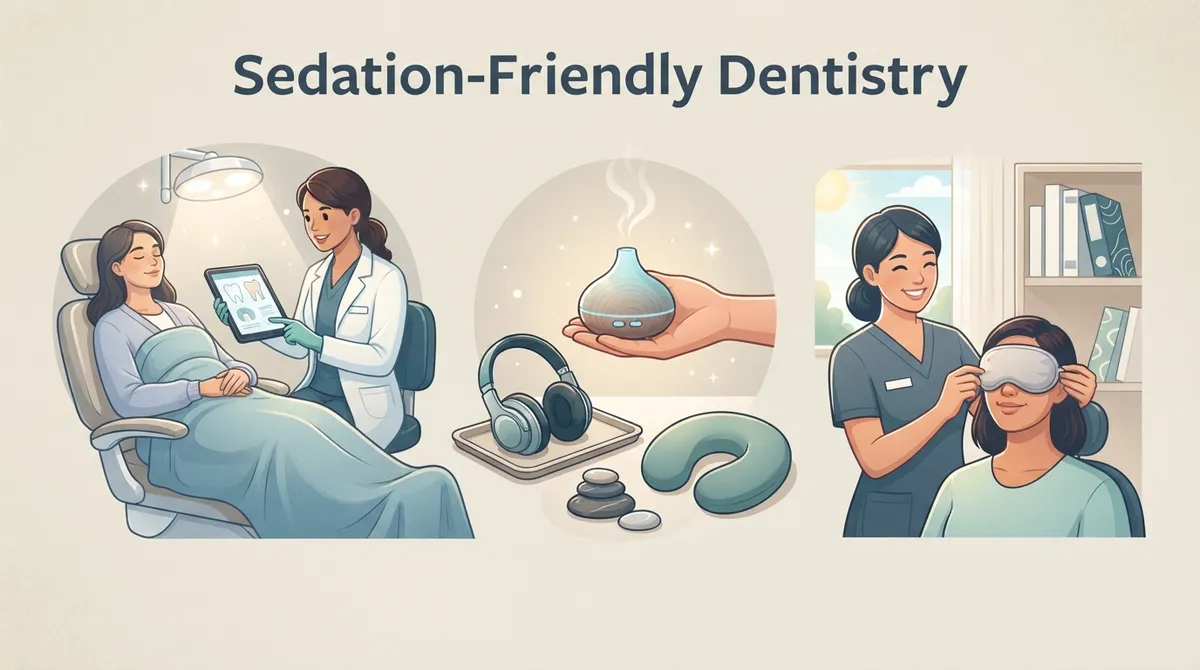
What Does "Sedation-Friendly" Really Mean?
There is no standard clinical definition for the term. One office may offer only nitrous oxide (laughing gas). Another may provide oral sedation pills. A third may bring in a trained provider for deeper sedation. All three might call themselves sedation friendly.
That is why the label alone tells you very little. What matters is the specific options available, who gives them, and how they keep you safe. Think of it like a restaurant claiming to be "allergy friendly." You would still want to ask exactly what that means for you.
A truly sedation friendly implant dentist in Apopka, FL should be able to explain, in simple terms:
- Which sedation types the office offers for implant surgery
- Who administers and monitors the sedation
- How they decide which option fits your health and anxiety level
- What emergency equipment and protocols are in place
If you get vague answers, that is useful information too.
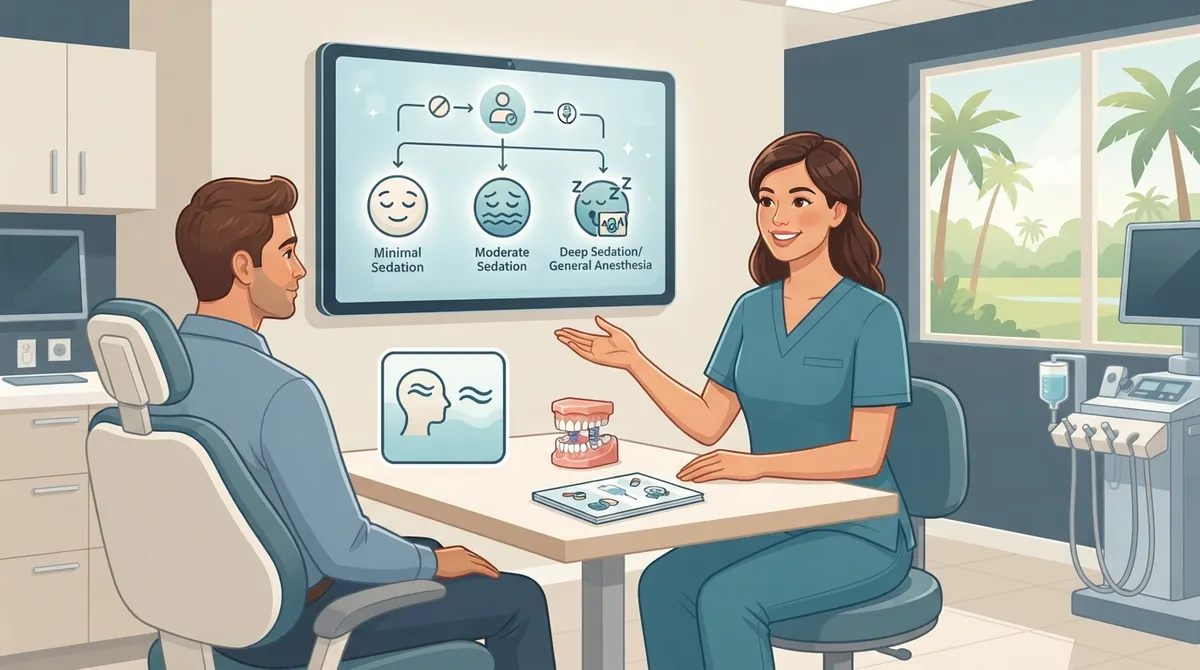
Understanding Your Sedation Options
Sedation is not one-size-fits-all. The right choice depends on your medical history, the complexity of your procedure, and how anxious you feel. Here is a quick comparison of the most common types.
| Sedation Type | How It Feels | How It Is Given | Best For |
|---|---|---|---|
| Nitrous oxide | Light, relaxed, floaty | Breathed through a small mask | Mild nerves, simple procedures |
| Oral sedation | Very relaxed, sleepy, may not recall much | Medication taken by mouth before the visit | Moderate anxiety |
| Moderate (IV) sedation | Deeply relaxed, often little memory | Medication through a vein | Strong anxiety, longer procedures |
| General anesthesia | Fully asleep | Given by a qualified provider | Complex cases, severe fear |
One important point: sedation does not replace local anesthetic. The area around your implant is still numbed so you do not feel pain. Sedation simply helps your mind and body stay calm while that work happens.
Not every option suits every person. Your health history, current medications, and the plan for your implant all play a role. That is why a thorough consultation matters so much.
Step 1: Verify the Dentist's Sedation Credentials
This step is the one most people skip, and it may be the most important. In Florida, dentists who give, supervise, or allow general anesthesia, deep sedation, or moderate sedation in a dental office must hold a permit from the Florida Board of Dentistry. The permit is tied to specific practice locations.
The state also sets training expectations. Under Florida rules for moderate sedation, applicants must document at least 60 hours of didactic training, including four hours on airway management. They must also document clinical experience giving anesthetics to 20 patients within the two years before applying. Dentists with active permits must complete continuing education in airway management and medical emergencies as well. Rules can change, so confirm the current requirements with the Board.
Here is how to check:
- Ask the office which sedation permit level the dentist or provider holds.
- Search the dentist's name on the Florida Board of Dentistry license lookup.
- Confirm the permit covers the exact office location where your surgery will happen.
- Ask who will monitor you during the procedure and what training that person has.
A confident, well-prepared office will welcome these questions. If someone gets defensive, consider that a gentle red flag.
Step 2: Ask About Implant Experience, Not Just Sedation
Great sedation does not make up for limited implant skill. You want both. A calm experience is wonderful, but the long-term success of your implant depends on careful planning, precise placement, and good follow-up care.
Ask questions like:
- How many implants do you place in a typical month?
- Do you use 3D imaging to plan placement?
- Do you handle the surgery and the final crown, or refer parts out?
- Can I see before-and-after examples of similar cases?
It also helps to understand your own timeline. Our guide on how to plan your dental implant timeline in 2026 explains each phase so nothing catches you off guard.
Step 3: Understand How Implant Treatment Works
Knowing what is coming can melt away a lot of anxiety. Here is the general path for most patients, though your plan may vary.
- Evaluation and imaging. The dentist examines your mouth, reviews your health history, and takes X-rays or 3D scans.
- Treatment planning. You discuss options, sedation choices, costs, and timing.
- Preparation if needed. Some people need a bone graft or other work first, depending on jawbone health.
- Implant placement. A small titanium post is placed in the jawbone. This is the stage where sedation is most often used.
- Healing. Over the following months, the implant integrates with your bone.
- Abutment and crown. A connector and a natural-looking crown are attached to complete your new tooth.
If you are curious about the full process, 11 steps that show how dental implants work breaks it down in detail. And if bone health is a concern, these jaw bone facts can help you prepare for the conversation.
Step 4: Share Your Full Health Story
Safe sedation starts with honest information. Before your procedure, be ready to share:
- Any medical conditions, such as heart, breathing, or blood sugar issues
- All medications, vitamins, and supplements you take
- Allergies, especially to anesthetics or medications
- Past experiences with sedation or anesthesia, good or bad
- Whether you have sleep apnea or trouble with your airway
This is not the time to be shy. Your dentist is not there to judge. These details help them choose the safest option and avoid surprises. If you have a chronic condition, ask whether you should check in with your physician first. For example, our article on getting dental implants if you have diabetes covers how health conditions can shape treatment.
Emotional wellbeing matters too. If anxiety runs deep or feels bigger than the dentist's chair, a mental health professional such as West Florida Therapy can be a helpful partner alongside your dental care.
Step 5: Plan Your Day-Of Logistics
Requirements differ depending on the type of sedation and the provider, so always follow your own office's instructions. In general, ask about:
- Fasting: Some sedation types require you to avoid food and drink for several hours first.
- A ride home: With oral, IV, or deeper sedation, you will usually need a responsible adult to drive you and stay with you.
- Recovery restrictions: You may need to skip work, driving, and important decisions for the rest of the day.
- Aftercare: Ask for written instructions on eating, medication, swelling, and when to call.
Arrange childcare, time off, and a comfortable recovery spot in advance. Soft foods, ice packs, and a cozy blanket go a long way. For tips on the weeks that follow, see 5 implant care instructions that protect your smile.
Step 6: Compare Costs Before You Commit
Sedation is often priced separately from the implant itself, and costs vary widely depending on the type used, the provider, and the length of the procedure. Because of that, ask for a written estimate that lists each part: consultation, imaging, implant, sedation, abutment, and crown.
Also ask what your insurance may cover and what financing is available. Many people are surprised by how manageable payments can be when spread over time. These resources can help you avoid common pitfalls:
- How to compare dental implant costs before you commit
- 7 dental implant cost mistakes that drain your wallet
- How to navigate dental care financing
Be wary of any price that seems too good to be true. Quality care, proper credentials, and safe monitoring all have a cost.
What About Apopka Options?
Searching locally, you will find several offices that place implants. For instance, Aspen Dental on W Orange Blossom Trail in Apopka lists dental implants, and its website notes that sedation may be available for anxious patients or more complex procedures. Because that wording is general, the smart move with any office is to call and confirm exactly which sedation types are offered for implant surgery, who provides them, and what the costs look like.
That same advice applies no matter where you go. Compare a few offices, ask the same questions at each, and trust the one that answers clearly and kindly. It is also worth reading our piece on Apopka implant providers versus Ocoee to weigh your options side by side.
Why Many Anxious Patients Choose a Calm, Comfort-First Practice
If dental fear is your main hurdle, the environment matters as much as the medication. Charming Smiles of Ocoee, led by Dr. Aliuska Lopez, is built around comfort. The team offers soothing music, streaming entertainment in treatment rooms, pillows, blankets, and aromatherapy, along with extra support for patients who feel anxious. Dr. Lopez is known for gentle, patient-centered care, and the practice offers dental implants with a free implant consultation, so you can talk through your options without pressure.
You can read more about the approach in how to use sedation dentistry for a calm visit and 5 dental anxiety treatment options that actually work. If you would like to hear from real patients, see what our Charming Smiles of Ocoee patients say on Google. Ocoee is a short drive from Apopka, and many patients find the trip well worth it for a more relaxed experience. To learn about the full process locally, explore dental implants in Ocoee.
Your Quick Checklist Before Booking
Print or screenshot this list for your consultation:
- Which sedation options do you offer for implant surgery?
- What permit does the provider hold, and is it valid for this location?
- Who monitors me during the procedure?
- What emergency protocols and equipment are in place?
- How many implants have you placed, and can I see examples?
- What is the full written cost, including sedation and the crown?
- What are the fasting, driving, and recovery rules for my sedation type?
If you feel heard and informed after asking these, you are likely in good hands. If you feel rushed or confused, keep looking. You are allowed to take your time.
Take the First Gentle Step
Choosing the right implant dentist is really about trust. You want credentials you can verify, options explained in plain words, and a team that treats your nerves with kindness instead of impatience. Start with a consultation, bring your questions, and let the answers guide you.
Ready to talk it through? Call us at (407) 378-3704, or book online to schedule your free implant consultation. You can also find our location at 315 West Rd in Ocoee. Your calm, confident smile is closer than you think.
FAQs
Q: Is sedation necessary for dental implant placement?
A: Not always. Many people do fine with local anesthetic alone, but sedation can make the visit much more relaxing if you feel anxious or need a longer procedure. Your dentist will help you pick the right approach based on your health and comfort level.
Q: How can I verify that a dentist is licensed to provide moderate sedation in Florida?
A: Florida requires dentists to hold a Board of Dentistry permit to give moderate sedation, deep sedation, or general anesthesia in a dental office. You can look up the dentist on the Florida Board of Dentistry website and confirm the permit covers the office where your procedure will take place.
Q: Will I need someone to drive me home after dental sedation?
A: With oral, IV, or deeper sedation, most offices require a responsible adult to drive you home and stay with you. Nitrous oxide often wears off quickly, but rules vary, so always follow your own dentist's instructions.
Q: How long does dental implant treatment take from consultation to crown?
A: It often takes several months, because the implant needs time to heal and fuse with your jawbone before the crown is attached. If you need a bone graft or other prep work first, the timeline can be longer, so ask your dentist for a personal estimate.
Q: What should I ask a dentist before choosing sedation for implants?
A: Ask which sedation types are offered, who administers and monitors them, what permit they hold, and what emergency protocols are in place. Also ask for a written cost breakdown so there are no surprises.