How to Find a Dentist for Full Mouth Implants
Wondering how to find a dentist for full mouth implants? Follow this friendly, step-by-step guide to compare options, costs, and care in 2026.
Key Takeaways
- Full mouth implants are not one standard procedure: fixed full-arch bridges, removable implant-retained dentures, and individual implant crowns differ in care, cost, and what's included.
- Ask who plans, places, and restores your implants, since a prosthodontist, periodontist, oral surgeon, or general dentist may each play a role, and the team's handoffs matter.
- Insist on a written, itemized treatment plan listing implants, temporary and final teeth, extractions, grafting, sedation, imaging, and follow-up, so quotes can be compared fairly.
- Verify credentials through your state dental board, ask how many full-arch cases the dentist has completed, and request before-and-after photos with patient permission.
- A broad 2026 estimate is about $38,600 to $90,000 for both arches, but that is a market range; a real quote depends on your anatomy, plan, and dentist's assessment.
- Good implant dentists take time for a full evaluation with imaging and history review and never pressure you to decide on the spot.
Losing most or all of your teeth is tough. Maybe you've been hiding your smile for years. Maybe your dentures slip when you laugh. Maybe you just want to eat a crisp apple again without a second thought. If you've ever typed "help me find a dentist for full mouth implants" into a search bar, you're in good company, and you're taking a smart first step.
Here's the good news. Full mouth implants can change how you eat, speak, and smile. The tricky part is choosing the right dentist. The term "full mouth implants" can mean very different treatments, and no two quotes look alike. This guide walks you through the process in plain language, one step at a time. You'll learn what to ask, what to compare, and what to watch for. For Ocoee-area neighbors, we'll also share how a local, comfort-focused team like Charming Smiles of Ocoee can help you feel at ease from the first visit.
Step 1: Understand What "Full Mouth Implants" Really Means
Before you search for a dentist, get clear on what you want. "Full mouth implants" is not one single procedure. It's a catch-all phrase, and different offices may use it differently.
Here are the most common options:
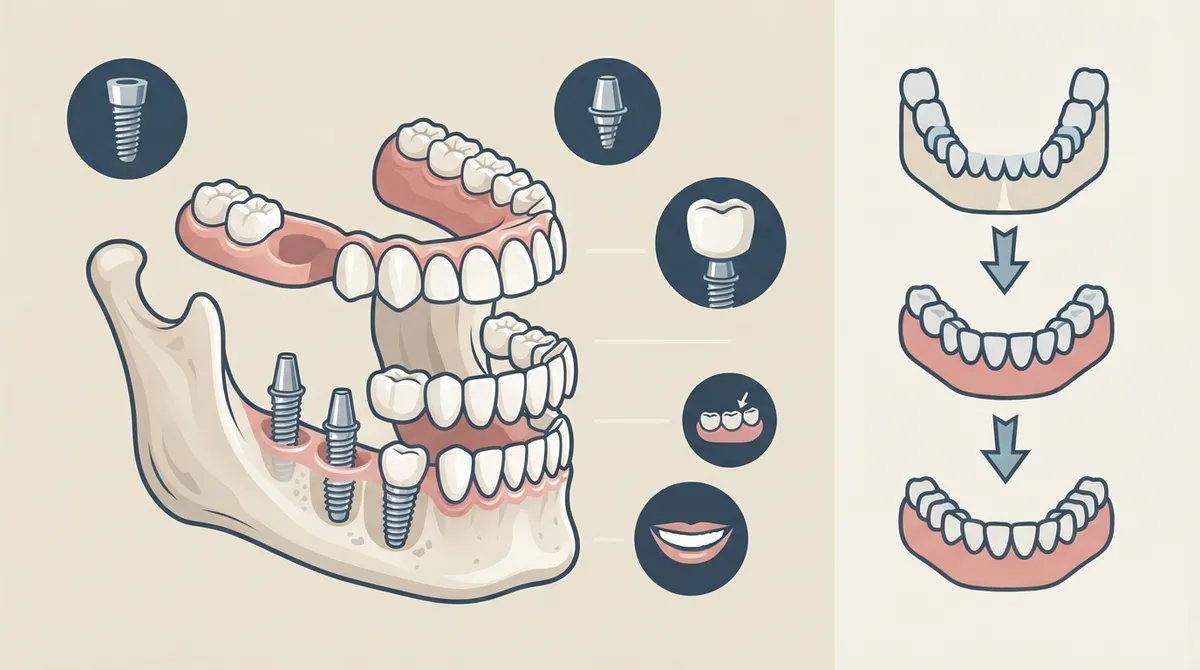
- Fixed implant-supported bridge: A full arch of teeth that stays in your mouth. Only your dentist removes it.
- Removable implant-retained denture: A denture that snaps onto implants. You can take it out to clean it.
- Individual implant crowns: One implant and one crown for each missing tooth.
You also need to know whether your plan covers one arch or both. Your upper and lower jaws are different, and many people only need work on one. If you want a deeper look at the tradeoffs, our guide on dental implants vs. dentures can help you decide which direction feels right.

Step 2: Know Who Can Place and Restore Implants
Implant care often involves a team. Understanding each role makes it easier to ask good questions.
| Provider | Focus |
|---|---|
| General dentist | Many offer implant care, including planning, placement, or restoration, depending on training |
| Prosthodontist | Restoring teeth and bite, including the final teeth that attach to implants |
| Periodontist | Gum and supporting-bone health, plus implant placement |
| Oral and maxillofacial surgeon | Surgical procedures, including implant placement and complex grafting |
No single title is automatically "the best." What matters is who plans your case, who places the implants, who makes your final teeth, and how they all talk to each other. Ask that question directly. A smooth handoff between team members often means a smoother experience for you.
Step 3: Check Credentials and Experience
Trust matters here, so do a little homework. It only takes a few minutes.
- Verify the license. Your state dental board lets you look up a dentist's license and any disciplinary history.
- Ask about training. Where did they learn implant dentistry? Do they take continuing education courses?
- Ask about similar cases. How many full-arch cases have they handled? Can they show you before-and-after photos with patient permission?
- Understand the difference between specialty training and board certification. They are not the same thing. Board certification is generally voluntary, so its absence is not automatically a red flag.
- Read reviews. Look for patterns about comfort, communication, and follow-up care.
Not sure how to size up what people say online? Our tips on spotting a dentist with great reviews can help you read between the lines.
Step 4: Expect a Thorough Evaluation
A good implant dentist won't hand you a price after a quick glance. A real evaluation takes time, and that's a good sign.
Here's what a solid consultation usually includes:
- A review of your dental and medical history
- An exam of your gums and any remaining teeth
- Imaging, which may include 3D scans to look at your jawbone
- A talk about whether you need extractions, bone grafting, or other prep work
- A clear explanation of your options and why one may fit you better
Bone health is a big part of this picture. If your jaw has thinned over time, you may need extra steps before implants. Learn more in our article on bone loss and implants. Your dentist should explain these steps in simple terms, without pressure.
Some health factors can affect your results too. Smoking, gum disease, and uncontrolled health conditions may change whether you're a good candidate. Only a clinician can assess your personal risk, so be honest about your health history. You can also read 10 dental implant requirements to see what dentists typically look for.
Step 5: Get a Written, Itemized Treatment Plan
This step protects your wallet and your peace of mind. Ask for your plan in writing, with every cost listed. If possible, get more than one consultation so you can compare.
A clear quote should spell out:
- The number of implants per arch
- Temporary teeth and final teeth
- Materials used for the final teeth
- Extractions, if needed
- Bone grafting or other prep work
- Anesthesia or sedation
- Imaging and scans
- Follow-up visits
- What happens if a part needs repair or replacement
Why does this matter? Two quotes can look far apart simply because one includes more. A lower number that leaves out grafting, sedation, and final teeth isn't really lower.
Step 6: Understand Costs in 2026
Let's talk numbers, because they surprise a lot of people. Prices vary widely by treatment type, location, and what's included. A 2026 consumer cost guide reported a broad U.S. estimate of roughly $38,600 to $90,000 for both arches. That's a market estimate, not a fixed price list, so treat it as a rough picture rather than a promise.
| Treatment Type | Example 2026 Estimate | Notes |
|---|---|---|
| Fixed full-arch implants | About $19,315 to $30,878 per arch (one provider dataset) | Provider-specific example, not a national average |
| Removable implant-retained dentures | About $7,600 to $13,300 per arch | Inclusions can differ from fixed options |
| Both arches, broad market range | About $38,600 to $90,000 | Varies by treatment and what's included |
These figures come from commercial cost guides and provider data. They are not official prices from the American Dental Association, which does not set a universal fee for any one patient's care. Your own quote depends on your mouth, your plan, and your dentist.
Some full-arch plans use four to six implants per arch. But the right number and placement depend on your anatomy and your dentist's assessment, so don't judge a plan by that count alone.
Want to avoid common money traps? Read 7 dental implant cost mistakes that drain your wallet before you commit.
Step 7: Ask About Insurance and Financing
Full mouth implants are a real investment, but you have options for making them manageable. Dental insurance may cover part of certain steps, such as extractions or some portions of care. Coverage varies a lot by plan, so ask your dentist's office to check your benefits before treatment begins.
Many practices also offer financing and savings plans. At Charming Smiles of Ocoee, patients can explore flexible third-party financing, accepted insurance plans, and in-house dental savings plans. Learn more about insurance and financing options or the dental savings plan. For a step-by-step look at paying over time, see how to finance implant dentures in Ocoee.
Step 8: Learn the Risks and Recovery
We believe in honest conversations, so let's talk about this part too. Implant treatment is surgery, and every surgery has risks. Possible issues include infection, bleeding, injury to nearby structures, and an implant that doesn't fuse with the bone. Problems with the final teeth can also come up later.
Most people do well with good planning and aftercare. Ask your dentist:
- What does recovery look like for my specific plan?
- What pain or swelling should I expect?
- What foods should I eat early on?
- Who do I call if something feels wrong?
It also helps to know the timeline. Our guide on how to plan your dental implant timeline walks through the stages. And if surgery makes you nervous, you're not alone. Dental anxiety is very common, and a gentle, spa-like office can make a real difference.
Step 9: Plan for Long-Term Care
Implants aren't a "set it and forget it" fix. They need daily cleaning and regular professional visits, just like natural teeth.
Ask your dentist how to clean under a fixed bridge, or how to care for a removable overdenture. Ask how often you should come back for checkups. And ask what to do if an implant or a tooth feels loose or painful. Our tips on implant maintenance routine mistakes show what to avoid so your investment lasts.
Step 10: Choose a Team That Makes You Feel Comfortable
Credentials and costs matter. But so does how you feel in the chair. You'll spend a lot of time with this team over many months, so you want people who listen and never rush you.
Watch for these green flags:
- They explain things in plain words and welcome your questions
- They offer comfort options if you feel nervous
- They give you a clear plan in writing
- They don't pressure you to decide on the spot
- They talk about follow-up care, not just surgery day
At Charming Smiles of Ocoee, Dr. Aliuska Lopez and her team focus on gentle, personalized care in a relaxing, spa-like setting. Comfort touches like soothing music, blankets, and aromatherapy help patients feel calm, even if dental visits have felt stressful in the past. You can learn more about what makes us different in 5 reasons Charming Smiles Ocoee wins every time. We also offer a free dental implant consultation, so you can ask questions and see if implants are right for you with no cost to start. You can see what neighbors say by reading reviews on our Charming Smiles of Ocoee Google page.
Questions to Bring to Your Consultation
Print this list or save it on your phone. It keeps you focused and confident.
- Which type of full mouth implant do you recommend for me, and why?
- Who will plan, place, and restore my implants?
- How many cases like mine have you treated?
- Do I need extractions or bone grafting first?
- What is included in my quote, and what could add to it?
- What happens if an implant fails or a tooth breaks?
- How will I eat and look during healing?
- What does long-term maintenance look like?
If you want a broader set of ideas, 6 full mouth dental implant mistakes to avoid in 2026 covers common missteps, and how to choose full mouth dental implants near me adds even more detail.
Take the Next Step Toward Your New Smile
Finding the right dentist for full mouth implants takes a little time, but you don't have to do it alone. Define what you want, check credentials, get a written plan, compare costs, and choose a team that makes you feel at ease. Do those things, and you'll be in a strong spot to decide with confidence.
If you live in or near Ocoee, we'd love to meet you. Come see us at our location at 315 West Rd, Ocoee, FL 34761, or call us at (407) 378-3704 to book your free implant consultation. You can also keep up with our team on the Charming Smiles Facebook page. Your best smile is closer than you think.
FAQs
Q: Should I see a prosthodontist, periodontist, oral surgeon, or general dentist for full mouth implants?
A: Any of them may be a good fit, depending on their training and experience with cases like yours. What matters most is knowing who plans, places, and restores your implants, and how the team works together. Ask each provider about similar cases they've treated.
Q: What is the difference between fixed full-arch implants and implant-supported dentures?
A: Fixed full-arch implants are a bridge that stays in your mouth, and only your dentist removes it. Implant-retained dentures snap onto implants and come out so you can clean them. Costs, care routines, and what's included can differ, so ask for an itemized plan for each.
Q: How much do full mouth dental implants cost, and what should a quote include?
A: A 2026 consumer cost guide estimated about $38,600 to $90,000 for both arches, but that's a market estimate and real quotes vary. Your quote should list the number of implants, temporary and final teeth, extractions, grafting, anesthesia, imaging, and follow-up visits.
Q: How many implants do I need for a full arch?
A: Some full-arch plans use four to six implants per arch, but the right number depends on your bone, your bite, and your dentist's assessment. A thorough exam and imaging will show what's best for you.
Q: Does dental insurance cover full mouth implants?
A: Coverage varies a lot by plan, and many plans cover only part of the care, such as extractions. Ask your dentist's office to check your benefits first, and ask about financing or a dental savings plan to help manage the rest.