Why Do Cosmetic Dentists Recommend E.max Veneers?
Discover how a cosmetic dentist uses E.max veneers to create natural, durable smiles, plus costs, candidacy tips, and care advice.
Key Takeaways
- E.max veneers made from lithium disilicate offer 360-500 MPa flexural strength, providing superior fracture resistance compared to traditional porcelain veneers while maintaining natural translucency and light transmission.
- Research shows E.max veneers have a 96.8% survival rate over 10.4 years on average, but success depends heavily on skilled bonding technique, proper tooth preparation, and consistent aftercare habits like wearing night guards.
- Good candidates must have healthy gums, sufficient enamel for bonding, stable bites without severe grinding, and no active decay; heavy bruxism, significant dentin exposure, or gum disease can cause early failure.
- Veneer placement is permanent—even minimal tooth preparation removes enamel that never regrows, so patients should understand this irreversible commitment before proceeding with treatment.
- E.max veneer costs range from $800-$2,500 per tooth depending on case complexity, location, and dentist experience; a thorough evaluation including digital mock-ups helps determine if veneers or alternatives like composite bonding suit your needs.
- Common failure causes include poor bonding technique, using teeth to open packages, untreated grinding, skipped dental checkups, and inadequate enamel; daily soft-bristle brushing, flossing, and wearing a night guard protect your investment.
Maybe you've noticed a chip in your front tooth. Or you cringe a little every time you see photos of yourself smiling. You're not alone, and you're in good company here in Ocoee. So many of our neighbors walk through our doors dreaming of a smile that finally feels like "them." That's exactly why so many folks start asking about E.max veneers, and why a skilled cosmetic dentistry team matters so much when making this choice.
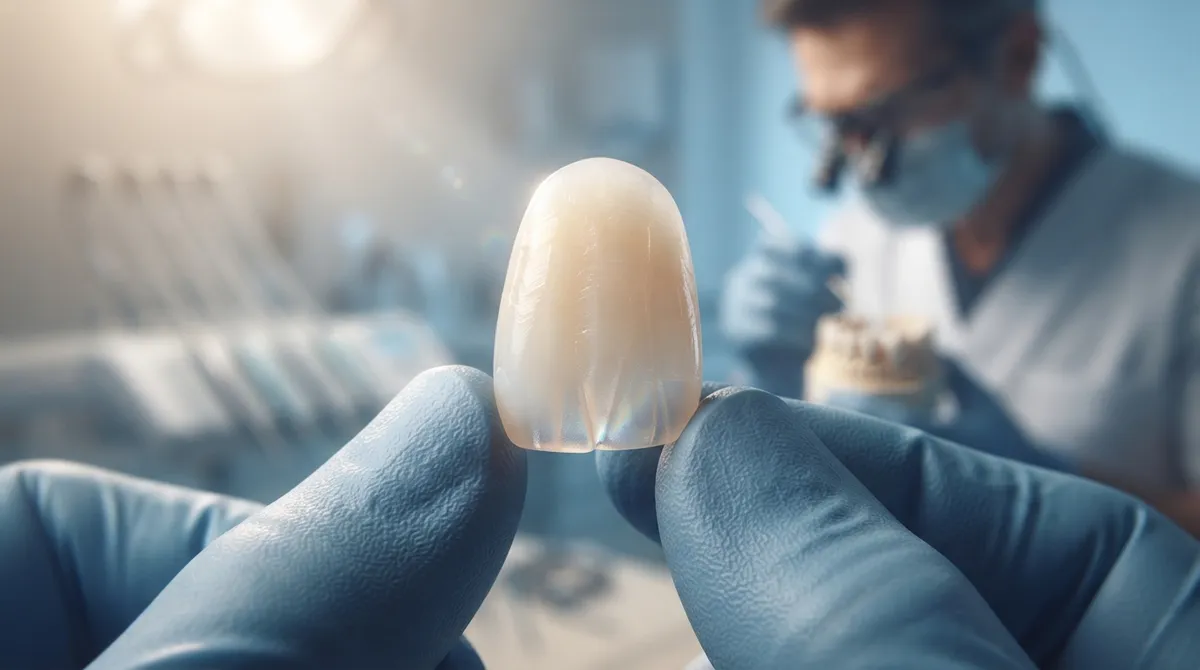
E.max veneers have become one of the most talked-about options in modern smile makeovers. They're thin, tooth-colored shells made from a special glass-ceramic material. When placed by a skilled hand, they can transform chipped, stained, or gapped teeth into a smile you're excited to show off. But not everyone is a good fit, and the details matter more than most people realize.
In this guide, we'll walk through exactly what E.max veneers are, how they compare to other options, what the process looks like, and how to know if you're a good candidate. We'll also share real numbers from dental research, so you can make a smart, informed choice. Let's get started.
What Are E.max Veneers, Exactly?
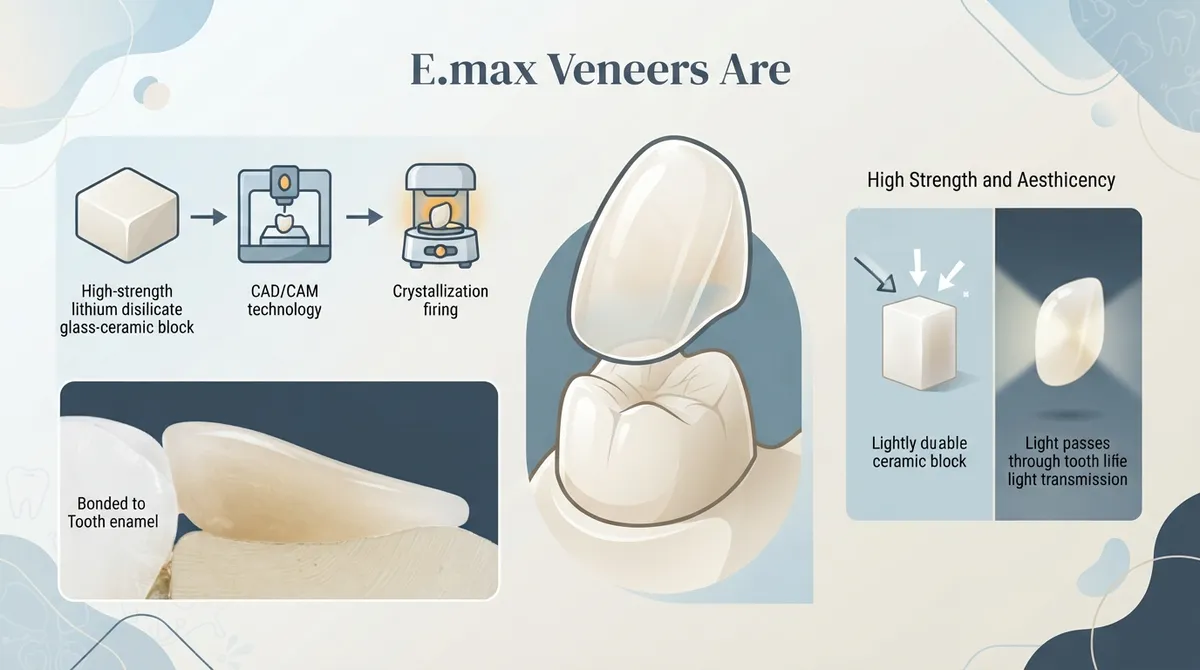
E.max veneers are thin shells made from lithium disilicate. That's a mouthful, we know. Simply put, it's a type of glass-ceramic material known for looking incredibly natural while also being tough.
These veneers get bonded to the front of your teeth. They can change the color, shape, size, and even fix small gaps or minor alignment issues. Think of them as a fresh, polished cover for teeth that need a boost.
What makes E.max special is the balance it strikes. It's translucent like real enamel, so light passes through it the same way. But it's also strong enough to handle everyday biting and chewing without cracking easily.
How E.max Differs From Traditional Porcelain Veneers
Traditional feldspathic porcelain has been used for decades and still looks great. But E.max lithium disilicate generally offers more strength and fracture resistance. Published data shows flexural strength values around 360 to 500 MPa for lithium disilicate materials, depending on the product and how it's made.
That extra strength doesn't automatically mean E.max is the right choice for every mouth. Your cosmetic dentist will look at your bite, your enamel, and your goals before making any final call.

Are You a Good Candidate for E.max Veneers?
This is the question that matters most. Not everyone should rush into veneers, and a good dentist will tell you that honestly.
Here's what typically makes someone a strong candidate:
- You have healthy gums with no active disease
- Your teeth have enough enamel for the veneer to bond properly
- You don't have untreated tooth decay
- Your bite is stable without severe grinding or clenching
- You want to fix color, shape, size, or minor spacing issues
- You understand that veneers are cosmetic, not a fix for every dental problem
On the flip side, some situations call for a different approach. Heavy bruxism (teeth grinding), significant dentin exposure, active gum disease, or major bite problems can all raise the risk of the veneer chipping, debonding, or failing early. This is why a full exam matters so much before moving forward.
What a Thorough Cosmetic Dentist Evaluation Includes
A responsible dentist won't just slap veneers on and send you home. Here's what a proper evaluation typically covers:
- A visual exam of your teeth, gums, and bite
- Digital photographs to map out your smile goals
- X-rays to check for hidden decay or bone issues
- A discussion about your expectations and lifestyle habits
- A diagnostic mock-up, so you can preview your new smile
- A conversation about tooth preparation and what it means long-term
This step-by-step process helps avoid surprises later. It also helps your dentist figure out if E.max is truly your best option, or if something else, like teeth whitening services or composite bonding, might work better for your situation.
How Long Do E.max Veneers Actually Last?
This is one of the biggest questions patients ask us, and it's a fair one. Nobody wants to pay for a smile that falls apart in a year or two.
The good news is that research backs up E.max as a reliable long-term option. A 2024 systematic review looking at 29 studies found lithium disilicate veneers had about a 96.8% survival rate over an average follow-up of roughly 10.4 years. That's a strong track record.
Other studies show slightly different numbers, which is normal in dental research. Here's a quick snapshot:
| Study Type | Survival Rate | Follow-Up Period |
|---|---|---|
| 2024 Systematic Review (29 studies) | ~96.8% | ~10.4 years average |
| CAD/CAM Clinical Evaluation | 89.1% | Varies |
| Retrospective Study | 92.7% | 10 years |
| Retrospective Study | 98.7% | ~3 years |
| Glass-Ceramic Meta-Analysis (46 studies) | 90.2% | ~6.5 years average |
These numbers aren't guarantees for every individual case. They're averages based on lots of patients and lots of different dental offices. Your own results depend heavily on how well the veneer was designed, how it was bonded, and how well you take care of it afterward.
What Can Cause a Veneer to Fail Early?
The same 2024 review found technical complications happened in about 6.1% of cases, aesthetic issues in about 1.9%, and biological complications in roughly 0.45%. So while E.max veneers hold up well overall, problems can still pop up.
Common causes of early failure include:
- Poor bonding technique or moisture control during placement
- Using veneered teeth to open packages or bite hard objects
- Untreated grinding or clenching (bruxism)
- Skipping regular dental checkups
- Not wearing a night guard when one is recommended
- Inadequate enamel available for bonding
The takeaway? A skilled dentist and good aftercare habits go a long way toward making your investment last.
Is the E.max Veneer Process Reversible?
Here's something every patient should understand clearly. Veneers are often described as "minimally invasive," and in many cases, they are. But that doesn't always mean the process is fully reversible.
When your dentist removes a thin layer of enamel to prep your tooth, that enamel doesn't grow back. Ever. So even a small amount of preparation is a permanent change to your tooth's surface.
Some patients qualify for no-prep or minimal-prep veneers, which preserve more of the natural tooth. But this isn't automatically the safer or better choice for everyone. It really depends on your bite, your tooth shape, and your smile goals. Ask your dentist directly whether minimal prep is truly right for your case, rather than assuming it always is.
What Happens During Your E.max Veneer Treatment?
Understanding the process can ease a lot of nervousness. Here's a general step-by-step breakdown of what to expect:
- Initial consultation and smile design discussion
- Comprehensive exam, including photos, scans, and X-rays
- Tooth preparation (if needed) to create space for the veneer
- Digital or traditional impressions of your teeth
- Lab fabrication of your custom veneers
- Placement of temporary veneers, if applicable, while you wait
- Final appointment for try-in, shade matching, and bonding
- Bite adjustment to make sure everything feels natural
Every step matters. Skipping steps or rushing the process can lead to a less natural look or a shorter lifespan for your veneers.
What Does E.max Veneer Treatment Typically Cost?
Cost is often the elephant in the room, so let's talk about it honestly. Pricing sources commonly place E.max veneers somewhere between $800 and $2,500 per tooth in the United States.
That's a wide range, and for good reason. Your final cost depends on:
- How many teeth need veneers
- The complexity of your case
- Diagnostic work, including scans and mock-ups
- Whether temporaries are needed
- Your location and the dentist's experience level
- Related treatments, like gum therapy or minor orthodontics
A trustworthy dental office should give you a written treatment plan. This plan should break down every fee, from the initial diagnostic work all the way to follow-up visits. If your dentist can't explain the pricing clearly, that's a red flag. At Charming Smiles of Ocoee, we walk every patient through the numbers before treatment begins, and we offer insurance & financing options to help make the cost more manageable.
We also offer helpful current specials, including a free cosmetic consultation, so you can explore your options without financial pressure right out of the gate.
Caring for Your E.max Veneers Long-Term
Once your new smile is in place, keeping it looking great isn't complicated. It just requires a little consistency.
Here are the habits that help veneers last the longest:
- Brush twice daily with a soft-bristle toothbrush
- Floss every day to protect the gum line around each veneer
- Avoid biting on hard objects like ice, pens, or fingernails
- Never use your teeth to open packages or bottles
- Wear a night guard if you grind or clench your teeth
- Keep up with regular dental exams and cleanings
These simple habits protect your investment and keep your smile looking fresh for years. Many patients find that E.max veneers actually make them more motivated to care for their teeth, simply because they love how their smile looks.
Why Choose Charming Smiles of Ocoee for Your Veneer Journey?
Dr. Aliuska Lopez has built a reputation in Ocoee as a true smile expert. She's known for combining precision with genuine compassion, especially for patients who feel nervous about dental work.
Our office isn't your typical dental clinic. We've created a spa-like space with calming music, comfortable blankets, and a team that genuinely listens to your goals. If dental anxiety has kept you away from getting the smile you want, we understand, and we're here to make the experience easier. You can read what other patients have said by visiting our testimonials page, or visit us on Google — Charming Smiles of Ocoee to see reviews from real patients in the Ocoee community.
We also stay active on social media, where we share smile transformations and helpful tips. Feel free to follow along on our Charming Smiles Facebook page or check out real patient results on our Charming Smiles Instagram page.
If you're curious whether E.max veneers fit your specific smile goals, our team offers a free cosmetic consultation to walk through your options together. We'll also happily discuss our dental savings plan or payment plans if budgeting is part of your decision.
Making the Right Choice for Your Smile
Choosing E.max veneers is a personal decision, and it deserves careful thought. The research shows strong survival rates when the case is right and the technique is solid. But success depends on working with a dentist who takes the time to evaluate your unique smile, not just sell you a treatment.
According to the American Dental Association, veneers work best when patients understand both the benefits and the long-term commitment involved. That's exactly the kind of honest conversation we aim to have with every patient who walks through our doors.
Whether you're dealing with stained teeth, small chips, minor gaps, or just want a fresh, confident smile, we're ready to help you explore whether E.max veneers make sense for you. You can also browse our full range of services to see how veneers might fit alongside other treatments, like Invisalign or crowns and bridges, if your smile needs a more comprehensive approach.
Ready to take the next step toward a smile you love? Book online today, visit our location in Ocoee, or simply call us at (407) 378-3704 to schedule your free cosmetic consultation. Our friendly team is here to answer every question and help you feel confident about your choice.
FAQs
Q: What are E.max veneers and how are they different from porcelain veneers?
A: E.max veneers are made from lithium disilicate, a glass-ceramic material known for its strength and natural translucency. Compared to traditional feldspathic porcelain, E.max often offers better fracture resistance while still capturing that lifelike sparkle we all want in a smile.
Q: How long do E.max veneers typically last?
A: Research shows some pretty encouraging numbers, with survival rates ranging from about 89% to nearly 97% depending on the study and follow-up period. Your own results depend on things like bonding technique, your bite, and how well you care for them at home.
Q: Are E.max veneers reversible?
A: Not exactly, and it's important to know that upfront. Even minimal tooth preparation removes a small layer of enamel that won't grow back, so veneers are considered a permanent change even when the process feels conservative.
Q: How much do E.max veneers cost per tooth?
A: Prices commonly range from about $800 to $2,500 per tooth, depending on your case, location, and the dentist's experience. We always provide a written treatment plan so you know exactly what you're paying for before starting anything.
Q: Who makes a good candidate for E.max veneers?
A: Great candidates usually have healthy gums, enough enamel for bonding, and no untreated decay or severe grinding habits. A thorough exam with your cosmetic dentist is the best way to find out if E.max veneers are the right fit for your smile.