What's the Best Missing Tooth Replacement Option?
Missing a tooth? Discover implants, bridges, and dentures options at Charming Smiles of Ocoee to restore your smile and protect your oral health.
Key Takeaways
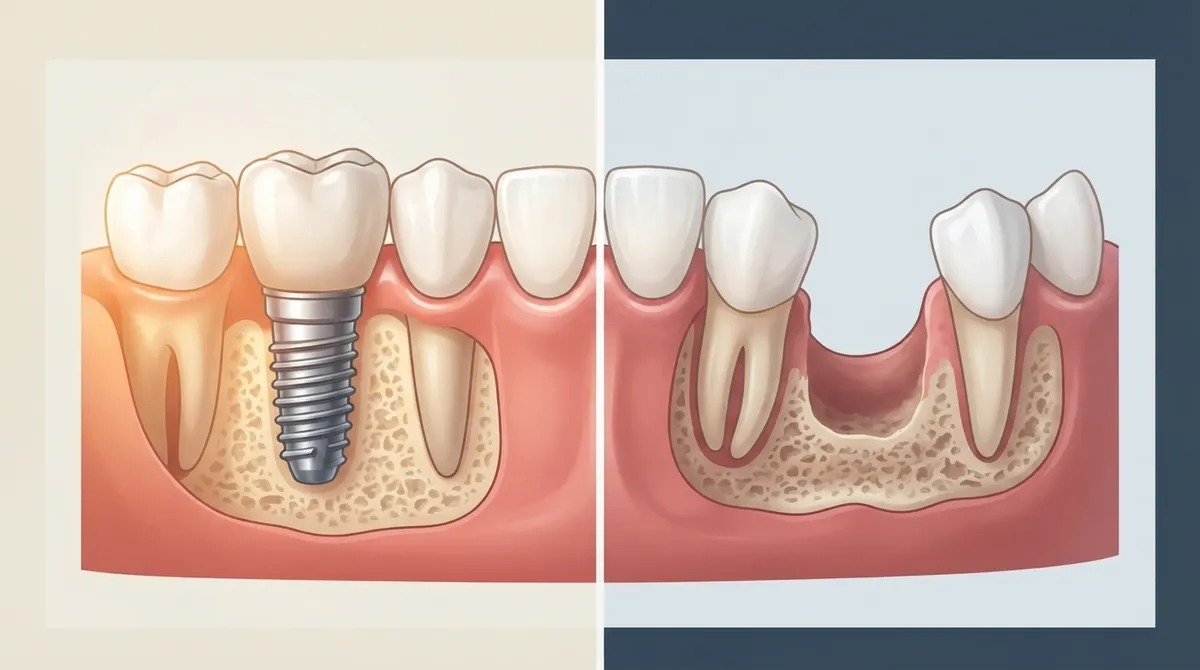
- Delaying missing tooth replacement causes neighboring teeth to shift, jaw pain, and jawbone shrinkage; dental implants are the only option that preserves bone by replacing the tooth root.
- Dental implants last 20+ years or a lifetime with proper care, while bridges last 10-15 years and dentures last 5-10 years; implants have the highest upfront cost but provide the longest-term value.
- Four main replacement options exist: dental implants (best for single/multiple teeth), bridges (faster, non-surgical for teeth in a row), partial dentures (for several missing teeth), and full dentures (for most/all teeth).
- Implant placement requires a few months of healing for bone integration, while bridges and dentures can be ready within weeks; treatment timeline depends on whether surgery is involved.
- Key factors in choosing the right option include number of missing teeth, remaining teeth health, jawbone volume, overall health, budget, and comfort with surgery versus non-surgical approaches.
- Proper maintenance like daily brushing, flossing, regular dental visits, and avoiding hard foods significantly extends the lifespan of any missing tooth replacement option.
A gap in your smile does more than change how you look. It can make chewing hard. It can shift your other teeth. It can even hurt your jawbone over time. If you have a missing tooth, you're not alone, and you have more options than ever in 2026.
At Charming Smiles of Ocoee, we help patients every day find the right missing tooth replacement for their smile, budget, and lifestyle. Dr. Aliuska Lopez and her team take time to explain each choice in plain language, so you never feel confused or rushed. This guide will walk you through the main options, what they cost, how long they last, and how to pick the best one for you.
Why You Should Replace a Missing Tooth Quickly
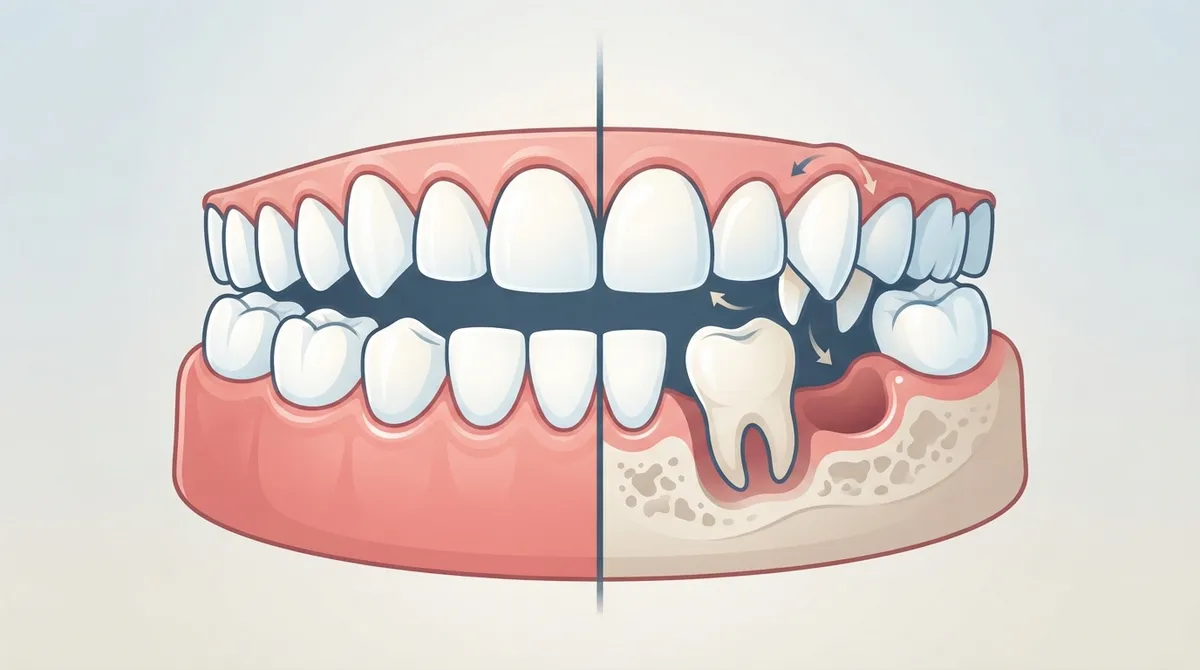
It might be tempting to just leave a gap alone, especially if it doesn't hurt. But waiting can cause bigger problems down the road. Your teeth are like a puzzle. When one piece is missing, the others start to move.
What Happens When You Skip Replacement
- Nearby teeth can tilt or drift into the empty space
- Your bite can shift, causing jaw pain or headaches
- The jawbone under the missing tooth starts to shrink
- Gum disease risk goes up around the open gap
- Chewing becomes harder, which can affect your diet
- Your smile and confidence can take a hit
Here's a fact that surprises many patients: the jawbone needs the pressure from chewing to stay strong. Without a tooth root there, the bone slowly wears away. This is one reason dental implants are often recommended. They are the only option that replaces the tooth root, not just the visible crown.
The Main Ways to Replace a Missing Tooth
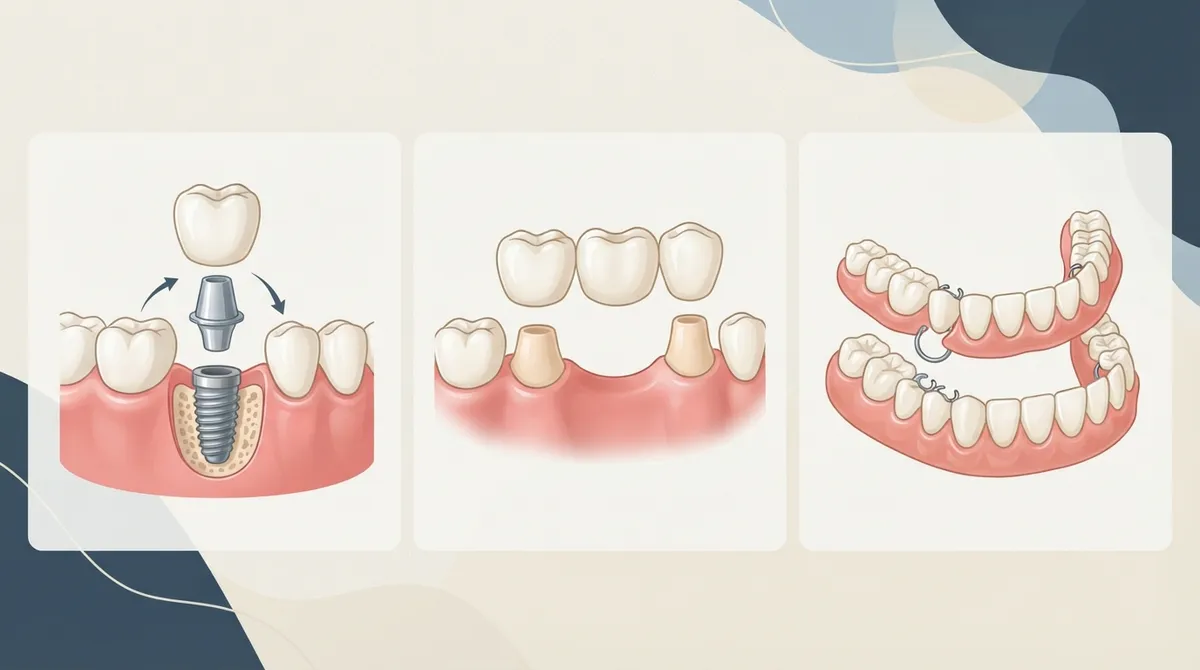
There are four common paths people take when replacing one or more missing teeth. Each one works differently and fits different situations.
1. Dental Implants
A dental implant is a small titanium post placed into your jawbone. It acts like an artificial tooth root. Once it heals, a crown is attached on top. This gives you a tooth that looks, feels, and works like a real one.
Implants have three main parts: the implant post, the abutment (a small connector), and the crown. This design is why implants feel so natural. They are also the only replacement option that stops bone loss in the jaw, since they mimic a real tooth root.
2. Dental Bridges
Dental bridges replace one tooth or several teeth in a row. A bridge uses crowns on the teeth next to the gap to hold a false tooth in place. Bridges can also be anchored to implants instead of natural teeth.
Bridges are a faster fix than implants. There's no surgery needed if you use your natural teeth as anchors. But your neighboring teeth need to be shaved down a bit to hold the crowns, which some patients want to avoid.
3. Partial Dentures
If you're missing several teeth but still have healthy teeth remaining, a partial denture might be a good fit. This is a removable appliance that clips onto your natural teeth. It fills in the gaps and can be taken out for cleaning.
4. Full Dentures
When all or most teeth are missing, full dentures replace the entire top or bottom row. Modern dentures look far more natural than they used to, and they can be made to fit comfortably and securely.
Implant-Supported Options
For patients missing many teeth or a whole arch, implant-supported bridges and implant-supported dentures are popular choices. A few implants are placed to anchor a larger restoration. This gives more stability than a removable denture alone, without needing an implant for every single tooth.
Comparing Your Missing Tooth Replacement Options
Every option has trade-offs. Here's a simple table to help you compare them side by side.
| Option | Best For | Typical Lifespan | Bone Preservation | Maintenance |
|---|---|---|---|---|
| Dental Implant | Single or multiple missing teeth | 20+ years, often a lifetime | Yes | Brush and floss like normal teeth |
| Dental Bridge | One or a few teeth in a row | 10-15 years | No | Special floss tools, regular checkups |
| Partial Denture | Several missing teeth, healthy teeth remain | 5-10 years | No | Daily removal and cleaning |
| Full Denture | All or most teeth missing | 5-10 years | No | Daily removal, soaking, and cleaning |
As this table shows, implants tend to last the longest and are the only option that protects your jawbone. But bridges and dentures are still excellent choices for many patients, especially when cost, healing time, or health factors come into play.
How to Choose the Right Option for You
Picking the best replacement isn't a one-size-fits-all decision. Dr. Lopez and her team look at several factors during your dental implants consultation or general checkup to guide you toward the right choice.
Key Factors We Consider
- How many teeth are missing, and where they are located
- The health and strength of your remaining teeth
- How much jawbone you have to support an implant
- Your overall health and healing ability
- How much time you have for treatment and healing
- Your budget and insurance or financing options
- Your personal comfort with surgery versus non-surgical options
If you're missing just one tooth and have strong bone, an implant is usually the top pick. If you have several teeth missing in a row and want a faster fix, a bridge might make more sense. For those missing many teeth, implant-supported dentures often offer the best mix of comfort, function, and value.
What to Expect During Treatment
Many patients feel nervous about the process, especially with implants. Here's a simple step-by-step look at what typically happens.
Steps for Getting a Dental Implant
- Initial consultation and X-rays to check bone health
- Implant post is placed into the jawbone during a short procedure
- Healing period of a few months while the bone bonds to the implant
- Abutment is attached once healing is complete
- Custom crown is placed on top to complete your new tooth
For bridges and dentures, the process is often quicker since there's no need to wait for bone healing. Your dentist will take impressions, and your custom restoration is usually ready within a few weeks.
Cost Considerations for Missing Tooth Replacement
Cost is one of the biggest questions patients ask. Prices vary based on the number of teeth involved, the material used, and whether you need extra steps like a bone graft. Here are some general points to keep in mind:
- Implants often have a higher upfront cost but last much longer
- Bridges cost less initially but may need replacement sooner
- Dentures are usually the most budget-friendly option upfront
- Insurance coverage varies, so it helps to check your plan
- Flexible financing can spread out the cost over time
Charming Smiles of Ocoee accepts many major insurance plans and offers insurance & financing options to make treatment easier to afford. We also have a dental savings plan and payment plans for patients without insurance. Right now, we're offering a free dental implant consultation and $200 off implant treatment, so it's a great time to ask questions and explore your options. Be sure to check our current specials for more savings.
Caring for Your New Smile
Once your missing tooth is replaced, taking care of it properly helps it last as long as possible. Here are some simple tips:
- Brush twice a day and floss daily, just like natural teeth
- Use special floss threaders for bridges to clean under the false tooth
- Remove and clean partial or full dentures every night
- Visit your dentist regularly for checkups and cleanings
- Avoid chewing very hard foods like ice, which can damage restorations
- Tell your dentist right away if something feels loose or uncomfortable
Good habits go a long way. Many implants last a lifetime with proper care, while bridges and dentures can also serve you well for many years when maintained correctly.
Why Choose Charming Smiles of Ocoee
Replacing a missing tooth is a big decision, and you deserve a team that listens and explains your choices clearly. Charming Smiles of Ocoee combines advanced dental technology with a calm, spa-like setting, so even nervous patients feel at ease. Dr. Aliuska Lopez is known as a true "smile expert," and she takes pride in helping patients of all ages feel confident about their care.
Our office near Publix in Ocoee is easy to find, and our friendly team is ready to walk you through every step, from your first consultation to your final smile reveal. You can also visit us on Google — Charming Smiles of Ocoee to see what our patients say about their experience. We're proud of our reputation, built one happy smile at a time.
Want to see more of our work and patient stories? Check out the Charming Smiles Facebook page or follow us on the Charming Smiles Instagram page for smile transformations and helpful tips. If you're ready to explore your options, you can also book online at a time that works for you.
Ready to Fill That Gap in Your Smile?
A missing tooth doesn't have to hold you back. Whether you need one implant, a bridge, or a full set of dentures, our team is here to guide you with warmth and expertise. Don't wait for small problems to become bigger ones. Reach out today to call us at (407) 378-3704 and take the first step toward a complete, confident smile.
FAQs
Q: What is the best way to replace a missing tooth?
A: For most people, a dental implant is the best long-term choice because it replaces the tooth root and stops bone loss. But the right pick really depends on your bone health, budget, and how many teeth you're missing, so a friendly chat with our team will help you find your perfect fit.
Q: How much does it cost to replace a missing tooth?
A: Costs vary quite a bit based on the option you choose and how many teeth need replacing. Implants often cost more upfront but last longer, while bridges and dentures may cost less initially. We offer financing and a free implant consultation to help make the decision easier on your wallet.
Q: Are dental implants better than bridges for missing teeth?
A: Implants are often considered the gold standard because they preserve your jawbone and can last a lifetime with good care. Bridges are still a wonderful option though, especially if you want a faster, non-surgical fix or your neighboring teeth already need crowns.
Q: How soon should a missing tooth be replaced?
A: It's best to replace a missing tooth as soon as you reasonably can. Waiting too long can let nearby teeth shift and cause your jawbone to shrink, which can make future treatment more complicated and costly.
Q: Can you leave a missing tooth unreplaced?
A: You technically can, but it's not something we usually recommend. Over time, an empty gap can lead to shifting teeth, bite problems, and bone loss, so most patients feel much better once the space is filled.