What Should You Do About a Cracked Dental Crown?
Learn what causes a cracked dental crown, warning signs to watch for, and how Charming Smiles of Ocoee repairs it comfortably.
Key Takeaways
- Stop chewing on the affected side immediately, save any broken pieces, and call your dentist promptly even if there's no pain, as early intervention prevents decay and infection under the crown.
- Most cracked crowns are fixable through polishing, resin repair, or recementing rather than full replacement, so costs vary significantly based on damage severity and can be managed through insurance or financing options.
- Dental X-rays are essential during diagnosis to check for deeper damage like decay or fractured roots beneath the crown, not just surface cracks, ensuring the correct treatment plan is selected.
- Avoid biting hard foods like ice and candy, wear a night guard if you grind your teeth, and attend regular checkups to catch cracks early, as some produce no symptoms but are discovered during routine exams.
- Seek emergency care immediately if you experience severe pain, facial swelling, fever, pus, or heavy bleeding, as these indicate serious complications beyond a simple cracked crown.
- Crown survival rates exceed 90% at five years across most materials, but individual longevity depends heavily on your bite force, oral hygiene habits, and whether you avoid using teeth as tools.
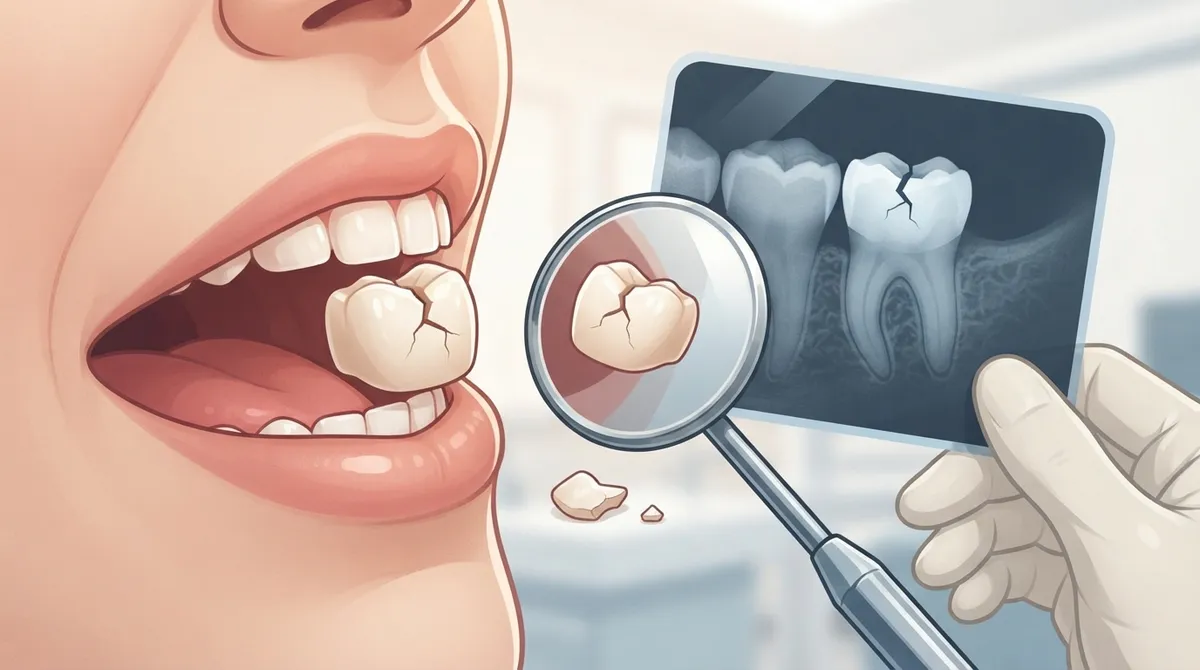
You bite into an apple, and suddenly something feels wrong. A sharp edge scrapes your tongue, or a piece of your tooth feels loose. If this sounds familiar, you may have a cracked dental crown. Don't panic. This happens more often than you think, and it's almost always fixable.
At Charming Smiles of Ocoee, we see patients with cracked crowns every week. Some rush in worried they'll lose their tooth. Others barely notice a chip until we spot it during a checkup. Either way, knowing what to do next can save you pain, time, and money. Let's walk through everything you need to know, from spotting the warning signs to getting it fixed with a smile.
What Exactly Is a Cracked Dental Crown?
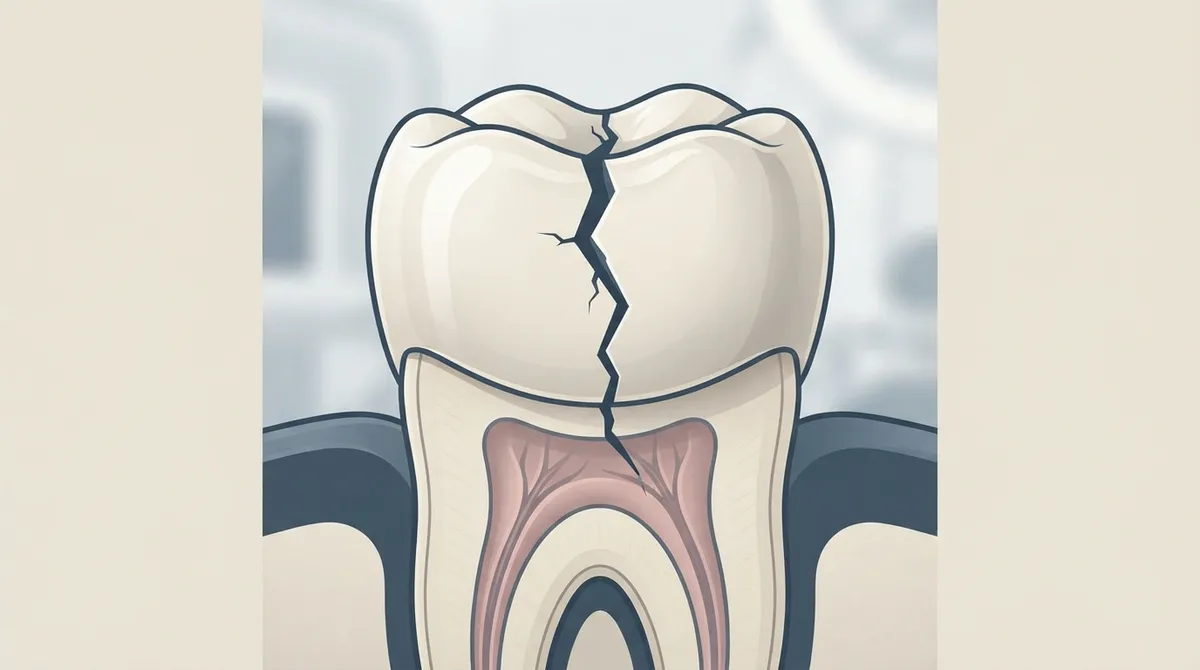
A dental crown is a cap that covers a damaged or weakened tooth. It's usually made from porcelain, zirconia, metal, or a mix of materials. When we say a crown is "cracked," we mean the crown itself has a fracture, chip, or break somewhere in its structure.
This can happen in different ways. Sometimes only the outer porcelain layer chips, while the inner structure stays strong. Other times, the crack runs deeper and affects the whole crown. In more serious cases, the natural tooth underneath the crown may also be damaged. That's why a quick check by your dentist matters so much.
Common Signs Your Crown May Be Cracked
Not every cracked crown hurts right away. Some problems show up quietly, while others announce themselves fast. Here's what to watch for:
- A rough or jagged edge you can feel with your tongue
- Pain when you bite down or release pressure
- Sudden sensitivity to hot, cold, or sweet foods
- Food constantly getting stuck near the crown
- A crown that feels loose or wiggly
- Your bite feels different than usual
- Visible chips or cracks you can see in the mirror
Here's something interesting: some cracks cause zero symptoms. You might feel completely fine, and we'll still catch the issue during your regular checkup. This is one more reason routine visits matter so much, even when your mouth feels perfectly healthy.
Why Do Dental Crowns Crack in the First Place?
Crowns are tough, but they aren't invincible. Understanding why cracks happen can help you protect your smile going forward.
Everyday Habits That Stress Your Crown
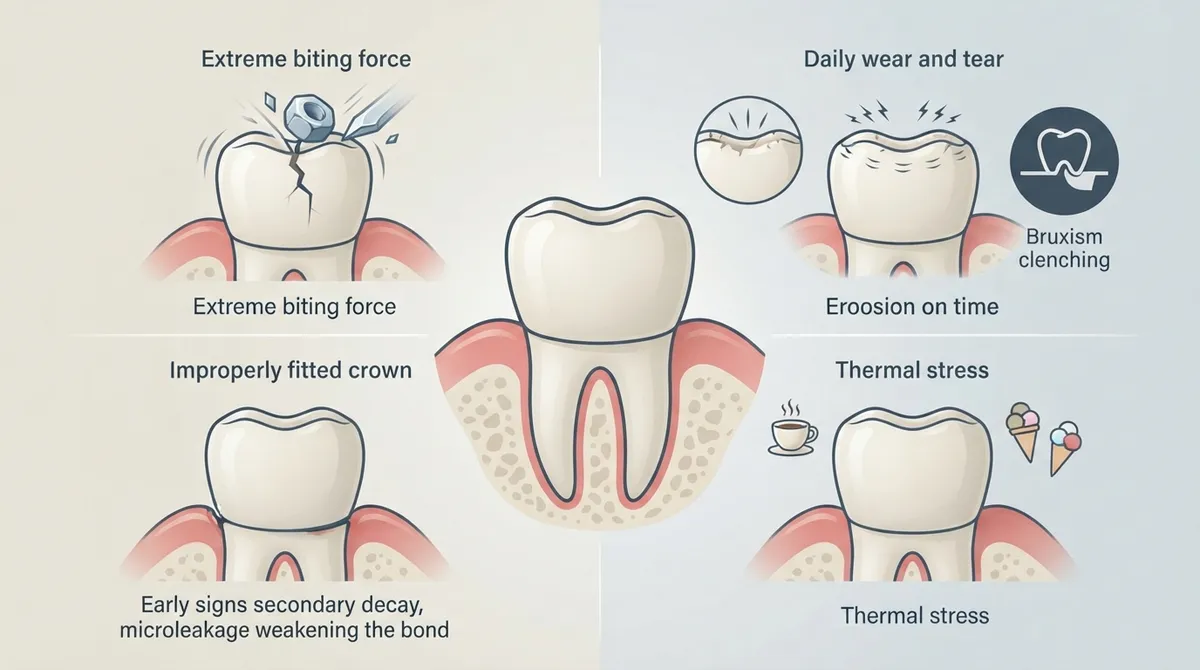
- Biting hard foods — Ice, hard candy, popcorn kernels, and nuts put serious pressure on crowns.
- Grinding or clenching your teeth — Many people grind at night without even knowing it.
- Chewing on objects — Pens, fingernails, or opening packages with your teeth can weaken a crown over time.
- Trauma or injury — A fall, sports accident, or car incident can crack a crown instantly.
- An uneven bite — If your teeth don't align well, certain spots take more pressure than they should.
- Decay under the crown — If the tooth beneath the crown develops new decay, it can weaken the whole structure.
- Normal wear over time — Just like anything else, crowns age and can become more fragile with years of use.
Interestingly, research backs this up. A systematic review found that ceramic fracture is one of the most common technical problems with crowns, while decay is the leading biological complication. Knowing your risk factors helps you take better care of your smile every day.
How Common Is Crown Failure? The Numbers May Surprise You
Good news first: crowns are built to last, and most do their job well for years. Studies show strong survival rates across different crown materials.
| Crown Material | 5-Year Survival Rate | Common Issue |
|---|---|---|
| Metal-ceramic crowns | 95.6% | Porcelain chipping |
| All-ceramic crowns | 93.3% | Ceramic fracture |
| Zirconia crowns (3-year) | 92.01% | Rare fractures |
| Implant-supported crowns | 91.2% to 95.4% | Veneer fracture (4.5% over 5 years) |
These numbers show that most crowns hold up beautifully for years. But no crown lasts forever, and individual results depend on things like your bite force, oral hygiene, and daily habits. That's why understanding the signs of trouble matters, no matter how strong your crown was on day one.
What Should You Do Right Away If Your Crown Cracks?
The moment you notice a problem, staying calm and acting smart makes all the difference. Here's your step-by-step game plan:
- Stop chewing on that side. Give the area a break to avoid making things worse.
- Save any broken pieces. Wrap them in a tissue or small container and bring them to your appointment.
- Avoid hard or sticky foods. Stick to softer options until you're seen.
- Don't poke or test the crown. Resist the urge to wiggle it with your tongue or fingers.
- Call your dentist promptly. Even if it doesn't hurt, get it checked soon.
- Rinse gently with warm salt water. This can soothe irritation from sharp edges.
- Use dental wax if needed. A small dab over a sharp edge can protect your cheek or tongue temporarily.
One thing you should never do? Reach for household glue. It's tempting to try a quick fix, but glue can be toxic and won't create a safe seal. Temporary dental cement from a pharmacy might help in a pinch, but it's not a substitute for professional care. Think of it as a band-aid, not a solution.
When It's a True Dental Emergency
Most cracked crowns are not emergencies, but some situations need urgent attention. Call for help right away if you notice:
- Severe or constant pain that won't ease up
- Swelling in your face or gums
- Fever along with tooth pain
- Pus or a bad taste near the crown
- Trouble swallowing or breathing
- Heavy bleeding
- Major trauma from an accident or fall
If any of these apply to you, don't wait. Our emergency dentistry team is ready to help you feel better fast.
How Dentists Diagnose and Fix a Cracked Crown
When you visit us for a cracked crown, we don't just glance and guess. We take a thorough, careful approach to make sure we treat the real problem, not just the symptom.
What Happens During Your Visit
First, we examine the crown closely, checking the crack's size, depth, and location. We also look at the margin where the crown meets your gum line, since bacteria can sneak in through gaps. Next, we check your bite to see if pressure from chewing may have caused the issue.
Dental X-rays often come next. A crack in the crown doesn't always mean the tooth underneath is damaged, but imaging helps us rule out deeper problems like decay, infection, or a fractured root. This step is key to picking the right treatment plan.
Treatment Options Based on Damage Level
| Type of Damage | Likely Treatment |
|---|---|
| Minor porcelain chip | Polishing or resin repair |
| Loose crown, healthy tooth | Recementing the crown |
| Severely cracked or ill-fitting crown | Full crown replacement |
| Damaged tooth structure | Filling, buildup, or root canal treatment |
| Gum involvement | Periodontal care |
| Tooth beyond repair | Extraction with replacement options like dental implants |
Every case is different, which is why Dr. Aliuska Lopez takes time to explain your options clearly. Our goal is always to save your natural tooth structure whenever possible while giving you a comfortable, lasting result.
How Much Does It Cost to Fix a Cracked Crown?
Costs vary based on what your crown needs. A simple polish or resin touch-up costs far less than a full crown replacement. If the tooth underneath needs a root canal or buildup, that adds to the total.
The good news is that Charming Smiles of Ocoee offers several ways to make treatment affordable. We accept many major insurance plans, including MetLife, Delta Dental, Cigna, and more. We also offer flexible insurance & financing options through CareCredit, Alphaeon Credit, and Cherry Financing, so cost never has to stand between you and a healthy smile.
If you don't have insurance, our dental savings plan can help lower your out-of-pocket costs throughout the year. And be sure to check our current specials, since we regularly offer savings on exams, consultations, and treatments.
Can You Prevent a Cracked Crown?
While no one can guarantee a crown will never crack, smart habits go a long way in protecting your investment. Here's what we recommend to our Ocoee patients:
- Brush twice daily with fluoride toothpaste
- Floss or clean between teeth every day
- Keep up with regular dental exams and cleanings
- Skip chewing ice, pens, or fingernails
- Wear a night guard if you grind your teeth
- Tell your dentist right away if your bite feels "off"
- Avoid using your teeth as tools to open packages
If you grind your teeth at night, a custom-fitted night guard can be a game-changer. Many patients don't realize they grind until we spot the wear patterns during an exam. Protecting your crown starts with protecting your whole mouth, and our general dentistry team is always here to help you build better habits.
Why Choose Charming Smiles of Ocoee for Crown Repair?
We know dental problems can feel stressful, especially when something as visible as your smile is involved. That's why our Ocoee practice focuses on more than just fixing teeth. We create a calm, spa-like space where you can relax during treatment.
Dr. Aliuska Lopez has built a reputation as a true "smile expert" who helps patients feel comfortable, even those with dental anxiety. Our office offers soothing music, cozy blankets, and gentle care from a team that genuinely enjoys helping people smile with confidence again.
Located conveniently near Publix in Ocoee, our practice makes it easy for busy families and individuals to fit dental care into their schedules. You can browse patient experiences and visit us on Google — Charming Smiles of Ocoee to see what our neighbors are saying. You can also follow along and see real smile transformations on our Charming Smiles Instagram page or connect with our community on our Charming Smiles Facebook page.
Don't Wait to Get Your Cracked Crown Checked
A cracked dental crown might seem small, but ignoring it can lead to bigger problems, like decay, infection, or a damaged tooth underneath. The sooner you get it checked, the easier and more affordable the fix usually is.
Whether you're dealing with a sudden crack from biting something hard or you just noticed a small chip during your morning coffee, our team is ready to help. According to the American Dental Association, timely evaluation of damaged restorations helps prevent more serious complications down the road.
Ready to get your smile back on track? You can easily book online at a time that works for you. Or if you'd rather speak with our friendly team directly, feel free to call us at (407) 378-3704. We're here to make your visit comfortable, quick, and stress-free, just like every appointment at Charming Smiles of Ocoee should be.
FAQs
Q: Can a cracked dental crown be repaired, or does it always need replacement?
A: It depends on how bad the crack is! Small chips can often be polished or repaired with resin, while a loose crown might just need recementing. But if the crack is severe or the crown doesn't fit right anymore, replacement is usually the best long-term fix.
Q: Is a cracked crown always a dental emergency?
A: Not always, but it's smart to get it checked soon either way. If you're dealing with severe pain, swelling, or bleeding, that's definitely urgent and you should call right away. Otherwise, scheduling a prompt appointment is usually just fine.
Q: What should I do if my crown falls out completely?
A: First, don't panic! Save the crown if you can find it, avoid chewing on that side, and call your dentist as soon as possible. Never try to glue it back in yourself since that can cause more harm than good.
Q: Will a cracked crown hurt my tooth underneath?
A: It's possible, which is why a dental check-up matters so much. Cracks can let bacteria sneak in, potentially leading to decay or infection in the tooth below. Catching it early usually means a simpler, less costly fix.
Q: How long do dental crowns typically last before needing repair?
A: Many crowns last well beyond five years, with studies showing survival rates above 90 percent for various materials. That said, your habits, like grinding or biting hard foods, can affect how long yours holds up beautifully.