What Are Your Best Cracked Tooth Repair Options in 2026?
Cracked tooth? Learn the causes, symptoms, and best repair options from Ocoee's trusted dental team at Charming Smiles.
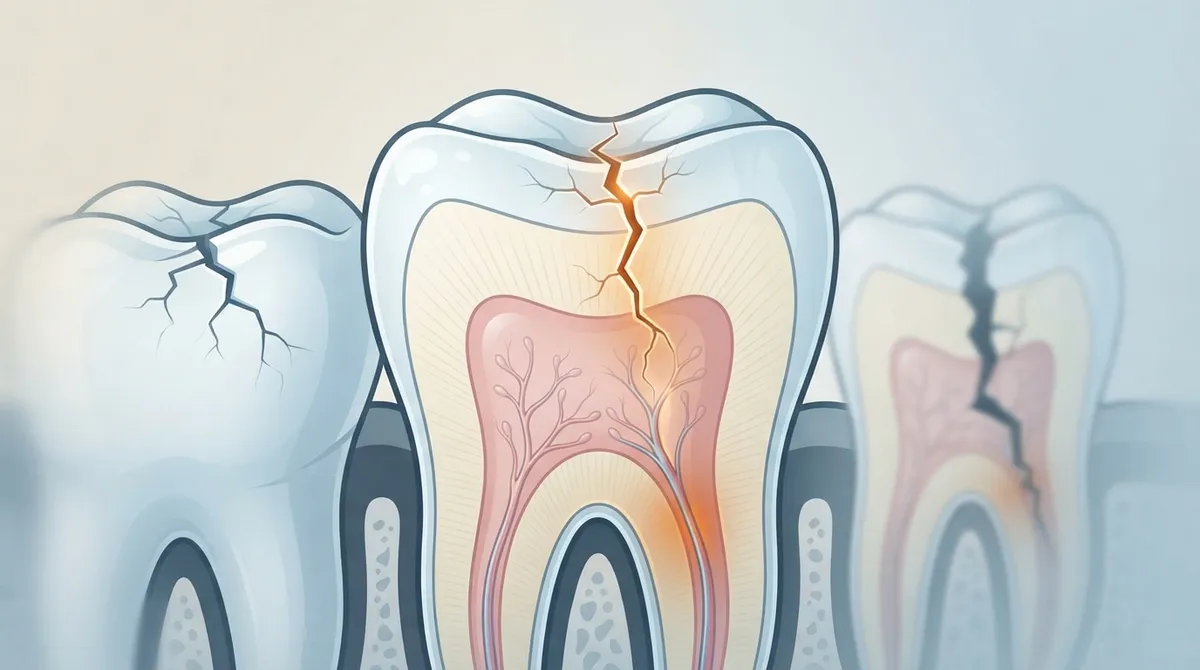
Key Takeaways
- Early treatment of cracked teeth is crucial because untreated cracks spread deeper with every bite, bacteria can infect the crack, and you may need a root canal instead of simpler fixes like bonding or crowns.
- Treatment options range from simple dental bonding for shallow cracks to root canals or extraction for severe cases; the right choice depends on crack depth and whether it reaches the nerve.
- Patients over 40 are most at risk for cracked teeth due to natural wear and tear; men account for 53.9% of cases, with molars in the lower jaw being the most common location.
- Common causes include biting hard foods like ice or candy, teeth grinding at night, large existing fillings, and sudden temperature changes; teeth with fillings are particularly vulnerable.
- Sharp pain when biting, sensitivity to hot/cold, swelling around the gum, and visible cracks are warning signs; immediate dental evaluation prevents the crack from worsening and increases treatment success rates.
- Avoid chewing on ice, hard candy, and popcorn; wear a nightguard if you grind your teeth at night; use a mouthguard during sports to prevent future cracks and protect your repair investment.
You bite into an ice cube or a piece of hard candy, and suddenly you feel it. A weird zing of pain, then it's gone. Then it happens again. If you've felt this, you might be dealing with a cracked tooth, and we know that can feel scary. The good news? Most cracked teeth can be fixed, and the sooner you get help, the more options you have. At Charming Smiles of Ocoee, we see this a lot, and we're here to help you understand exactly what's going on and what comes next.
Cracked tooth repair is one of the most common reasons people visit our office near Publix in Ocoee. Whether you're a busy parent, a senior enjoying retirement, or someone who just wants their smile back to normal, this guide will walk you through everything you need to know. Let's dig in together.
What Exactly Is a Cracked Tooth?
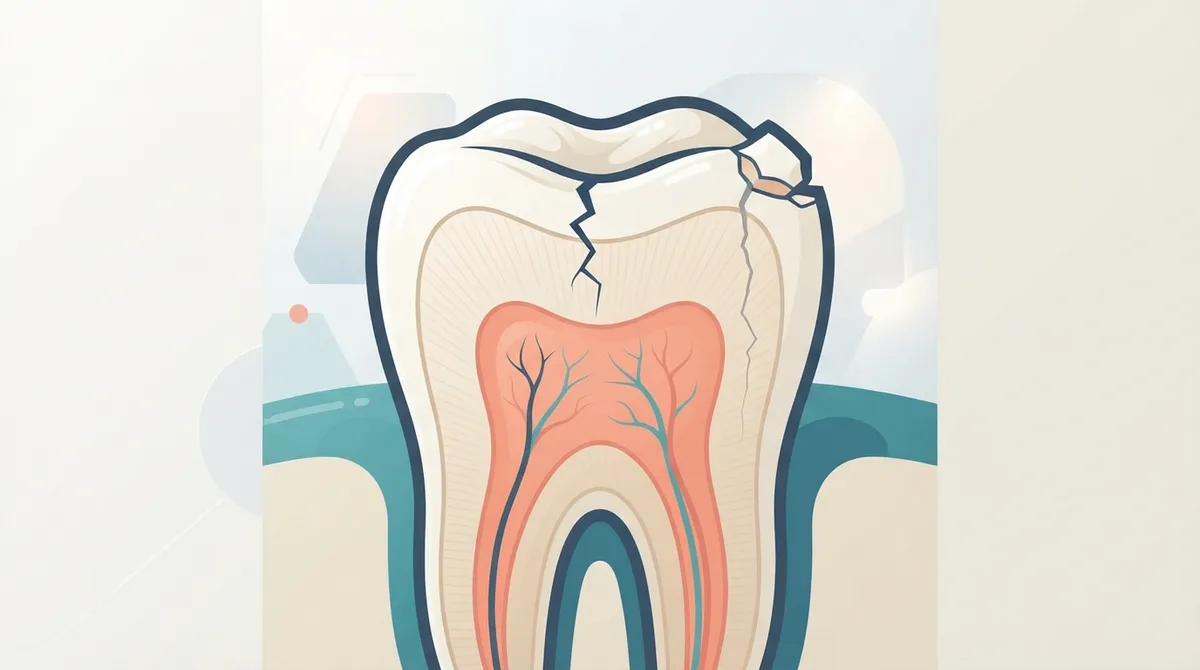
A cracked tooth happens when a small fracture line forms in the hard outer layer of your tooth. Sometimes it's tiny and barely noticeable. Other times it runs deeper and can even reach the nerve inside. Teeth crack for lots of reasons, and it's more common than most people think.
According to the Cleveland Clinic, cracked teeth are often linked to biting down on hard foods, grinding your teeth at night, or even just normal wear over the years. Molars in the back of your lower jaw are the most common spot for these cracks to show up, especially in teeth that already have fillings or crowns.
Common Signs of a Cracked Tooth
Here are the symptoms our patients usually describe when they come to us with a possible cracked tooth:
- Sharp pain when biting down, followed by quick relief
- Sensitivity to hot or cold foods and drinks
- Pain that comes and goes rather than staying constant
- Swelling around the gum near the affected tooth
- Discomfort when chewing on one particular side
- A visible line or crack you can see or feel with your tongue
If any of this sounds familiar, don't wait it out. A crack that seems small today can grow bigger over time, especially if you keep chewing on it.
Why Do Teeth Crack in the First Place?
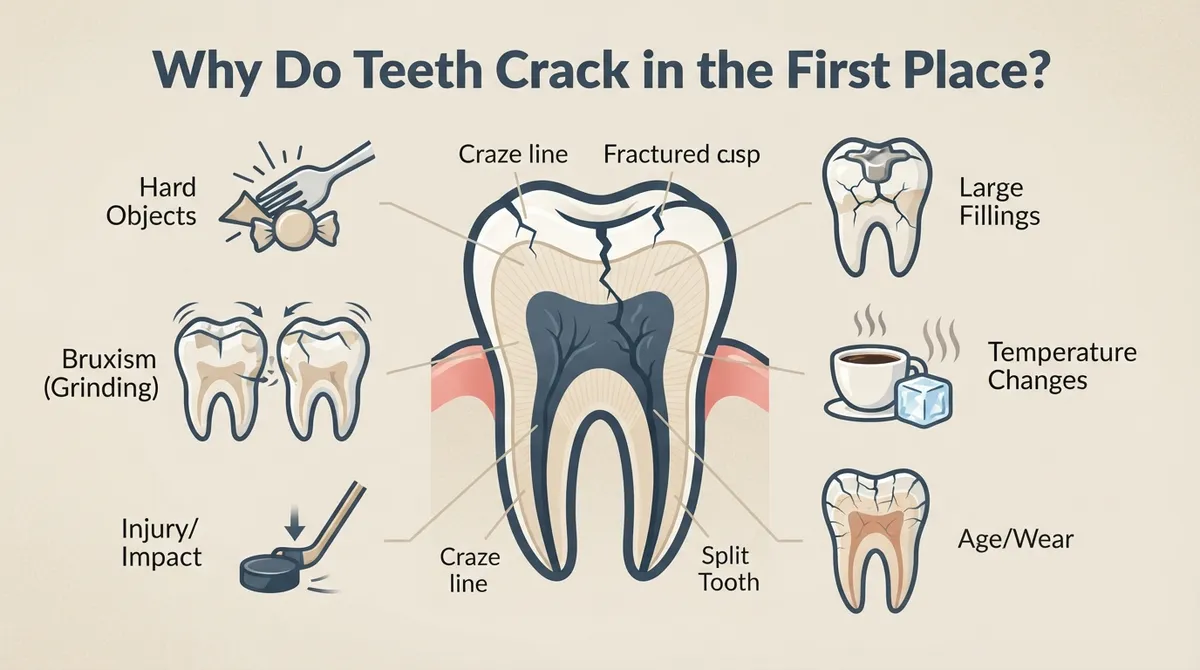
Cracks don't just appear out of nowhere. There's usually a cause behind them. Understanding the "why" can help you protect your other teeth going forward.
- Biting hard objects: Ice, popcorn kernels, and hard candy are common culprits.
- Teeth grinding (bruxism): Grinding puts constant pressure on your teeth, especially at night.
- Large fillings: Teeth with big fillings are weaker and more likely to crack.
- Age-related wear: Teeth naturally become more brittle as we get older.
- Sudden temperature changes: Eating hot food followed by an ice-cold drink can stress your enamel.
- Trauma or injury: A fall, sports accident, or even a hard bump can crack a tooth instantly.
Research published by the Canadian Dental Association shows cracked teeth are strongly linked to teeth that already have fillings. This is a good reminder that regular checkups matter, since we can catch small cracks before they turn into bigger problems. Our general dentistry visits are a great time to catch these issues early.
Who Gets Cracked Teeth Most Often?
You might think cracked teeth mainly happen to younger, active people, but the data tells a different story. A published case review found some interesting patterns worth knowing about.
| Age Group | Percentage of Cases |
|---|---|
| Patients in their 40s | 31.2% |
| Patients in their 50s | 26.6% |
| Men (overall) | 53.9% |
| Women (overall) | 46.1% |
So if you're over 40, you're actually in the group most likely to deal with a cracked tooth. This makes sense since teeth naturally wear down over time, and years of chewing add up. This is one reason our dental care for seniors program focuses so much on protecting existing teeth.
How We Diagnose a Cracked Tooth
Finding a crack isn't always as simple as looking in the mirror. Cracks can be tiny, hidden under old fillings, or only visible with special tools. Here's what a visit to Charming Smiles of Ocoee usually looks like when we're checking for a crack.
- We start by asking about your symptoms, like when the pain happens and what triggers it.
- We do a visual exam using bright lighting and magnification.
- We may use a special dye that highlights cracks not visible to the naked eye.
- We test your bite using a small tool that has you bite down on different areas of the tooth.
- We take digital X-rays to check the depth of the crack and see if it reaches the nerve.
- We check for gum health around the tooth, since deep pockets can affect treatment options.
This step-by-step process helps us figure out exactly how deep the crack goes, which is the biggest factor in deciding your treatment. You can learn more about what to expect during our dental exams before your visit.
Cracked Tooth Repair Options: What Are Your Choices?
The right fix depends on how deep the crack goes and whether it has reached the soft inner part of your tooth, called the pulp. Let's break down the main treatment paths.
1. Dental Bonding
For small, shallow cracks that haven't hurt the nerve, bonding is often enough. We apply a tooth-colored resin over the crack, shape it, and harden it with a special light. It's quick, painless, and looks completely natural.
2. Contouring and Polishing
Sometimes a tiny surface crack just needs smoothing out. This prevents the crack from catching food or getting worse, without needing a big procedure.
3. Veneers
If the crack is on a front tooth and affects how your smile looks, veneers can cover the crack completely while giving you a bright, even smile.
4. Dental Crowns
For cracks that go deeper but haven't reached the nerve, a crown is often the best choice. A crown wraps around the entire tooth like a protective cap, stopping the crack from spreading. Recent reviews actually favor crowns that cover the whole biting surface, especially for back teeth doing heavy chewing work. Learn more about our crowns & bridges options.
5. Root Canal Therapy
When a crack reaches the pulp, the nerve inside your tooth becomes irritated or infected. A root canal removes the damaged tissue, cleans out the area, and seals it up. This is usually followed by a crown to protect the tooth long-term.
6. Tooth Extraction
Sometimes a crack runs so deep, often splitting the tooth root, that saving it just isn't possible. In these cases, extraction is the safest choice, followed by options like a dental implant or bridge to fill the gap.
Comparing Your Treatment Options
| Treatment | Best For | Typical Recovery |
|---|---|---|
| Bonding | Shallow cracks, no nerve damage | Same day |
| Veneers | Front teeth, cosmetic concerns | 1-2 visits |
| Crown | Moderate to deep cracks | 1-2 visits |
| Root Canal + Crown | Cracks reaching the nerve | 1-2 visits, healing over weeks |
| Extraction + Implant | Severe splits, non-restorable teeth | Several months for full healing |
Why Getting Treated Quickly Matters
Waiting can turn a small problem into a much bigger one. Here's why timing really matters with cracked tooth repair.
- Cracks can spread deeper with every bite, especially on hard foods.
- Bacteria can sneak into the crack, leading to infection.
- Untreated cracks often lead to nerve damage, meaning you'll need a root canal instead of a simple filling.
- Deep infections can spread to the jawbone if left alone too long.
- Early treatment is almost always less expensive than waiting for the problem to worsen.
Research shows that teeth treated with root canal therapy after cracking have a 90% survival rate after two years. That's a pretty strong success rate, especially when caught early. However, the same research found that survival drops to 74.1% when gum pockets around the tooth are deeper than 6mm, compared to 96.8% when pockets stay shallow. This shows just how much gum health plays into the outcome, something we always check during treatment.
What About Temporary Fixes While You Wait for Your Appointment?
If you're in pain right now and can't get in immediately, here are a few things that can help in the meantime:
- Rinse gently with warm salt water to reduce bacteria
- Take over-the-counter pain relief as directed on the package
- Avoid chewing on the affected side
- Stick to soft foods and lukewarm drinks
- Avoid very hot or very cold foods that trigger sharp pain
These steps won't fix the crack, but they can make you more comfortable until we can see you. If your pain is severe or you notice swelling, please don't wait. Our emergency dentistry team is ready to help right away.
Does Insurance Cover Cracked Tooth Repair?
Many patients ask us this, and the honest answer is: it depends on your plan and the treatment needed. Most insurance plans cover a portion of crowns, fillings, and root canals since these are considered medically necessary. Cosmetic options like veneers are less likely to be covered.
We work with many major insurance providers, including MetLife, Delta Dental, Cigna, Aetna, and more. If you're unsure what your plan covers, our team is happy to check your benefits for you. We also offer insurance & financing options and flexible payment plans for patients without insurance, so cost never has to stand between you and a healthy smile. Be sure to check our current specials, which often include savings on exams and emergency visits.
Preventing Future Cracks
Once you've gone through cracked tooth repair, you'll want to protect your investment. Here are simple habits that go a long way.
- Avoid chewing on ice, hard candy, and popcorn kernels.
- Wear a nightguard if you grind your teeth while sleeping.
- Don't use your teeth to open packages or bottles.
- Keep up with regular checkups so small issues get caught early.
- Wear a mouthguard during sports or physical activities.
These small changes can save you a lot of discomfort and money down the road. Our team is always happy to talk through personalized tips during your next visit.
Why Choose Charming Smiles of Ocoee for Cracked Tooth Repair
Led by Dr. Aliuska Lopez, our team combines gentle, modern care with a relaxing, spa-like environment. We know dental visits can feel stressful, especially when you're already in pain. That's why we focus on making every step comfortable, from the moment you walk in to the moment your tooth is fully repaired.
We proudly serve families, seniors, and anyone in Ocoee looking for reliable, compassionate dental care. Curious what our patients say? Feel free to visit us on Google — Charming Smiles of Ocoee to read real reviews from real patients. You can also check out our Charming Smiles Facebook page and Charming Smiles Instagram page for smile transformations and helpful tips.
Your Next Step Toward a Pain-Free Smile
A cracked tooth doesn't have to turn into a bigger problem. The sooner you get it checked, the more treatment options you'll have, and the better your tooth's chances of healing well. Whether it's a small chip or something more serious, our friendly team is ready to help you feel comfortable again.
Don't wait until the pain gets worse. Reach out today and call us at (407) 378-3704 to book your visit, or stop by our location near Publix in Ocoee. You can also book online at a time that works best for you. Your smile deserves gentle, expert care, and we're honored to be your trusted choice for cracked tooth repair in Ocoee.
FAQs
Q: Can a cracked tooth heal on its own?
A: Unfortunately, no. Unlike a broken bone, tooth enamel can't repair itself once it's cracked. The good news is that early treatment, like bonding or a crown, can stop the crack from getting worse and keep your tooth healthy for years to come.
Q: How do I know if my cracked tooth needs a root canal?
A: If the crack has reached the nerve inside your tooth, you'll likely feel constant pain, extra sensitivity to hot and cold, or even swelling. A quick exam and X-ray at our office can tell us exactly how deep the crack goes and whether a root canal is needed.
Q: Is cracked tooth repair covered by dental insurance?
A: Many plans cover treatments like crowns, fillings, and root canals since they're considered medically necessary. We accept major insurance providers and are happy to check your benefits, plus we offer flexible payment plans if you need extra support.
Q: How long does a cracked tooth repair typically last?
A: It really depends on the treatment. Bonding can last several years with good care, while crowns often last a decade or more. Following good oral hygiene and avoiding hard foods helps your repair last as long as possible.
Q: What happens if I ignore a cracked tooth?
A: Ignoring a crack usually makes things worse over time. The crack can deepen, bacteria can sneak in and cause infection, and you might end up needing a root canal or even extraction instead of a simple, quick fix. It's always better to get it checked sooner rather than later.