Is a Dental Implant Better Than a Bridge for You?
Wondering if a dental implant is better than a bridge? Compare costs, lasting power, risks, and who fits each option in this friendly guide.
Key Takeaways
- The best choice between an implant and a bridge depends on your neighboring teeth, jawbone, gum health, budget, and timeline, so neither option wins for everyone.
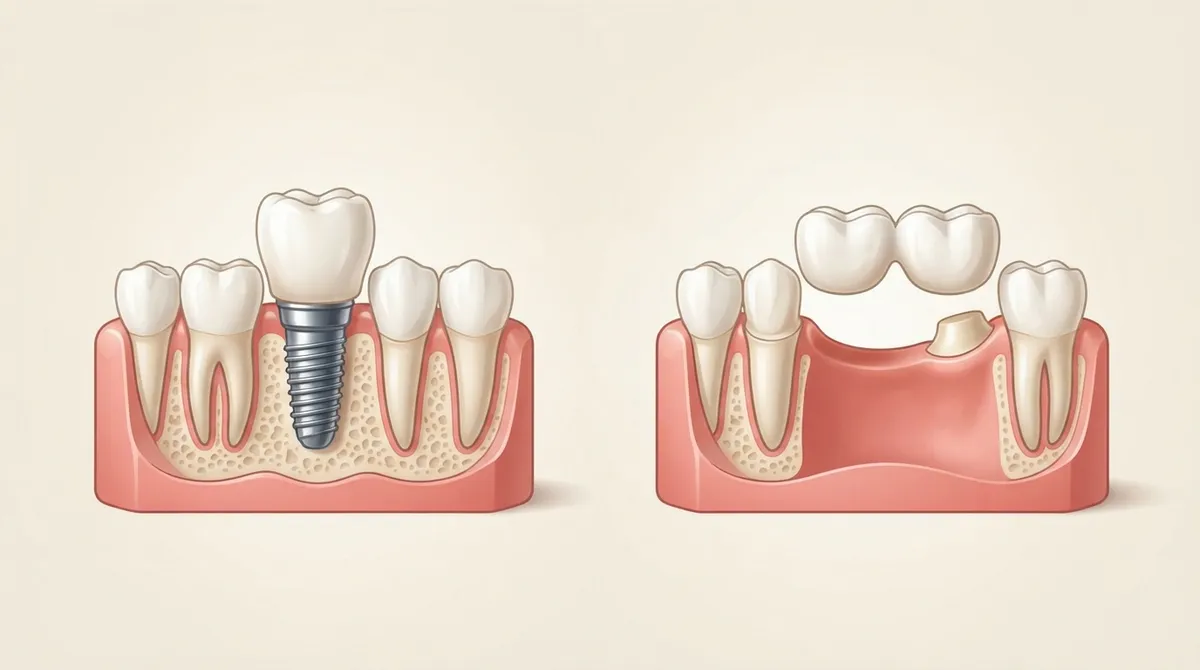
- A single implant generally does not require reshaping healthy neighboring teeth, while a traditional bridge requires filing down the teeth on both sides to hold the crowns.
- A bridge is often faster and avoids surgery, making it a good fit if neighboring teeth already need crowns or you want to skip an implant procedure.
- Implants require surgery and months of healing as the bone bonds to the post, but they stand on their own and can be brushed and flossed like natural teeth.
- Preparing teeth for a traditional bridge carries a 5% to 19% risk that a supporting tooth later needs a root canal or removal, according to one hospital's guidance.
- Both options can last many years with good care, so daily brushing, flossing (with floss threaders or a water flosser for bridges), and regular checkups matter most.
Losing a tooth can feel like a big deal. Maybe it happened during a game with the kids, or maybe it crept up slowly over the years. Either way, you now face a very common question: is a dental implant better than a bridge? Good news. You are not alone, and there is a clear way to sort it out.
Here is the honest answer. Neither option wins for every person. The best choice depends on your neighboring teeth, your jawbone, your gums, your health, your budget, and your timeline. In this guide, we break it all down in plain, friendly language so you can feel confident about your next step.
Whether you are a busy parent in Ocoee, a senior who wants a lasting fix, or someone who gets nervous in the dental chair, you will find helpful answers below. Dr. Aliuska Lopez and the team at Charming Smiles of Ocoee see this question every week, and we love helping patients find the right fit.
The Short Answer: It Depends on Your Mouth
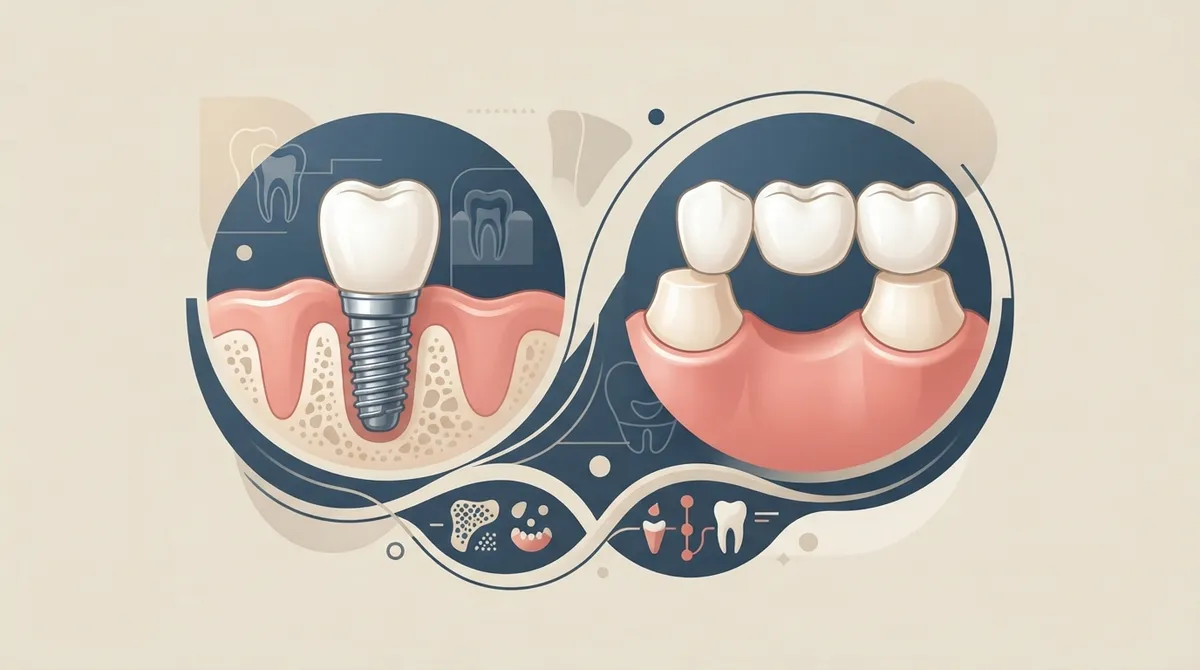
So, is a dental implant better than a bridge? Many people think of implants as the "gold standard," and for good reason. An implant replaces the tooth root and the crown. A bridge replaces only the visible part by leaning on nearby teeth.
But "better" is personal. A bridge can be the smarter pick when your neighboring teeth already need crowns, when surgery is not a good idea for you, or when you want a faster fix. An implant can be the smarter pick when your neighboring teeth are healthy and you want to leave them alone.
The right answer comes from a real exam, X-rays, and an honest chat with your dentist. Think of this article as your friendly head start.
What Is a Dental Implant?
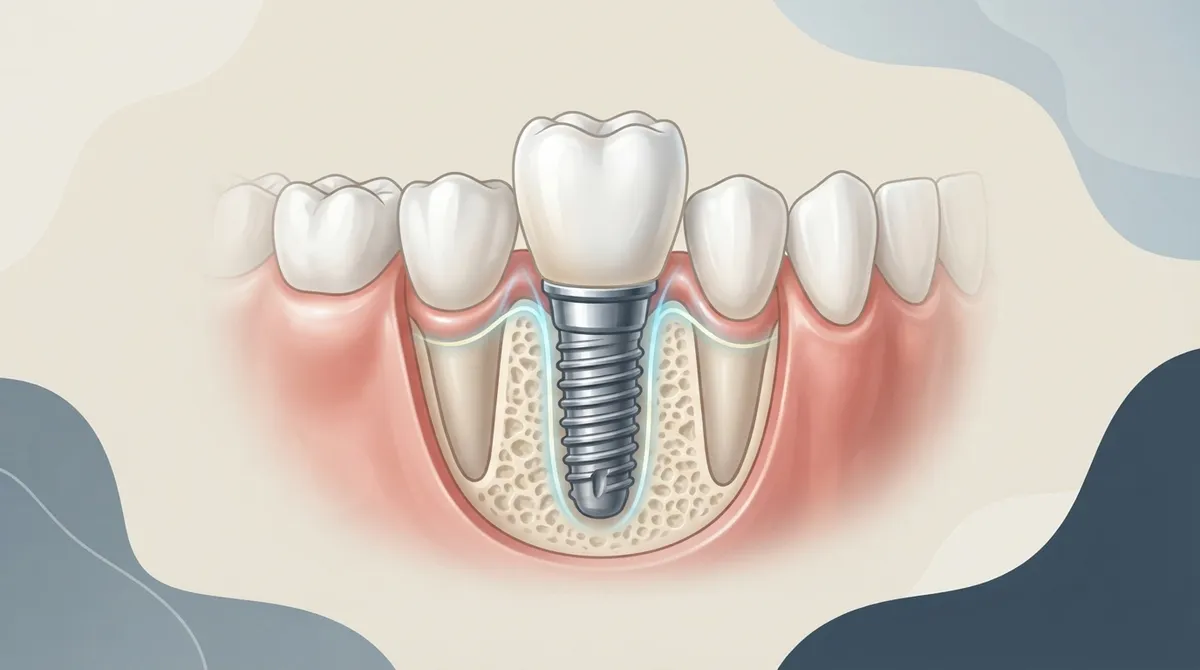
A dental implant is a small post, usually made of titanium, that is placed in your jawbone. Over time, the bone grows around it and holds it in place. A custom crown is then attached on top. The result looks and feels like a natural tooth.
The big perk is that an implant stands on its own. It does not need the teeth beside it for support. You can learn more about our dental implants and how the process works.
What the Implant Process Looks Like
- Exam and planning: Your dentist checks your gums, bone, and overall health with X-rays and a careful review.
- Implant placement: The post is placed in the jawbone during a short surgical visit.
- Healing: The bone bonds with the implant. This healing phase takes time, often a few months.
- Crown placement: Your custom crown is attached, and your smile is complete.
Some patients need a bone graft first if the jawbone is thin. That can add time to the process.
What Is a Dental Bridge?
A dental bridge fills the gap using an artificial tooth held in place by crowns on the teeth on each side. Those neighboring teeth are called abutment teeth. A traditional bridge means those teeth must be reshaped so the crowns can fit over them.
Bridges are a well-known way to restore chewing and smiling without surgery. If you want to understand them better, check out our page on crowns and bridges. We also share a helpful local guide on getting a dental bridge in Ocoee.
There is also a type called a resin-bonded bridge. It may need little or no reshaping of nearby teeth, but it can come loose over time. Your dentist can tell you if it makes sense for your case.
Dental Implant vs. Bridge: Side-by-Side Comparison
A quick table can make the big picture easier to see. Keep in mind that these are general points. Your own mouth may be different.
| Factor | Dental Implant | Dental Bridge |
|---|---|---|
| Neighboring teeth | Generally left untouched | Traditional bridge needs nearby teeth reshaped |
| Surgery | Yes, with a healing period | No implant surgery |
| Treatment time | Longer, often several months | Often faster |
| Jawbone support | Works with the bone beneath the tooth | Does not replace the missing root |
| Cleaning | Brush and floss like a natural tooth | Needs special tools to clean under the fake tooth |
| Possible problems | Infection, gum inflammation, bone loss, failure to bond | Loosening, fracture, decay or nerve problems in supporting teeth |
| Upfront cost | Often higher, varies widely | Often lower, varies widely |
Costs depend on materials, complexity, insurance, and whether extra work like bone grafting is needed. Exact numbers vary, so a personal quote is the best way to know. You can also read about dental implant costs in Ocoee for more local details.
The Pros and Cons of a Dental Implant
Why Many Patients Love Implants
- Neighbor-friendly: A single implant generally does not require reshaping the healthy teeth on either side.
- Natural feel: The crown sits on a post anchored in bone, so it can feel very much like your own tooth.
- Easy daily care: You brush and floss it much like a regular tooth.
- Stands alone: It does not rely on nearby teeth for support.
Things to Think About
- Surgery is involved: Some people feel nervous about this, and that is okay.
- Healing takes time: The full process can take months.
- Not right for every mouth: Gum disease, thin bone, smoking, and some health conditions can affect results.
- Possible risks: These include infection, nerve or sinus issues, and later gum inflammation or bone loss around the implant.
The Pros and Cons of a Dental Bridge
Why a Bridge Can Be a Great Choice
- No implant surgery: This can be a relief if surgery is not a good fit for you.
- Often quicker: You may get your final result sooner.
- A practical fit: If the neighboring teeth already need crowns, a bridge can solve two problems at once.
Things to Think About
- Healthy teeth get reshaped: A traditional bridge means preparing the teeth on both sides.
- Risk to supporting teeth: Patient guidance from one major hospital notes that preparing a tooth for a bridge carries a 5% to 19% risk that the tooth later needs a root canal or removal. That number is specific to its clinical context, but it shows why a careful exam matters.
- Harder to clean: Food and plaque can hide under the fake tooth if you skip special cleaning tools.
- Possible issues later: Bridges can loosen, fracture, or develop decay in the supporting teeth.
If a tooth needs saving first, you may also want to read about a root canal, since treatment of nearby teeth can affect your plan.
How Long Do Implants and Bridges Last?
This is one of the most common questions, and it deserves a careful answer. Studies measure "survival" and "success" in different ways. Survival may mean the restoration is still working. Success may require that there are no complications at all. That is why numbers from different studies are not always a fair side-by-side comparison.
Here is some of what the research reports:
- A 2008 meta-analysis reported a five-year survival rate of 94.5% for implant-supported single crowns and 96.8% for the implants themselves. It also found soft-tissue complications next to 9.7% of crowns and bone loss over 2 mm around 6.3% of implants during the study period.
- A Cambridge University Hospitals patient page reports implant success of 80% to 95% over 15 years for patients with healthy mouths, and 80% to 85% over seven years for patients with gum disease.
- A 2023 review of implants connected to natural teeth reported survival of 77% to 84% at five years and 72% at ten years. That study looked at a special setup, so it is not a direct match for a single implant versus a standard bridge.
The takeaway? Both options can last many years with good care. Both also need ongoing checkups, and the crown or bridge parts may need repair or replacement over time. Staying on top of your cleanings is one of the best ways to protect either choice. Our post on dental care for bridges has easy tips you can start using today.
Who Is a Good Candidate for Each Option?
An Implant May Be a Good Fit If You:
- Have healthy neighboring teeth you want to protect
- Have enough healthy jawbone, or are open to a bone graft
- Have healthy gums, or are willing to treat gum issues first
- Are comfortable with a longer treatment timeline
A Bridge May Be a Good Fit If You:
- Have neighboring teeth that already need crowns or large repairs
- Prefer to avoid implant surgery
- Want a faster path to a finished smile
- Have health conditions that make surgery less suitable
What Different Patients Often Ask Us
Every person who sits in our chair has different goals, and that is exactly why we never give one-size-fits-all advice.
- Busy families: If your schedule is packed, a bridge may feel easier to fit in. An implant can still work well if you plan visits in advance.
- Seniors: Many older adults want a stable, long-term fix. An implant can be a great option when the bone and gums are healthy. A bridge may suit those who prefer to skip surgery.
- Cosmetic enthusiasts: Both options can look natural. Your dentist will match shade and shape to your smile. Our cosmetic dentistry team loves helping with that.
- Anxious patients: If the idea of surgery makes your palms sweat, you are not alone. Share your fears with us. Our spa-like office, soothing music, blankets, and aromatherapy are all designed to help you relax.
What About Emergencies or Sudden Tooth Loss?
Sometimes a tooth breaks or gets knocked out without warning. If that happens, do not wait. Prompt care gives you more choices later. Learn what to do in our guide on emergency dentistry, and read what to do when you need emergency dental care in Ocoee.
After the emergency is under control, we can talk about replacing the tooth with an implant, a bridge, or another option that fits your needs.
Cost, Insurance, and Payment Options
Cost matters, and we get that. There is no single price that fits every case. Fees vary based on location, materials, complexity, insurance, and whether you need extra steps like grafting.
The good news is that Charming Smiles of Ocoee works to make care manageable. Take a look at our insurance and financing options, our payment plans, and our dental savings plan. We also post current specials, including a free dental implant consultation, so you can learn your options without pressure.
Questions to Ask Your Dentist
Before you decide, bring a short list of questions to your visit. Here are a few good ones:
- Are my neighboring teeth healthy enough to leave alone?
- Do I have enough bone and healthy gums for an implant?
- What is the full timeline for each option?
- What will it cost, and what will insurance cover?
- How will I clean and care for the replacement tooth?
- What problems could come up, and how would you handle them?
A good dentist will explain your alternatives, walk you through likely upkeep, and build a plan around you. That is exactly how we approach every consult. You can also read about dental implant mistakes to avoid and our comparison of dental implants vs. bridges in Ocoee for even more detail.
How to Take Care of Your New Tooth
No matter which option you choose, daily habits make a big difference. Here are simple steps that help both implants and bridges last:
- Brush twice a day with a soft brush and fluoride toothpaste.
- Clean under a bridge with floss threaders or a water flosser.
- Floss around implants and nearby teeth every day.
- Skip smoking, which can hurt healing and long-term results.
- Keep up with regular checkups and professional cleanings.
Staying consistent protects your investment and your smile. Simple habits add up to big results.
Ready to Find Out Which Option Fits You?
So, is a dental implant better than a bridge? For some people, yes. For others, a bridge is the wiser pick. The only way to know for sure is to have your mouth checked and your questions answered by a caring professional.
At Charming Smiles of Ocoee, Dr. Aliuska Lopez and our team take the time to listen, explain, and build a plan that feels right for you. We would love to meet you. You can book online or call us at (407) 378-3704 to schedule your visit. Prefer to find us first? Stop by our location near Publix in Ocoee, and see what other patients say when you visit our Charming Smiles of Ocoee page on Google. You can also follow us on the Charming Smiles Facebook page and the Charming Smiles Instagram page for smile stories and tips.
Your smile deserves a thoughtful, personal plan. Let us help you take the first step with confidence.
FAQs
Q: Is a dental implant better than a bridge for one missing tooth?
A: It can be, especially if your neighboring teeth are healthy, because a single implant generally does not require reshaping them. But a bridge can be the better fit if those teeth already need crowns or if you prefer to skip surgery. A quick exam helps us point you in the right direction.
Q: Does a dental bridge damage the teeth next to a missing tooth?
A: A traditional bridge needs the neighboring teeth to be reshaped so crowns can fit over them. That can weaken otherwise healthy teeth, and some may later need a root canal. A resin-bonded bridge may need little or no reshaping, but it can come loose over time.
Q: Can I get a dental implant if I have gum disease or bone loss?
A: Often, yes, but we usually treat the gum disease first, and some patients need a bone graft to build up the jaw. Smoking and poor cleaning habits can also affect results. We will check your gums and bone and walk you through your options with care.
Q: How long does it take to get an implant compared with a bridge?
A: A bridge is often faster because there is no implant surgery or long bone-healing period. An implant usually takes several months, since the bone needs time to bond with the post. Your own timeline depends on your health and whether you need extra steps like grafting.
Q: How do I clean and care for an implant or a bridge?
A: Brush twice a day and floss daily for both. With a bridge, use floss threaders or a water flosser to clean underneath the fake tooth. Regular checkups and cleanings help either option last, and we are always happy to show you the best tools for your smile.