How to Make Your Porcelain Crown Last Longer
Most porcelain crowns last 5 to 15 years, and many last longer. Learn what affects lifespan and how to protect your crown.
Key Takeaways
- Most dental crowns last 5 to 15 years with proper care, and many last 30 years or more, but there is no fixed expiration date; your dentist judges condition at checkups.
- Studies show about 90% 10-year survival for porcelain-fused-to-metal crowns versus roughly 75-80% for all-ceramic crowns, so crown type matters when choosing a material.
- Brush twice daily with fluoride toothpaste, focus on the crown-gum line, and floss daily by sliding floss out to the side to prevent plaque buildup at the crown edge.
- A crown cannot get a cavity, but the tooth underneath can, often through decay at the crown's edge, so six-monthly checkups help catch problems early.
- Grinding and clenching can chip or loosen crowns; a custom night guard protects them, and a mouthguard is advised for sports.
- Avoid chewing ice, hard candy, and sticky caramel, and never use your teeth to open packages; call your dentist promptly for a loose crown, a chip, or pain when biting.
You finally got your new porcelain crown, and it looks fantastic. Now a very fair question pops up: how long does a porcelain crown last? It is the one thing almost every patient asks us, and we love it, because it means you care about protecting your smile.
Here is the friendly short answer. Most dental crowns last about 5 to 15 years, and many go well beyond that. Some even reach 30 years or more with good care. But there is no magic expiration date. Your crown's lifespan depends on the material, the fit, your gums, your bite, and your daily habits.
The good news is that you have real control over many of those things. In this guide, we will walk you through what affects a crown's lifespan, simple steps to protect it, warning signs to watch for, and when to call your dentist. Whether you are a busy parent, a senior, or someone who gets nervous at the dentist, you will find easy, practical tips here.
How Long Does a Porcelain Crown Last on Average?
According to the Cleveland Clinic, dental crowns generally last 5 to 15 years with proper care, and some can last 30 years or longer. That is a wide range, and it is wide for a good reason. No two mouths are alike.
Research backs up how well crowns can perform. In a retrospective study of 997 porcelain-fused-to-metal (PFM) single crowns, estimated survival at 10 years was 92.3% for front teeth and 95.9% for back teeth. At 5 years, those numbers were 96.4% and 97.5%. Here, "survival" meant the crown had not needed replacement yet.
Keep in mind that these results come from one study group. They are encouraging, but they are not a promise for any single crown. A crown does not automatically need to be replaced just because it reaches a certain age. Your dentist checks its condition and the tooth underneath it.
Not All Porcelain Crowns Are the Same
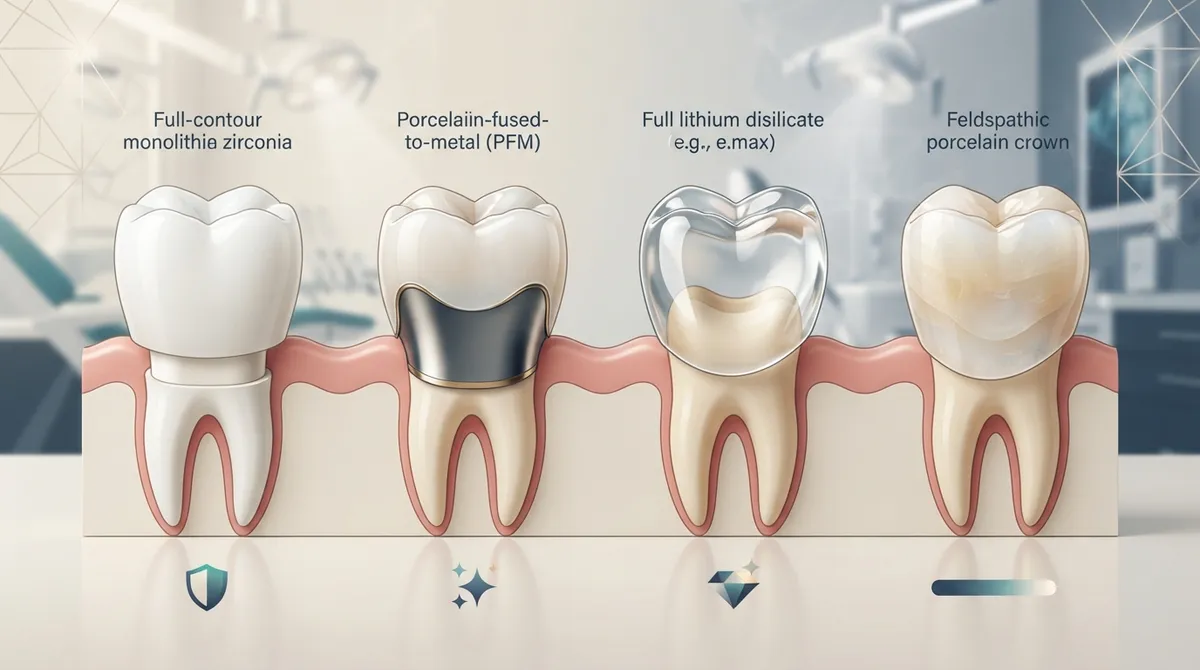
When people say "porcelain crown," they can mean a few different things. The type you have changes how long you can expect it to last, so it helps to know which one is in your mouth.
| Crown Type | What It Is | Good to Know |
|---|---|---|
| All-ceramic or porcelain jacket | Made fully from tooth-colored ceramic | Very natural look. Often chosen for visible teeth. |
| Porcelain-fused-to-metal (PFM) | A metal base covered with a porcelain layer | Strong. Metal can show if the porcelain chips. |
A 2015 literature review reported about 90% 10-year survival for PFM crowns and roughly 75 to 80% for all-ceramic crowns. Estimates vary by study, crown type, and how "success" is defined. Newer ceramic materials and designs keep improving, so your dentist is the best guide for your situation.
At our crowns and bridges service, we help you pick the material that fits your tooth, your bite, and your smile goals.
What Affects How Long Your Crown Lasts?
Think of a crown like a good pair of shoes. How long they last depends on how well they fit, what they are made of, and how you treat them. Here are the biggest factors:
- Crown material and design: Different materials handle chewing forces differently.
- Fit and quality of the work: A well-fitted crown seals the tooth better and resists decay at the edges.
- Tooth location: Back teeth take more chewing pressure than front teeth.
- Health of the tooth underneath: The crown is only as strong as the tooth it protects.
- Gum health: Gum disease can loosen the foundation around a crown.
- Daily habits: Grinding, clenching, and chewing hard objects add wear.
- Oral hygiene: Brushing and flossing keep decay away from crown edges.
The good news is that several of these are in your hands. Let us look at how.
How to Make Your Porcelain Crown Last Longer
You do not need a complicated routine. A few steady habits go a long way. Follow these steps to protect your investment:
- Brush twice a day. Use a soft toothbrush and fluoride toothpaste. Pay extra attention to the line where the crown meets your gum.
- Floss daily. Slide the floss gently to the side rather than snapping it up. This keeps plaque from building up at the crown's edge.
- Skip hard and sticky foods. Ice, hard candy, and tough caramel can chip porcelain or loosen a crown.
- Never use your teeth as tools. Do not open packages, bottles, or nuts with your teeth.
- Protect against grinding. If you clench or grind at night, ask about a custom night guard.
- Wear a mouthguard for sports. A good guard can prevent a sudden crack or chip.
- Keep up with checkups. Regular visits let your dentist spot small problems before they grow.
For a deeper look at everyday care, check out our guide on dental care for crowns in Ocoee.
Why Regular Checkups Matter So Much
Here is something many patients do not realize. A crown itself cannot get a cavity, but the tooth underneath it can. Decay can sneak in at the crown's edge, especially if plaque builds up there.
During a checkup, your dentist looks closely at the crown margins, the surrounding gums, and your bite. They can catch tiny gaps, early decay, or wear long before you feel any pain. Many problems are far easier and cheaper to fix when caught early.
Most people do well with a checkup and cleaning about every six months. Your dentist may suggest a different schedule based on your gum health and history. Our general dentistry team makes these visits relaxed and easy, with a spa-like feel that is great for anyone who gets nervous.
Warning Signs Your Crown May Need Attention
Your crown will usually tell you when something is off. Watch for these signs:
- A crown that feels loose or wiggles
- A chip, crack, or rough spot on the porcelain
- New or lingering sensitivity to hot, cold, or sweets
- Pain when you bite down
- A bite that suddenly feels too high or uneven
- A dark line near the gumline, or metal showing through
- Swollen, red, or bleeding gums around the crown
- A bad taste or odor near the tooth
Do not panic if you notice one of these. Many issues are fixable. Just do not wait. The sooner your dentist looks, the more likely you can save the tooth and the crown.
Can a Chipped Porcelain Crown Be Repaired?
Sometimes, yes. Small chips can often be smoothed or patched with a dental-grade bonding material. This can be a quick, simple fix for a minor flaw.
Larger cracks, deep chips, or a crown that has come loose usually need a closer look. In some cases, the crown needs to be replaced. If the underlying tooth is damaged or has decay, your dentist may need to treat that first.
If you have a damaged crown, learn more in our post on dental crown repair in Ocoee. And if you lose a crown or break one suddenly, avoid chewing on that side and call your dentist promptly.
What Do the Different Crown Problems Mean?
Here is a quick guide to common issues, what may be causing them, and what to do next:
| Problem | Possible Cause | What to Do |
|---|---|---|
| Chipped porcelain | Hard foods, grinding, or biting force | See your dentist for repair or replacement |
| Loose crown | Worn cement or decay underneath | Call right away and avoid chewing there |
| Sensitivity | Gum recession, decay, or a high bite | Schedule an exam to find the cause |
| Dark line at gumline | Gum recession or metal base showing | Ask your dentist to check the margin |
| Pain when biting | High spot or tooth damage | Book a bite check and exam |
If you ever have sudden pain, swelling, or a broken tooth, our emergency dentistry team is here to help you feel better fast.
Do Grinding and Clenching Shorten a Crown's Life?
Yes, they really can. Grinding and clenching put huge pressure on your teeth, far more than normal chewing. Over time, that force can chip porcelain, crack a crown, or loosen it.
Many people grind in their sleep and never know it. Clues include morning jaw soreness, headaches, flattened teeth, or a partner who hears grinding at night. If this sounds familiar, tell your dentist. A simple custom night guard can shield your crowns and your natural teeth.
Protecting your bite is one of the smartest moves you can make for any dental work, from crowns to veneers and implants.
Tips for Different Patients
Every smile has its own needs. Here are some friendly pointers based on who you are:
- Busy families: Build crown care into the family routine. Brush and floss together, and schedule checkups for everyone on the same day.
- Seniors: Gum recession can expose crown edges, so gentle brushing and regular exams are extra important.
- Anxious patients: Do not skip checkups out of fear. Tell us how you feel, and we will adjust to keep you calm and comfortable.
- Cosmetic enthusiasts: Ask your dentist about stain-resistant care so your crown keeps its glow.
- Teens and young adults: Wear a mouthguard for sports and avoid chewing on ice or pen caps.
If cost is a worry, we offer helpful insurance and financing options and an in-house dental savings plan to make care more manageable.
When to Replace Instead of Repair
Sooner or later, many crowns need to be replaced. That is normal, and it does not mean you did anything wrong. Common reasons include:
- Decay at the crown's edge
- Loss of fit or the crown coming loose
- Damage to the tooth underneath
- Gum or bite problems
- A chip or fracture too big to fix
Your dentist will examine the crown, take X-rays if needed, and talk through your options. There is no pressure and no guesswork. The goal is simply to keep your tooth healthy and your smile strong.
Your Smile Is in Good Hands at Charming Smiles of Ocoee
Wondering how long a porcelain crown lasts is really about protecting something you care about, your smile. With good habits, regular checkups, and quick attention to small problems, your crown can serve you well for many years.
At Charming Smiles of Ocoee, Dr. Aliuska Lopez and our caring team combine modern technology with a calm, spa-like setting. Want to know more about us? Read about our practice, and see what neighbors say when you visit our Charming Smiles of Ocoee location on Google. You can also follow our Charming Smiles Facebook page for tips and updates.
Ready to have your crown checked, or thinking about getting a new one? Easy, book online today, or call us at (407) 378-3704. We are located at 315 West Rd, Ocoee, FL 34761, and we cannot wait to meet you!
FAQs
Q: How long does a porcelain crown last on average?
A: Most dental crowns last about 5 to 15 years, and many last longer with good care. Some reach 30 years or more. There is no fixed expiration date, so your dentist checks its condition during regular visits.
Q: Do porcelain crowns last as long as porcelain-fused-to-metal crowns?
A: Not always. Studies often show about 90% 10-year survival for PFM crowns and roughly 75 to 80% for all-ceramic crowns, though results vary by study and material. Your dentist can help you choose the best type for your tooth and bite.
Q: How do I know if my porcelain crown needs to be replaced?
A: Watch for looseness, chips or cracks, new sensitivity, pain when biting, or swollen gums around the crown. If you notice any of these, call your dentist soon so the tooth underneath stays protected.
Q: Does teeth grinding shorten the life of a porcelain crown?
A: Yes, it can. Grinding and clenching put extra pressure on porcelain and may cause chips or cracks. A custom night guard is a simple way to protect your crowns and natural teeth.
Q: Can a chipped porcelain crown be repaired?
A: Small chips can often be smoothed or bonded. Larger cracks or a loose crown may need replacement. Your dentist will examine the crown and the tooth beneath it to recommend the best fix.