How to Get a Dental Crown: Steps From Start to Finish
Learn the full dental crown procedure steps, from exam to final fitting, and see how Charming Smiles of Ocoee makes it stress-free.
Key Takeaways
- A dental crown procedure typically takes two visits: the first involves tooth reshaping and taking impressions, while the second visit (2-3 weeks later) involves fitting and cementing the permanent crown after lab fabrication.
- Local anesthetic numbs the tooth before reshaping, making the procedure painless; patients should inform their dentist about dental anxiety to access comfort options like calming music, blankets, and aromatherapy.
- Temporary crowns require careful maintenance—avoid sticky foods, hard candies, and ice; chew on the opposite side and floss gently by sliding sideways to prevent loosening or falling off.
- Dental crowns have approximately 80% survival rates at 10 years and 61.8% at 20 years; metal crowns last longer than porcelain, and front teeth crowns perform better than back tooth crowns due to lower chewing pressure.
- Same-day crowns using CAD/CAM technology can be completed in one visit without temporary crowns, but work best for simple cases; traditional two-visit crowns offer more material options for complex cases.
- Maintain crown longevity by brushing twice daily, flossing gently at crown edges, wearing a night guard if you grind teeth, avoiding hard foods, and attending regular dental checkups to catch problems early.
Is your dentist telling you that you need a crown? Take a deep breath. You are not alone, and this fix is more common than you think. Millions of people get dental crowns every year to protect weak or damaged teeth. Once you understand the crowns & bridges process step by step, the whole thing feels a lot less scary. At Charming Smiles of Ocoee, we know dental work can feel stressful. That is why Dr. Aliuska Lopez and her team focus on gentle, modern care in a relaxing, spa-like setting. Whether you are a busy parent, a nervous first-timer, or someone who just wants a stronger smile, this guide walks you through every part of the dental crown procedure steps. By the end, you will know exactly what to expect at each visit.
What Is a Dental Crown and Why Might You Need One
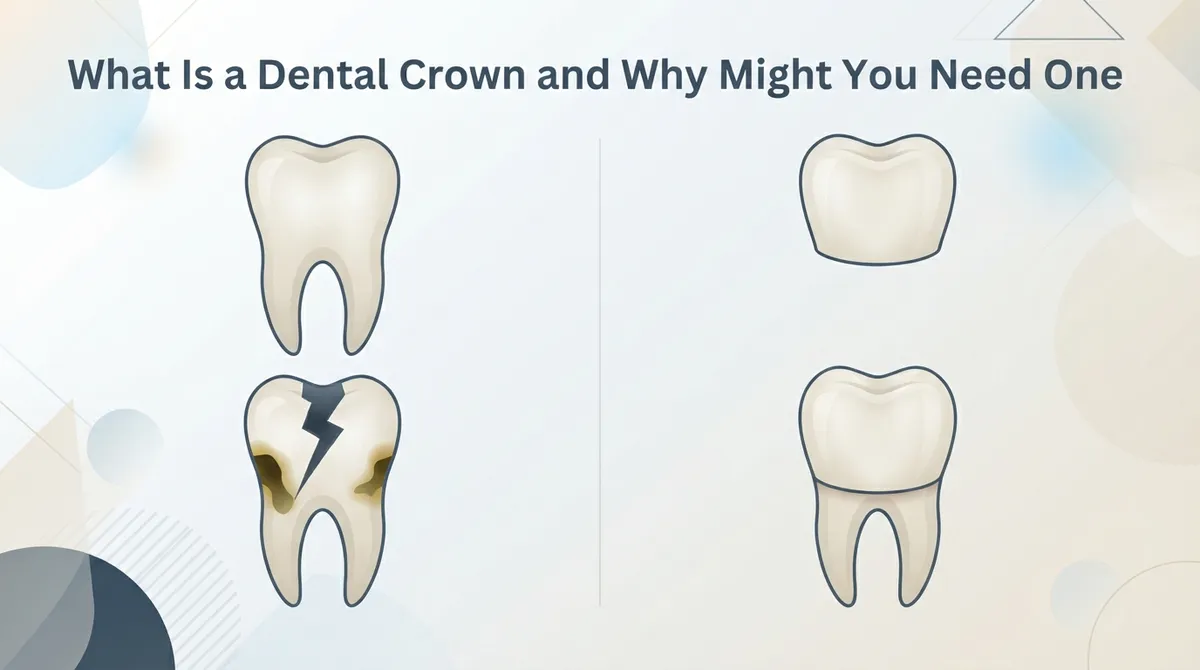
A dental crown is a custom-made cap. It fits over a tooth that is weak, cracked, heavily filled, or discolored. Think of it like a helmet for your tooth. It protects what is left of your natural tooth while restoring its shape, strength, and look. You might need a crown if you have:
- A tooth with a large filling that is cracking or breaking down
- A tooth that had root canal treatment
- A cracked or fractured tooth from an injury or grinding
- A tooth that is worn down from years of chewing
- A tooth that is discolored or oddly shaped and needs a cosmetic fix
Not every damaged tooth needs a crown right away. Sometimes a filling or an onlay works just fine. Your dentist will look at the whole picture before deciding what is right for you. If you are curious about other options first, our general dentistry team can walk you through the choices.
The Dental Crown Procedure Steps: A Simple Walkthrough
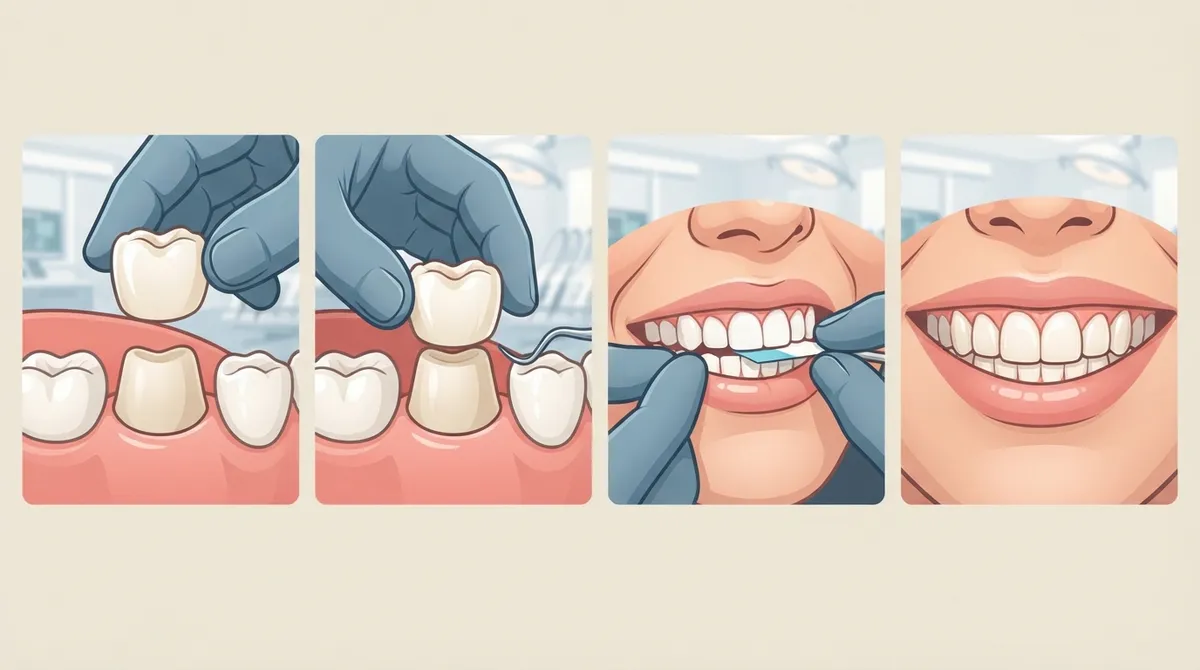
Most crowns are placed over two visits. Some modern offices use same-day technology to finish in one visit. Either way, the basic steps stay the same. Here is what typically happens.
Step 1: The Exam and Treatment Plan
Your first visit starts with a close look at the tooth. Your dentist may take X-rays to check the roots and surrounding bone. This helps confirm a crown is really the best fix. During this visit, you and your dentist will talk about material choices, cost, and what to expect. This is also the time to ask questions. Nervous patients love this part of our process, since our team takes time to explain everything in plain language before moving forward.
Step 2: Numbing the Area
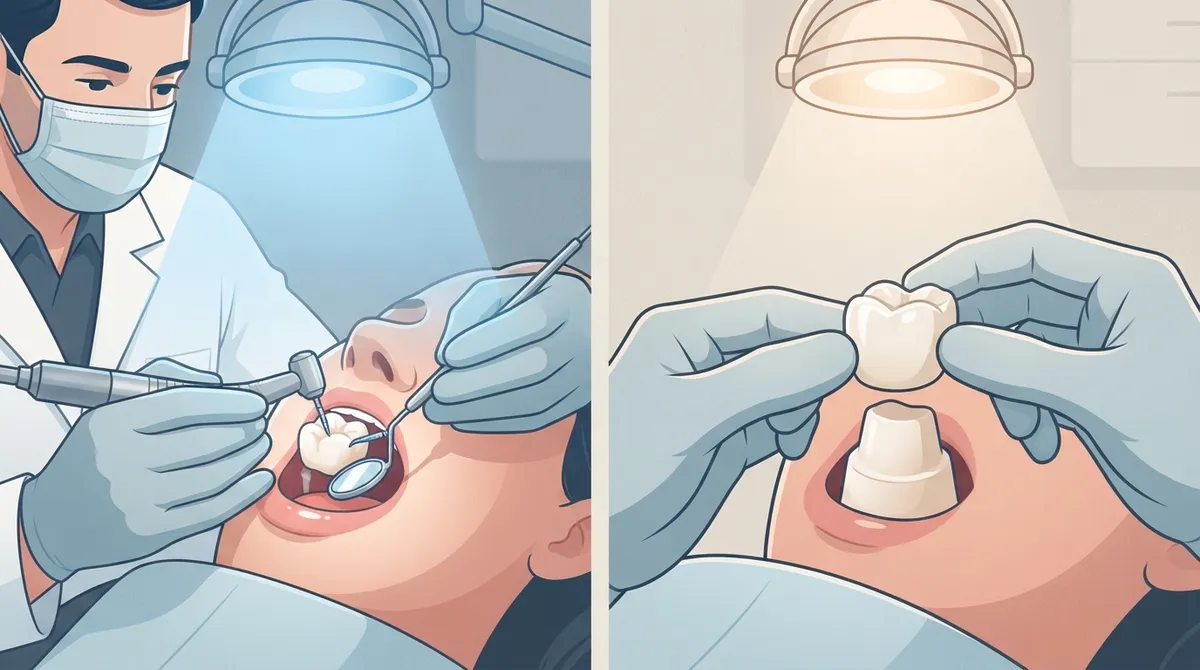
Nobody wants to feel pain during a dental visit. Before any tooth reshaping begins, your dentist will numb the area with local anesthetic. Most patients feel a small pinch and then nothing at all. If you deal with dental anxiety, let your dentist know ahead of time. There are extra comfort options available, from calming music to blankets and aromatherapy, all designed to help you relax.
Step 3: Reshaping the Tooth
Once you are numb, your dentist gently reshapes the tooth. This means removing a thin layer of the outer surface so the crown has room to fit properly. If there is decay, that gets cleaned out first. Sometimes a tooth has lost too much structure to hold a crown well. In that case, your dentist may use a core buildup. This adds material back to the tooth so it has a stable base. A root canal is not automatic just because you are getting a crown. It is only needed if the tooth's nerve is infected or badly inflamed. Learn more about when a root canal might be recommended alongside crown work.
Step 4: Taking Impressions or Digital Scans
Next, your dentist captures the exact shape of your prepared tooth. This can be done with a traditional putty impression or a digital scanner. Many patients actually prefer digital scans because they feel quick and comfortable, with no messy trays. Your dentist will also match the shade of the crown to your natural teeth. This step matters a lot for front teeth, where looks are just as important as strength.
Step 5: Placing a Temporary Crown
While your permanent crown is being made, you will not walk around with a bare tooth. A temporary crown, usually made from resin or acrylic, gets placed to protect the tooth. It is not as strong as the final crown, so you will get some care instructions to follow. Here are a few quick tips for living with a temporary crown:
- Avoid sticky foods like caramel or gum
- Skip hard foods like ice or hard candy
- Chew on the other side of your mouth when possible
- Floss gently by sliding the floss out sideways instead of lifting up
- Call your dentist if the temporary crown feels loose or falls off
Step 6: Lab Fabrication
Your impressions or scans get sent to a dental lab, unless your office has same-day CAD/CAM crown-making technology in-house. According to the Cleveland Clinic, this lab process commonly takes about two to three weeks. Timing can vary based on the lab, the material, and how busy the schedule is. During this waiting period, your temporary crown does the heavy lifting. Just be gentle with it and you will be fine.
Step 7: Fitting and Cementing the Permanent Crown
At your second visit, your dentist removes the temporary crown and checks the fit of the new permanent one. They will look at the color, shape, and how your bite feels when you close your mouth. If everything looks good, the crown gets permanently cemented or bonded into place. If small adjustments are needed, your dentist will polish or reshape the crown edges before final placement. You will leave with a strong, natural-looking tooth ready to handle everyday chewing again.
Same-Day Crowns vs. Traditional Two-Visit Crowns
Busy families and working adults often ask if there is a faster way to get a crown. The answer is sometimes yes. Same-day crowns use in-office CAD/CAM technology to design and mill a crown while you wait. This skips the lab wait time and the need for a temporary crown altogether. However, not every case works for same-day crowns. It depends on the tooth's condition, the material needed, and your bite. Below is a simple comparison to help you understand the differences.
| Factor | Traditional Crown | Same-Day Crown |
|---|---|---|
| Number of Visits | Two visits | One visit |
| Lab Wait Time | About 2 to 3 weeks | None |
| Temporary Crown Needed | Yes | No |
| Material Options | Wide range | Limited to CAD/CAM compatible materials |
| Best For | Complex cases, front teeth needing detailed shading | Simple cases, patients wanting speed and convenience |
How Long Do Dental Crowns Actually Last
This is one of the most common questions we hear. The honest answer is that crown lifespan depends on a lot of factors. A 2022 cohort study following 1,037 tooth-supported crowns found survival rates of 89.9% at five years, 80.9% at ten years, 70.5% at 15 years, and 61.8% at 20 years. Loss of retention, tooth loss, and tooth fracture were the top reasons crowns failed in that study. A separate large-scale analysis from England and Wales looked at more than 80,000 patients and found that metal crowns had the longest 10-year survival rate at 68%, while all-porcelain crowns had a shorter rate around 48%. Location in the mouth matters too. Front teeth tend to do better than back teeth because they face less chewing pressure. A 2016 meta-analysis found failure rates of 6.5% for front-tooth ceramic crowns versus 9.1% for back-tooth ceramic crowns. What does this mean for you? Crown material, tooth location, your bite force, and your daily oral hygiene routine all play a role. Good habits like brushing, flossing, and regular checkups go a long way toward protecting your investment.
Caring for Your Crown After Placement
Once your permanent crown is in place, it acts just like a natural tooth for daily use. Still, a few extra habits help it last longer.
- Brush twice daily and floss once a day, paying close attention to the crown's edge
- Avoid chewing ice or hard candy that can crack the crown
- Wear a night guard if you grind your teeth while sleeping
- Keep up with regular dental exams and cleanings
- Call your dentist right away if you notice a loose feeling, sharp pain, or swelling
Bruxism, poor hygiene, and heavy biting forces can shorten a crown's life. On the flip side, staying on top of your general dentistry checkups helps your dentist catch small problems before they turn into bigger ones.
When to Call Your Dentist After Getting a Crown
Mild sensitivity to hot or cold is normal for a short time after crown placement. But some signs need attention right away. Reach out to your dental office if you notice:
- Pain that gets worse instead of better
- A bite that feels off or uneven
- Swelling near the treated tooth
- A crown that feels loose or has cracked
- Any sign of infection, like a bad taste or odor
If you ever face sudden pain or a cracked crown, our emergency dentistry team is ready to help fast. Dental problems rarely wait for a convenient time, so we make sure you are never left in pain.
Why Choose Charming Smiles of Ocoee for Your Crown
Getting a crown does not have to feel stressful. At Charming Smiles of Ocoee, Dr. Aliuska Lopez and her team blend advanced technology with a calm, spa-like setting. From soothing music to gentle hygienists, every detail is designed to keep you comfortable from start to finish. We proudly serve families throughout Ocoee, FL, and we accept many major insurance plans along with flexible insurance & financing options. If cost is a concern, ask about our dental savings plan or check our current specials, including our Adult Complete Checkup for just $129. Many patients tell us they finally feel at ease at the dentist after visiting our office. You can visit us on Google — Charming Smiles of Ocoee to read real reviews from Ocoee neighbors just like you. You can also follow along on our Charming Smiles Facebook page or check out smile transformations on our Charming Smiles Instagram page.
Ready to Take the Next Step?
A dental crown can protect your tooth and give you back your confident smile. If you think you might need one, do not wait until the pain gets worse. Our friendly team is here to guide you through every step, from the first exam to the final fitting. You can easily book online at a time that works for your schedule. Prefer to talk to someone directly? Simply call us at (407) 378-3704 and our team will help you find the right appointment. Visit our location near Publix in Ocoee and experience gentle, modern dental care designed just for you.
FAQs
Q: What are the main dental crown procedure steps?
A: The main steps are an exam, numbing the tooth, reshaping it, taking impressions, placing a temporary crown, and then fitting the permanent crown at a second visit. Some offices offer same-day crowns that skip the temporary crown step entirely!
Q: How many appointments do I need for a dental crown?
A: Most traditional crowns take two visits, with a few weeks in between for the lab to build your custom crown. If your dentist has same-day CAD/CAM technology, you might finish it all in just one comfortable visit.
Q: Does getting a dental crown hurt?
A: Not at all, thanks to local anesthetic that numbs the area before your tooth is reshaped. You might feel some mild pressure, but the process itself should be pain-free and easy to handle.
Q: Do I always need a root canal before getting a crown?
A: No, a root canal is only needed if the tooth's nerve is infected or badly inflamed. Plenty of crowns go on teeth that never needed a root canal at all.
Q: How long do dental crowns typically last?
A: Many crowns last well over a decade with good care, and studies show survival rates around 80% at the ten-year mark. Brushing, flossing, and regular checkups at Charming Smiles of Ocoee help your crown last as long as possible.