How to Choose Restorative Dental Services That Work
Discover how restorative dental services fix damaged or missing teeth. Learn about fillings, crowns, implants, and more at Charming Smiles of Ocoee.
Key Takeaways
- Small dental problems escalate quickly: untreated cavities become infections requiring root canals, missing teeth cause jaw bone loss and bite shifts, and delayed care costs significantly more than early treatment.
- Dental implants last 20+ years or a lifetime, while composite fillings last 5-10 years and crowns/bridges last 10-15 years; proper daily maintenance like brushing, flossing, and avoiding hard foods extends restoration lifespan substantially.
- Six main restorative treatments exist—fillings for cavities, crowns for weakened teeth, bridges for one-two missing teeth, implants for permanent replacement, dentures for multiple missing teeth, and root canals for deep infections—with choice depending on damage severity.
- Restorative dentistry fixes function and health by repairing damaged or missing teeth, while cosmetic dentistry improves appearance; treatments like crowns often achieve both goals simultaneously.
- Multiple financing options make restorative care affordable: major insurance coverage (MetLife, Delta, Cigna, Aetna), flexible payment plans, third-party financing (CareCredit, Alphaeon, Cherry), and in-house dental savings plans for uninsured patients.
- Prompt emergency dental treatment significantly improves tooth-saving outcomes; tooth trouble is common—over 90% of U.S. adults have had cavities—making restorative care a normal part of life, not a rare event.
Broke a tooth? Missing one? Or maybe that old filling finally gave up on you. Whatever brought you here, you're not alone. More than 90% of adults in the U.S. have had a cavity at some point, so tooth trouble is about as common as it gets. The good news? Restorative dental services can fix almost any tooth problem and give you back a smile you feel good about.
At Charming Smiles of Ocoee, we see patients every week who need help repairing damaged or missing teeth. Some are nervous. Some are in pain. Some just want their smile to feel whole again. This guide will walk you through everything you need to know about restorative dental care, so you can make a smart choice for your smile without feeling overwhelmed.
What Are Restorative Dental Services, Really?
Restorative dental services are treatments that repair teeth damaged by decay, injury, or wear. They also replace teeth that are missing altogether. Think of it as fix-it work for your mouth, similar to how a contractor repairs a cracked wall or replaces a broken window.
These treatments aren't just about looks, though a nicer smile is a wonderful bonus. The real goal is getting your mouth back to full working order. That means chewing without pain, speaking clearly, and protecting the rest of your teeth from further damage.
Our team at general dentistry services often blends restorative care with routine checkups, so small problems get caught before they turn into big ones.
The Main Goals of Restorative Care
- Stop pain and discomfort caused by decay or damage
- Restore your ability to chew and bite normally
- Protect healthy teeth from future problems
- Bring back a natural-looking smile
- Prevent teeth from shifting after tooth loss
- Support your overall oral health for years to come
Common Types of Restorative Dental Services
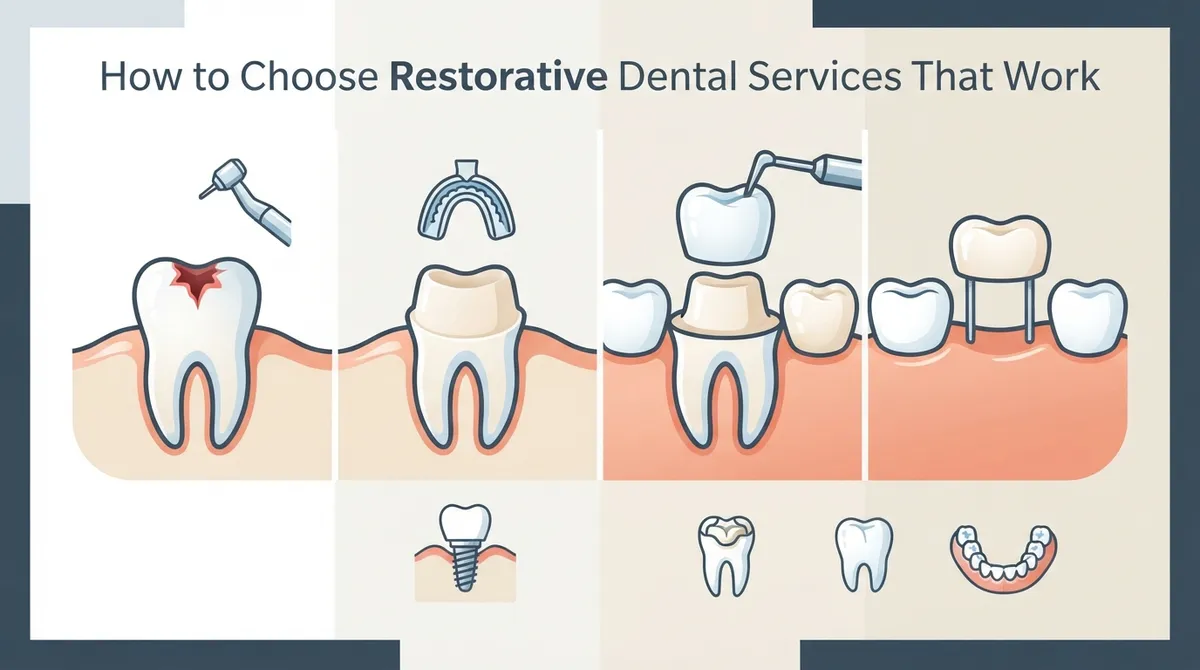
There's no one-size-fits-all fix in dentistry. Your dentist picks the right restorative treatment based on how much damage there is and where it's located. Here's a rundown of the most common options.
1. Dental Fillings
Fillings are the classic fix for cavities. Your dentist removes the decayed part of the tooth, then fills the space with a tooth-colored material. This is usually quick, simple, and often pain-free with modern numbing techniques. In fact, interest in pain-free dental fillings has grown a lot, since patients want comfort without sacrificing quality.
2. Dental Crowns
A crown is like a cap that covers a weak or broken tooth. It's used when a tooth has too much damage for a filling but doesn't need to be pulled. Crowns protect the tooth and let you chew normally again. Learn more about crowns & bridges and how they compare to other options.
3. Dental Bridges
Bridges fill the gap left by one or more missing teeth. They use the neighboring teeth as anchors to hold a replacement tooth in place. This keeps your other teeth from drifting into the empty space over time.
4. Dental Implants
Implants are a permanent way to replace a missing tooth. A small titanium post is placed in the jawbone, and a crown is attached on top. Many patients love implants because they look, feel, and function just like a real tooth. If you're curious, check out our page on dental implants to see if you're a good fit.
5. Dentures
Dentures replace multiple missing teeth, or even a full set. They're removable and custom-made to fit your mouth comfortably. Modern dentures look far more natural than they did years ago. See our guide on dentures to learn about your options.
6. Root Canal Treatment
When decay or infection reaches deep inside a tooth, a root canal can save it. This treatment removes the infected tissue and seals the tooth to stop pain and protect it long-term. Learn more about root canals and what to expect during the procedure.
Restorative vs. Cosmetic Dentistry: What's the Difference?
This mix-up trips people up all the time. Restorative dentistry repairs function. Cosmetic dentistry improves appearance. Sometimes they overlap, but they're not the same thing.
| Restorative Dentistry | Cosmetic Dentistry |
|---|---|
| Fixes decay, damage, or missing teeth | Improves the look of healthy teeth |
| Focuses on function and health | Focuses on appearance and confidence |
| Includes fillings, crowns, implants, dentures | Includes whitening, veneers, bonding |
| Often needed for pain relief | Usually elective and planned |
Many patients end up wanting both. A crown, for example, restores a tooth's function while also looking natural. If you're weighing your choices, our post on what good dental health really means in 2026 breaks this down further.
How to Know Which Restorative Treatment You Need
Here's a simple way to think through your options based on your situation.
- Small cavity, early decay: A filling usually does the job.
- Cracked or weakened tooth: A crown protects what's left of the tooth.
- Deep infection or severe pain: A root canal saves the tooth from extraction.
- One or two missing teeth: A bridge or implant can fill the gap.
- Several missing teeth or a full arch: Dentures or multiple implants may be the best fit.
- Unsure what you need? A dental exam and X-rays will show the full picture.
No two mouths are exactly alike, so this list is just a starting point. Your dentist will confirm the right path after a full checkup.
Why Restorative Care Matters More Than You Think
It's easy to put off fixing a small chip or a nagging ache. But small problems rarely stay small. Left untreated, minor decay can turn into an infection. A missing tooth can cause your bite to shift, leading to jaw pain or extra wear on other teeth.
Recent data backs this up. A 2026 German Oral Health Study found that dental restorations among teens jumped from 13.2% to 47.7% over nine years, showing just how common these treatments become as we age. Adults saw restoration progression rates of about 16.4 per 100 person-years, according to the same study. In other words, tooth repair is a normal part of life for most people, not a rare event.
What Happens If You Wait Too Long
- Small cavities can grow into infections that need root canals
- Cracked teeth can break further and become harder to save
- Missing teeth can cause bone loss in the jaw over time
- Shifting teeth can lead to bite problems and jaw pain
- Delayed care often costs more in the long run
What to Expect During Your Restorative Dental Visit
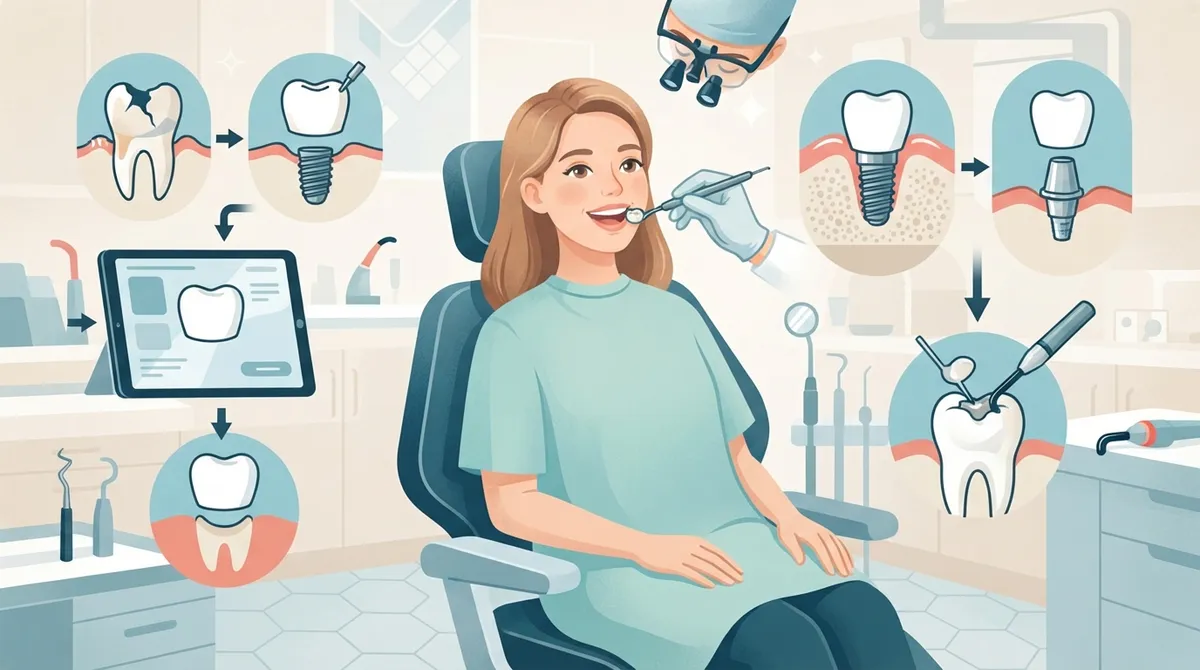
Walking into a dental office for restorative work can feel a little nerve-wracking, especially if you're dealing with pain. Here's what a typical visit looks like at Charming Smiles of Ocoee.
- You'll check in and discuss your symptoms with our friendly front desk team.
- Dr. Aliuska Lopez or a member of her team will examine your teeth and may take X-rays.
- You'll go over the diagnosis and treatment options together, no pressure involved.
- If treatment can happen that day, you'll get comfortable in a treatment room with soothing extras like aromatherapy, blankets, or streaming entertainment.
- The procedure begins, often with local anesthesia so you stay comfortable throughout.
- You'll get aftercare instructions and a follow-up plan if needed.
We know dental anxiety is real, and we built our whole office around easing it. From calming music to gentle hygienists, we want every visit to feel more like a spa trip than a stressful chore.
How Long Do Restorative Treatments Last?
This is one of the most common questions we hear, and the honest answer is: it depends. But here's a general idea based on typical care and maintenance.
| Treatment | Average Lifespan |
|---|---|
| Composite Fillings | 5 to 10 years |
| Dental Crowns | 10 to 15 years or more |
| Dental Bridges | 10 to 15 years |
| Dental Implants | 20+ years, often a lifetime |
| Dentures | 5 to 10 years |
Interestingly, industry data shows that older amalgam fillings are becoming less common. They dropped from 21.8% of all restorations in 2017 to just 4.1% by 2023. Tooth-colored materials are now the go-to choice, giving patients a more natural look without sacrificing strength.
Tips to Make Your Restoration Last Longer
- Brush twice a day with a soft-bristled toothbrush
- Floss daily to keep gums and restorations healthy
- Avoid chewing ice or very hard foods
- Wear a nightguard if you grind your teeth
- Keep up with regular checkups and cleanings
- Tell your dentist right away if something feels off
Simple habits go a long way. Most restorations fail early because of neglect, not bad luck. A little care each day protects your investment for years.
Paying for Restorative Dental Work
Cost is often the biggest worry when it comes to restorative care. The good news is there are more ways than ever to make treatment affordable. Charming Smiles of Ocoee works with many major insurance & financing options, including MetLife, Delta Dental, Cigna, Aetna, and more.
If you don't have insurance, we also offer flexible payment plans and third-party financing through CareCredit, Alphaeon Credit, and Cherry Financing. Our in-house dental savings plan is another great option if you're uninsured, giving you discounted rates on checkups, cleanings, and other services throughout the year.
Be sure to check our current specials too. We often run promotions like free consultations for implants or discounts on treatment plans, which can make a big difference in your total cost.
Why Choose Charming Smiles of Ocoee for Restorative Care
Dr. Aliuska Lopez has built a reputation in Ocoee as a true smile expert, known for gentle care and precise work. Our office isn't just about fixing teeth. We focus on making the whole experience calm and comfortable, especially for patients who feel nervous about dental visits.
Hundreds of patients have shared their experiences online, and the reviews consistently mention our welcoming staff, clean office, and efficient scheduling. You can visit us on Google — Charming Smiles of Ocoee to read what our patients have to say for yourself.
We also stay active on social media, so feel free to check out our Charming Smiles Facebook page or follow us on our Charming Smiles Instagram page for smile transformations, tips, and updates from our Ocoee office.
Emergency Restorative Care: When You Can't Wait
Sometimes tooth trouble doesn't wait for a convenient time. A cracked tooth at dinner or sudden pain at midnight needs fast attention. Our emergency dentistry services are built for exactly this kind of situation.
If you're dealing with sudden pain, swelling, or a broken tooth, don't wait it out. Getting seen quickly can mean the difference between a simple fix and a more involved procedure. According to the American Dental Association, prompt treatment of dental injuries greatly improves the chances of saving a tooth.
Restorative Care for the Whole Family
Restorative dentistry isn't just for adults. Kids can need fillings too, especially with baby teeth prone to cavities. Our pediatric dentistry team handles these cases with extra patience and a gentle touch, so young patients feel safe and comfortable.
Older adults often need more restorative work as well, thanks to years of wear and tear. Our office is set up to serve every stage of life, from a child's first filling to a senior's new set of dentures.
Ready to Restore Your Smile?
Restorative dental services aren't just about fixing teeth. They're about giving you back your comfort, your confidence, and your ability to enjoy everyday life without worrying about your smile. Whether you need a simple filling or a full set of dental implants, the team at Charming Smiles of Ocoee is here to help, right in the heart of Ocoee near Publix.
If you're ready to take the next step, book online today or reach out directly. You can also call us at (407) 378-3704 to schedule your visit and get started on rebuilding a healthy, confident smile.
FAQs
Q: What are restorative dental services?
A: Restorative dental services are treatments that repair damaged teeth or replace missing ones. This includes fillings, crowns, bridges, implants, dentures, and root canals. The goal is to bring back your ability to chew, speak, and smile with confidence.
Q: What's the difference between restorative and cosmetic dentistry?
A: Restorative dentistry focuses on fixing function and health, like repairing a cavity or replacing a missing tooth. Cosmetic dentistry focuses on appearance, like whitening or veneers. Many treatments, like crowns, actually do both at once.
Q: When do I need a root canal instead of a filling?
A: A filling works for small to moderate cavities where the tooth's inner structure is still healthy. A root canal is needed when decay or infection reaches deep into the tooth's nerve. Your dentist will confirm which one you need with an exam and X-rays.
Q: How long do dental restorations last?
A: It varies by treatment. Fillings often last 5 to 10 years, crowns and bridges can last 10 to 15 years, and dental implants can last 20 years or more with good care. Regular checkups help catch problems early and extend the life of your restoration.
Q: Are dental implants better than dentures?
A: It depends on your needs and budget. Implants are permanent and feel most like natural teeth, while dentures are removable and often more affordable upfront. Our team can help you weigh the pros and cons during a free consultation.