How to Choose Between Veneers vs Crowns for Your Smile
Veneers vs crowns: which is better? Learn how each works, when to choose one, and how to decide with your Ocoee dentist.
Key Takeaways
- Veneers suit teeth that are still structurally healthy and mainly need cosmetic fixes like stains, small chips, gaps, or shape changes, while crowns are better for weak, cracked, heavily filled, or root canal-treated teeth.
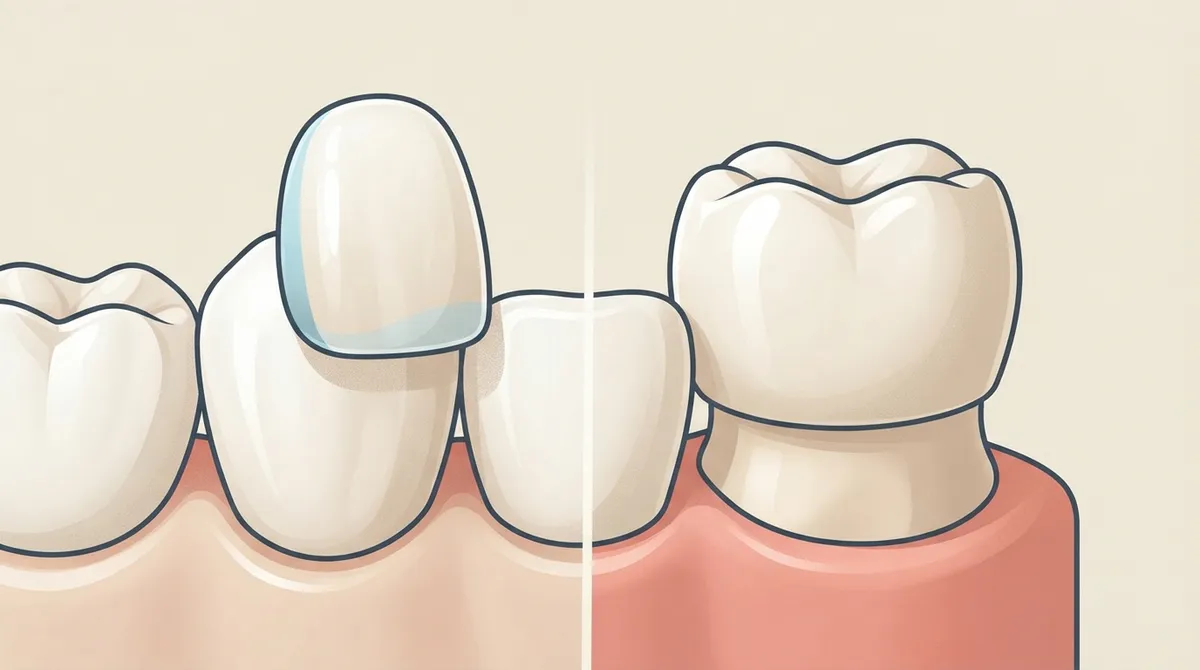
- A veneer is a thin porcelain facing bonded to the front of a tooth, while a crown is a cap covering all or most of the tooth for strength and protection.
- Veneers generally require less tooth removal than crowns, but neither option is reversible once tooth structure has been removed.
- If you grind or clench your teeth, tell your dentist: heavy force can chip veneers, and a night guard or a crown may be a safer choice.
- Neither veneers nor crowns prevent decay; the natural tooth underneath can still develop cavities, especially at the edges, so good brushing and flossing remain essential.
- Studies suggest both can last a decade or more, but survival figures come from different studies and should not be compared directly; ask your dentist about your specific situation and costs.
Standing in front of the mirror, you notice a chipped front tooth. Or maybe an old filling is failing. Now you are asking the big question: veneers vs crowns, which is better? Great news: you are not alone, and the answer is friendlier than you might think.
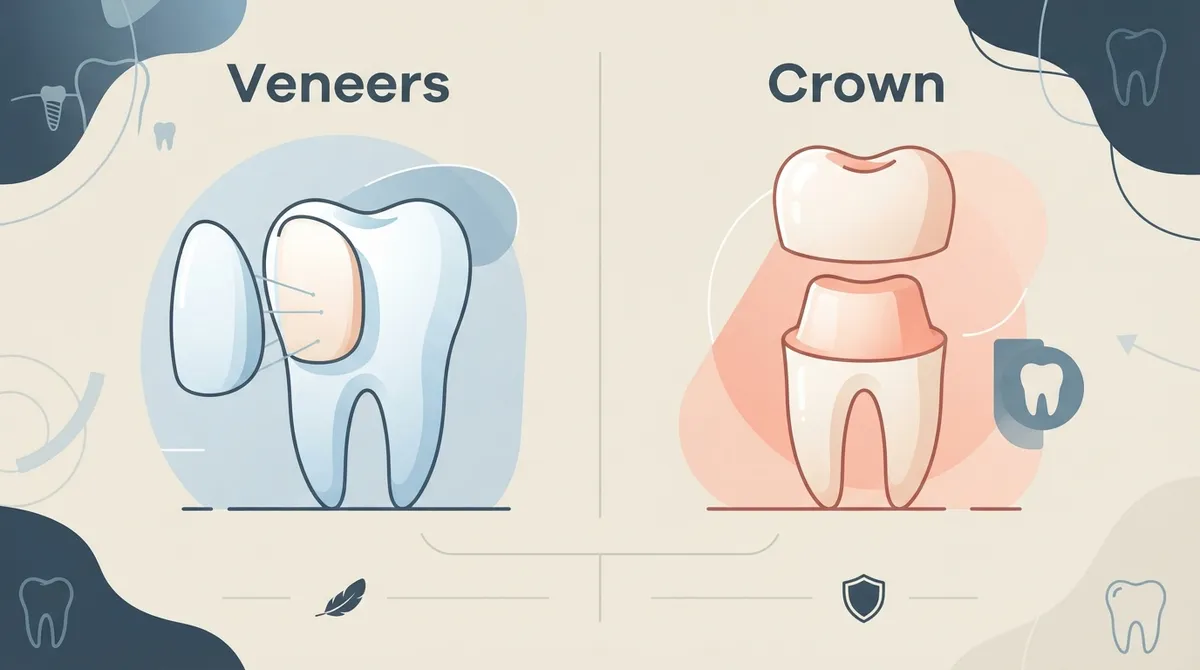
Here is the honest truth. Neither one is better for everyone. They do different jobs. A veneer is a thin shell that improves how a tooth looks. A crown is a cap that protects a tooth that is weak or damaged. The right pick depends on your tooth, your bite, and your goals.
In this guide, we will walk you through the choice step by step. You will learn what each option does, how to compare them, and what to ask your dentist. Whether you are a busy parent, a smile-makeover dreamer, or someone who feels nervous about dental visits, you will leave feeling more confident. Let's dive in!
Veneers vs Crowns: The Quick Answer
When people ask veneers vs crowns which is better, the short answer is this: it depends on how much healthy tooth you have left. Veneers are usually the gentler, more cosmetic choice for teeth that are still strong. Crowns are usually the better choice when a tooth needs real strength and full coverage.
Think of it like a house. A veneer is like fresh siding. It makes the outside look great, but the walls underneath must already be solid. A crown is like a full protective shell for a house with cracked walls. It holds everything together.
Your dentist will examine your tooth, your gums, and your bite before recommending one. That exam matters more than any online rule of thumb.
What Is a Veneer?
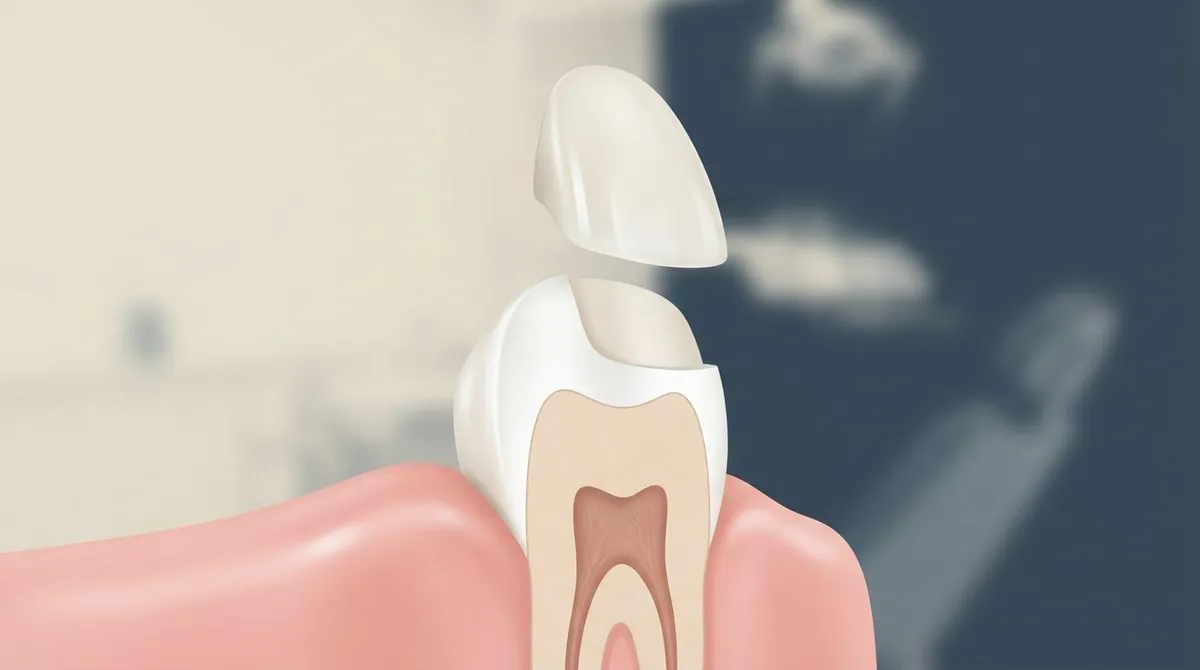
A veneer is a thin facing, usually made of porcelain, that is bonded to the front of a tooth. It is mostly used to improve looks. Veneers can change color, shape, and size. They can also close small gaps and hide minor chips or stains that do not respond to whitening.
Veneers need healthy enamel to bond well. That is why they work best on teeth that are structurally sound. Some veneers need very little tooth shaping. Others need a bit more. It depends on the tooth and the goal.
If you want to learn more about the process, our porcelain veneers guide explains it in plain language.
What Is a Crown?
A crown covers the tooth on all or most sides. Dentists often call it a cap. It restores the shape, size, strength, and look of a tooth that has been damaged. You can learn more about our crowns and bridges options on our website.
A crown is often recommended when a tooth:
- Has a large filling that is wearing out
- Is cracked or badly worn down
- Has had a root canal and needs extra protection
- Is weak and at risk of breaking
Because a crown wraps around the whole tooth, the dentist removes more tooth structure than with a veneer. In return, you get full coverage and strong protection.
Veneers vs Crowns: Side-by-Side Comparison
Seeing the two options next to each other makes the choice much easier. Here is a simple comparison.
| Feature | Veneers | Crowns |
|---|---|---|
| Main purpose | Improve appearance | Restore strength and protect |
| Coverage | Mostly the front of the tooth | All or most of the tooth |
| Tooth removal | Usually less | Usually more |
| Best for | Stains, chips, gaps, shape changes on sound teeth | Weak, cracked, heavily filled, or root canal teeth |
| Bite pressure | Can chip with heavy grinding | Built to handle more biting force |
| Reversible? | No, if enamel is removed | No, tooth is reshaped |
Notice that neither option is reversible once tooth structure is removed. That is an important thing to think about before you decide.
How to Decide: A Step-by-Step Guide
Ready to figure out which option fits you? Follow these steps. They will help you have a smart, calm conversation with your dentist.
- Name your main goal. Are you fixing how a tooth looks, or protecting a weak tooth? Looks point toward veneers. Strength points toward crowns.
- Check the health of the tooth. A tooth with lots of healthy enamel may suit a veneer. A tooth with a large filling, a crack, or a root canal may need a crown.
- Think about your bite. Do you grind or clench your teeth? Heavy force can chip veneers. Your dentist may suggest a night guard or a stronger option.
- Consider the tooth location. Front teeth are often good veneer candidates. Back teeth handle heavy chewing, so crowns are common there.
- Ask about tooth preparation. Veneers generally need less shaping, but it varies. Ask exactly how much of your tooth will be changed.
- Talk about budget and timing. Ask about costs, insurance, and payment options before you commit.
Walking through these steps at home gives you a head start. Your dentist can then confirm the best path after a full exam.
When Veneers Are Usually the Better Choice
Veneers shine when your tooth is healthy but you are not thrilled with how it looks. Cosmetic enthusiasts love them for a reason. Here are common situations where veneers often make sense:
- Stains that whitening cannot fix
- Small chips or minor cracks on the surface
- Slightly uneven or short teeth
- Small gaps between front teeth
- A desire for a brighter, more uniform smile
Veneers often need less tooth removal than crowns. That is a big plus if you want to keep as much natural tooth as possible. Want to see how a full transformation works? Our guide on transforming your smile with cosmetic dentistry is a great next read.
When Crowns Are Usually the Better Choice
Crowns step in when the tooth needs rescue, not just a makeover. They are the go-to when a tooth has lost a lot of its natural structure. Consider a crown if:
- A big old filling is failing
- The tooth is cracked or splitting
- You had a root canal treatment
- The tooth is badly worn from grinding or acid
- The tooth is decayed so much that a filling will not hold
A crown is not just about looks. It protects the tooth from breaking further. It can also be tooth-colored, so it blends in nicely with your smile. For a deeper look, see our post on crowns and bridges in Ocoee.
How Long Do Veneers and Crowns Last?
Both options can last many years with good care. Research gives us some helpful numbers, though they come from different studies. They should not be treated as a head-to-head contest or a promise for any one person.
A 2021 systematic review of 25 studies covering 6,500 porcelain laminate veneers estimated a 95.5% cumulative survival rate at 10 years. A 2024 review also found veneer survival above 90% beyond 10 years, while noting that results vary by materials, enamel preservation, and patient habits.
For crowns, a 2007 systematic review estimated five-year survival of 93.3% for all-ceramic crowns and 95.6% for metal-ceramic crowns. Another analysis found that 77% of crowns stayed without re-treatment at five years, and 63% at 10 years. Those numbers measure different things, so comparing them directly would not be fair.
The takeaway? Both can serve you well for a long time. Your daily habits, your bite, and your dental care make a big difference.
Risks and Downsides to Know About
Every dental treatment has trade-offs. Being honest about them helps you choose wisely. Here is what to keep in mind:
- Neither prevents decay. The natural tooth underneath can still get cavities, especially at the edges.
- Both can chip, crack, or come loose. This is more likely with grinding, nail-biting, or chewing ice.
- Tooth removal is permanent. You will likely need a restoration for life.
- Replacement may be needed. Over time, either one may need to be redone.
If you grind your teeth, tell your dentist. They may suggest a custom night guard to protect your investment. Our post on mouth guard facts explains how these work.
Caring for Your New Restoration
Good news: caring for veneers and crowns is simple. A few habits go a long way:
- Brush twice a day with a soft toothbrush
- Floss daily, especially around the edges
- Avoid biting hard objects like pens, ice, or hard candy
- Wear a night guard if you grind your teeth
- Keep up with regular cleanings and checkups
You can find more tips in our guides on dental care for veneers and dental care for crowns.
What About Cost and Payment?
Cost is a real part of the decision, and that is completely okay. Prices vary based on the material, the number of teeth, and your specific needs. Veneers are often considered cosmetic, so insurance may not cover them. Crowns are often partly covered when they are needed to restore a damaged tooth.
The best move is to ask before you start. At Charming Smiles of Ocoee, we are happy to explain your options. You can learn about insurance and financing options, explore our dental savings plan, or check current specials. We also offer a free cosmetic consultation so you can ask questions with no pressure.
Easing Dental Anxiety Before Treatment
If dental visits make you nervous, you are in good company. Many of our patients feel the same way. That is why our team created a calm, spa-like space with soothing music, pillows, blankets, and aromatherapy.
Dr. Aliuska Lopez is known as a smile expert who takes time to explain every step. She will show you what is happening and why. You stay in control the whole time. If you want to know more about her, read about why patients love Dr. Lopez or visit our about us page.
Questions to Ask Your Dentist
Come prepared! These questions can help you feel confident at your consultation:
- Is my tooth strong enough for a veneer?
- How much tooth structure will be removed?
- Does my bite or grinding affect which option is safer?
- What material do you recommend, and why?
- What happens if the restoration chips or comes loose?
- What will it cost, and what will insurance cover?
A good dentist welcomes these questions. If you want tips on finding the right fit, our guide to finding the perfect cosmetic dentist can help.
Why Choose Charming Smiles of Ocoee?
At Charming Smiles of Ocoee, we combine modern technology with gentle, personal care. Our team looks at the whole picture of your smile before recommending veneers, crowns, or another option. We want you to feel informed, not pressured.
You can book online in just a few minutes. You can also follow our Charming Smiles Instagram page and our Charming Smiles Facebook page to see smiles we love creating. Curious what neighbors say? Visit us on Google — Charming Smiles of Ocoee to read real reviews from Ocoee patients.
Final Thoughts: So, Which Is Better?
So, veneers vs crowns which is better? The best choice is the one that fits your tooth and your goals. Veneers are a lovely option for healthy teeth that need a cosmetic boost. Crowns are the dependable option for teeth that need real strength and protection.
You do not have to figure it out alone. A simple exam can give you a clear answer. Ready to take the first step? Visit our location or call us at (407) 378-3704 to schedule your visit at 315 West Rd in Ocoee. We cannot wait to help you smile with confidence!
FAQs
Q: Are veneers or crowns better for front teeth?
A: It depends on the tooth! If your front tooth is healthy and you want to fix color, shape, or small chips, a veneer is often a great fit. If the tooth is weak, cracked, or heavily filled, a crown may protect it better.
Q: Do veneers require less tooth removal than crowns?
A: Usually, yes. Veneers generally need less shaping because they cover mainly the front of the tooth. Still, the amount varies, so your dentist can tell you exactly what your tooth needs.
Q: Can you get veneers if you grind your teeth?
A: Sometimes, but grinding can raise the risk of chips or cracks. Your dentist may suggest a night guard or recommend a stronger option like a crown. Be sure to mention any grinding at your visit.
Q: How long do veneers and crowns last?
A: Studies show both can last a decade or more with good care, though results vary from person to person. Healthy habits, regular checkups, and protecting your teeth from heavy force all help them last longer.
Q: When does a tooth need a crown instead of a veneer?
A: A crown is often the better choice when a tooth is badly damaged, cracked, worn down, or had a root canal. In those cases, the tooth needs full coverage for strength, not just a cosmetic touch.