How to Choose Between E.max and Porcelain Veneers
Confused about e.max veneers vs porcelain veneers? Learn the real differences, survival rates, and how to pick the best option for your smile.
Key Takeaways
- E.max is actually a type of porcelain (lithium disilicate), not a separate material—when comparing 'e.max vs porcelain veneers,' you're really choosing between different porcelain types based on strength, translucency, and coverage needs.
- E.max veneers are significantly stronger (360-400 MPa flexural strength) and better at masking discolored teeth, while feldspathic porcelain offers superior translucency for a more natural enamel appearance in conservative cases.
- Both veneer types show excellent longevity with 95.5-96.81% survival rates over 10 years, but fracture, debonding, and marginal discoloration are common failure points preventable through proper care and avoiding habits like teeth grinding and ice chewing.
- The veneer selection process requires a professional consultation to assess your enamel, bite, habits, and goals—experienced cosmetic dentists will recommend minimal-prep options when possible since tooth preparation is irreversible.
Thinking about getting veneers but stuck on which type is right for you? You're not alone! Many patients in Ocoee walk into our office asking the same question: "What's the real difference between e.max veneers and porcelain veneers?" It's a great question, and honestly, one worth taking your time with. Your smile matters, and picking the right material can make a big difference in how it looks and lasts. In this guide, we'll break down everything in simple terms, so you can walk into your cosmetic dentistry consultation feeling confident and informed. Grab a cup of coffee, get comfy, and let's chat about smiles.
What Are E.max Veneers and Porcelain Veneers, Really?
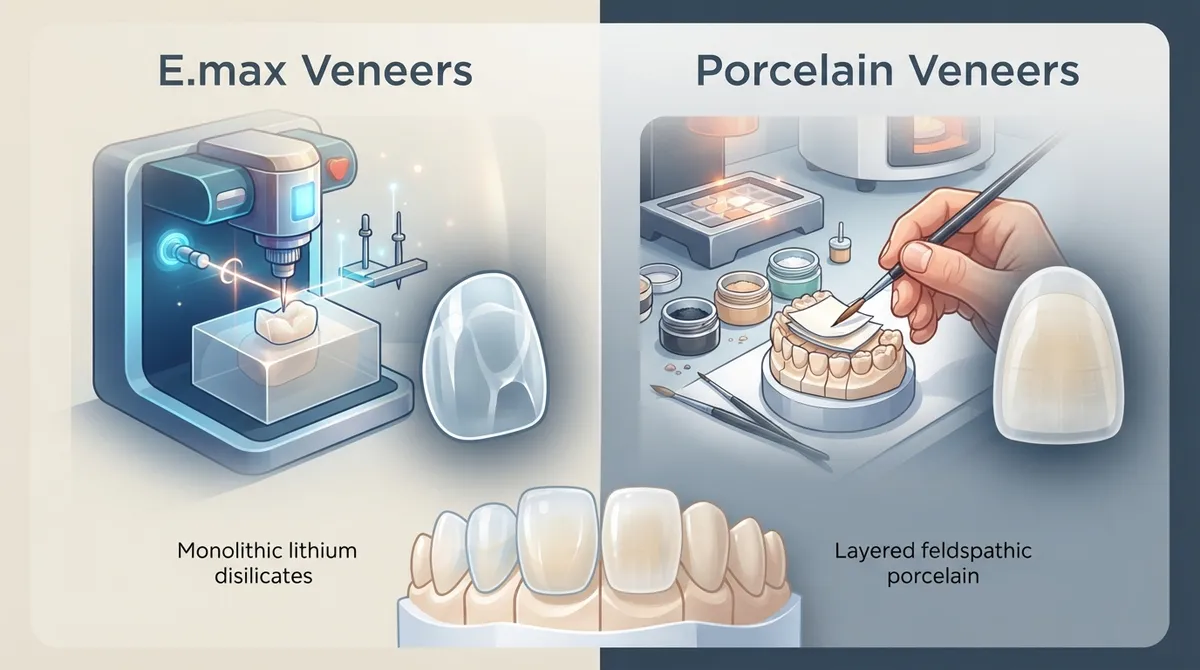
Here's a fun fact that surprises a lot of people: e.max is actually a type of porcelain veneer. It's not a totally separate category. E.max is a brand name for a material called lithium disilicate, which is a strong glass-ceramic material. "Porcelain veneers" is a bigger umbrella term. It can include feldspathic porcelain, leucite-reinforced ceramic, and yes, lithium disilicate too.
So when people ask "e.max vs porcelain," they're really asking which type of porcelain is best for their smile. Think of it like asking "SUV vs car." An SUV is still a car, just a specific kind built for certain needs.
At Charming Smiles of Ocoee, we help patients understand these options every day. Dr. Aliuska Lopez, our smile expert, takes time to explain which material fits your goals best.
Key Differences Between E.max and Traditional Feldspathic Porcelain
Let's get into the nitty-gritty. Both materials can create gorgeous smiles, but they shine in different ways.
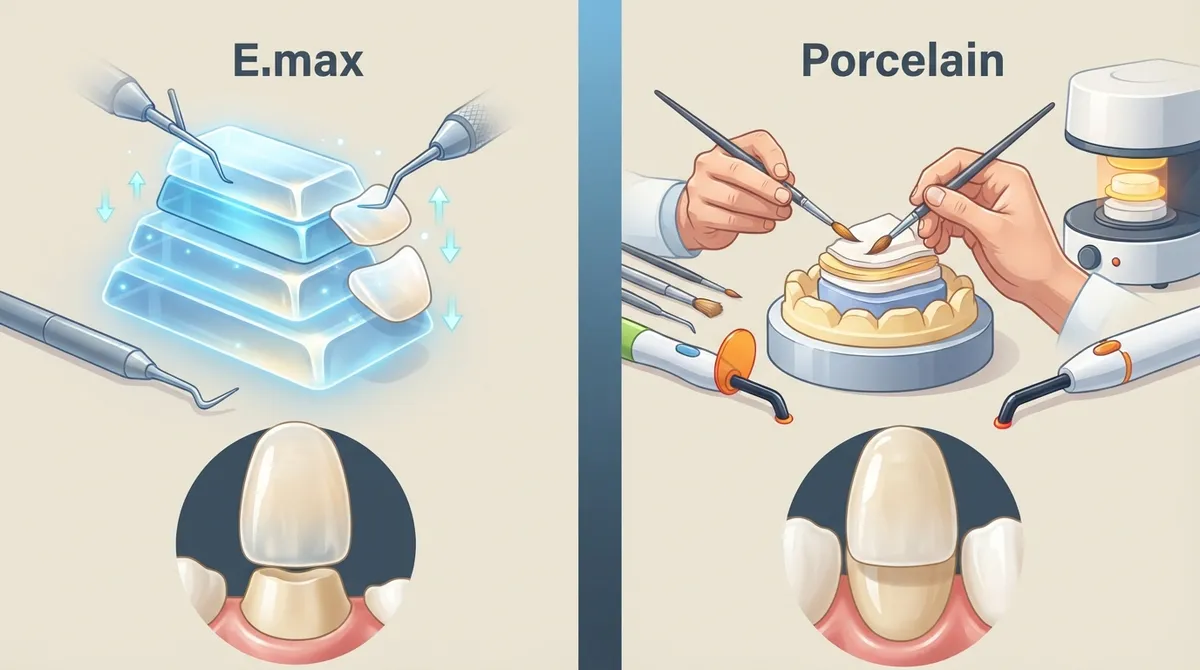
- Strength: E.max (lithium disilicate) is tougher. It has a flexural strength of about 360-400 MPa, much higher than traditional feldspathic porcelain.
- Translucency: Feldspathic porcelain wins here. It mimics natural enamel beautifully, especially in thin layers.
- Shade masking: E.max is better at covering discolored teeth underneath.
- Fabrication: E.max can be milled digitally or pressed, giving dentists more flexibility.
- Best use cases: Feldspathic porcelain often works great for very thin, conservative cases. E.max is often chosen when strength or coverage is a priority.
Neither one is automatically "better." It really depends on your teeth, your smile goals, and what your dentist recommends after examining your mouth.
How Long Do These Veneers Actually Last?
This is probably the question we hear most. Let's look at the numbers, because they tell a helpful story.
| Veneer Type | Reported Survival Rate | Follow-Up Period |
|---|---|---|
| Porcelain Laminate Veneers (general) | 95.5% | 10 years |
| Lithium Disilicate (E.max) | 96.81% | ~10.4 years |
| Lithium Disilicate (small study) | 98.7% | ~3 years |
| E.max CAD vs Feldspathic Ceramic | 92.7% vs 89.1% | Varies by study |
These numbers come from real research, including a 2021 systematic review covering 6,500 porcelain veneers and a 2024 clinical review on lithium disilicate. The takeaway? Both materials can last a long time when placed and cared for correctly. Fracture is the most common issue, followed by debonding and color changes over time.
What Causes Veneers to Fail?
Nobody wants to think about problems, but knowing the risks helps you make smart choices. Here are the most common complications reported in dental studies:
- Ceramic fracture or chipping
- Debonding (the veneer coming loose)
- Marginal discoloration around the edges
- Secondary tooth decay underneath
- Rare pulpal or nerve-related complications
Certain habits make these problems more likely. Grinding your teeth, biting your nails, chewing ice, or having poor oral hygiene can all shorten the life of your veneers. If you're someone who tends to clench your jaw at night, mention this during your consultation. A protective night guard might be recommended alongside your veneer treatment.
Which One Looks More Natural?
This depends on your unique smile and what look you're going for. Feldspathic porcelain has a slight edge in translucency. It can look incredibly lifelike, almost like real enamel catching the light. This makes it popular for patients wanting a subtle, natural enhancement.
E.max, on the other hand, can also look stunning and natural. It's often chosen when a patient needs more strength or better coverage of stained teeth, without sacrificing beauty. Many patients can't tell the difference once the veneers are placed and polished by a skilled cosmetic dentist.
Our team at Charming Smiles of Ocoee loves helping patients visualize their results before treatment even begins. We want you to feel excited, not nervous, about your smile transformation.
Steps to Decide Which Veneer Type Is Right for You
Feeling a little overwhelmed? That's totally normal. Here's a simple step-by-step process we walk patients through:
- Schedule a consultation to discuss your smile goals and concerns.
- Get a full oral exam to check your enamel, bite, and alignment.
- Talk about your habits, like grinding, biting nails, or chewing ice.
- Review your budget and financing options together.
- Discuss whether you want maximum translucency or maximum strength.
- Choose a shade and preview your new smile design.
- Prepare your teeth and get temporary veneers if needed.
- Have your custom veneers placed and bonded by your dentist.
This process usually takes a couple of visits, but the results can last for years when done right. Our office also offers insurance & financing options and a dental savings plan to help make treatment more affordable.
Do Veneers Require Removing Tooth Enamel?
Yes, in most cases, a small amount of enamel needs to be removed. This helps the veneer fit naturally and bond securely. Research shows that keeping as much healthy enamel as possible leads to better long-term results. Preparation that goes too deep into the dentin layer can actually reduce how long veneers last.
This is exactly why choosing an experienced provider matters so much. Every patient's teeth are different, so the amount of preparation needed will vary. Some patients may even qualify for minimal-prep options, depending on their tooth position, shape, and color.
Because veneers involve removing some enamel, the process is considered irreversible. They also don't prevent future cavities or gum disease, so good oral hygiene habits are still a must.
Caring for Your New Veneers
Once your veneers are in place, a little TLC goes a long way. Here's what we recommend to our patients:
- Brush twice daily with a non-abrasive toothpaste
- Floss gently around the veneer edges every day
- Avoid chewing ice, pens, or fingernails
- Wear a night guard if you grind your teeth
- Visit your dentist regularly for checkups and cleanings
- Limit stain-causing foods and drinks like coffee, tea, and red wine
Routine visits are especially important. Our team can spot small issues early, before they turn into bigger (and more expensive) problems. Many patients pair their veneer care with regular general dentistry visits for the best long-term results.
Why Ocoee Patients Trust Charming Smiles for Veneers
Choosing where to get your veneers is just as important as choosing the material. At Charming Smiles of Ocoee, Dr. Aliuska Lopez brings years of experience and a gentle touch to every cosmetic case. Our spa-like office near Publix in Ocoee is designed to help even the most nervous patients relax. Think soothing music, cozy blankets, and a team that genuinely cares about your comfort.
We proudly accept many major insurance plans and offer flexible payment plans through trusted third-party financing. Right now, we also have a free cosmetic consultation special running, which is a fantastic way to explore your veneer options with zero pressure.
Curious what other patients think? You can visit us on Google — Charming Smiles of Ocoee to read real reviews from real people. You can also check out our Charming Smiles Facebook page or follow along on our Charming Smiles Instagram page for smile transformations and tips.
A Quick Comparison Table for Easy Reference
| Feature | E.max (Lithium Disilicate) | Feldspathic Porcelain |
|---|---|---|
| Strength | Higher (360-400 MPa) | Lower |
| Translucency | Good | Excellent |
| Shade Masking | Strong | Moderate |
| Best For | Strength & coverage needs | Ultra-natural, conservative cases |
| Fabrication | Milled or pressed | Hand-layered |
For more general background on ceramic dental materials, the National Institute of Dental and Craniofacial Research offers helpful patient education resources on restorative dentistry.
Ready to Start Your Smile Journey?
Choosing between e.max veneers and porcelain veneers doesn't have to feel stressful. The most important step is talking with an experienced cosmetic dentist who can look at your specific smile and guide you toward the best choice. Whether you value maximum strength or that ultra-natural translucent look, there's a great option waiting for you.
Ready to take the next step? You can easily book online for your free cosmetic consultation today. Prefer to talk it through first? Feel free to call us at (407) 378-3704 and our friendly team will answer all your questions. You can also stop by our location near Publix in Ocoee to see our comfortable, spa-like office for yourself. We can't wait to help you fall in love with your smile all over again!
FAQs
Q: Are e.max veneers stronger than traditional porcelain veneers?
A: Yes, generally speaking! E.max is made from lithium disilicate, which has a flexural strength of about 360-400 MPa. That's noticeably stronger than traditional feldspathic porcelain. That said, strength on paper doesn't guarantee results, since your bite, habits, and care matter a lot too.
Q: Is e.max the same as porcelain, or is it a different material?
A: Great question, and one that trips up a lot of folks! E.max is actually a specific type of porcelain, sometimes called a glass-ceramic. So when comparing e.max vs porcelain veneers, you're really comparing one type of porcelain to another, not two totally different things.
Q: Which looks more natural: e.max or feldspathic porcelain veneers?
A: Feldspathic porcelain tends to be the most translucent, giving it that classic natural enamel look. But e.max can look beautifully natural too, especially when it's expertly shaped and shaded by a skilled cosmetic dentist like our team here in Ocoee.
Q: How long do e.max veneers and porcelain veneers last?
A: Studies show impressive results for both! Porcelain veneers overall show about a 95.5% survival rate over 10 years, while lithium disilicate (e.max) veneers show around 96.81% survival over roughly 10.4 years. Your personal habits and maintenance play a huge role too.
Q: Do e.max or porcelain veneers require shaving down my teeth?
A: In most cases, yes, a small amount of enamel needs to be removed for a natural fit and secure bond. This makes veneers a permanent choice, so it's worth discussing all your options thoroughly with your dentist before moving forward.