Dentures vs. Implants: Which Is Better for Your Smile?
Dentures vs implants: which is better? Compare cost, comfort, surgery, and care to find the right tooth replacement for you in Ocoee, FL.
Key Takeaways
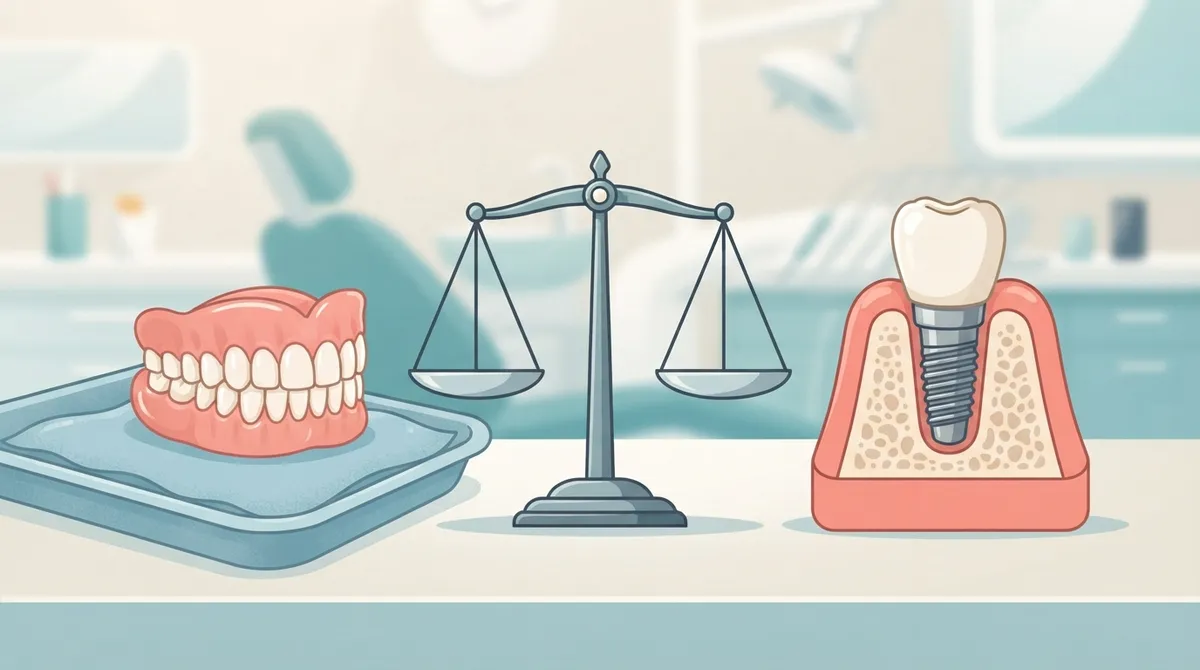
- Neither dentures nor implants win for everyone; the best choice depends on how many teeth you're missing, your bone and gum health, your budget, and your goals.
- Implants require surgery and healing time and need adequate jawbone, but they offer more stability than dentures, especially on the lower jaw.
- Dentures are generally lower cost, faster to complete, and surgery-free, but they can shift over time as gums and jawbone change, often needing relines or replacement.
- Implant 'survival' (about 95-97% at 5-10 years) does not mean trouble-free; complications like gum inflammation or loose parts occur, so ongoing checkups are essential.
- Smoking, uncontrolled diabetes, active gum disease, poor oral hygiene, and insufficient bone can make implants risky, though some issues can be treated first or bone grafts added.
- A removable implant-retained overdenture is a middle ground for full tooth loss, offering better hold than regular dentures while keeping cleaning simple; a dentist exam is the key first step.
Losing teeth can feel overwhelming. You may worry about how you'll eat, how you'll look, and how much it will all cost. If you're asking dentures vs implants which is better, you're in good company. It's one of the most common questions we hear from patients across Ocoee.
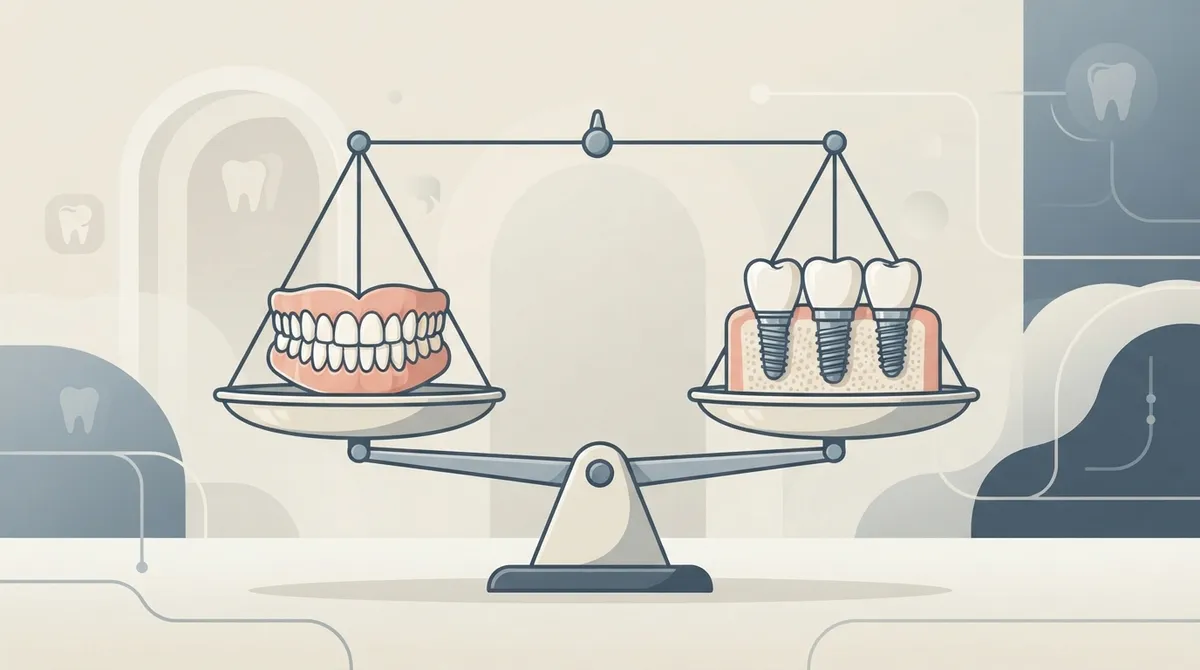
Here's the honest answer: neither option wins for everyone. Dentures and implants both restore your smile and your ability to chew. They just do it in different ways. The right pick depends on how many teeth you're missing, your health, your budget, and your goals.
In this friendly guide, we'll walk through how each option works, what they cost in time and effort, and how to decide. Whether you're a busy parent, a senior who wants gentle care, or someone who gets nervous in the dental chair, you'll find clear answers here.
The Short Answer: There Is No Single Winner
Many people hope for a simple verdict. But the best choice is personal. A dentist needs to look at your mouth, your jawbone, your medical history, and your budget before recommending a plan.
Here is the big picture in plain words:
- Dentures are removable teeth. They usually avoid surgery and can replace a few teeth or a full arch.
- Dental implants are small posts placed in the jaw. They hold a crown, a bridge, or a denture in place.
- Neither option is risk-free or maintenance-free.
Think of it like choosing shoes. Sneakers and dress shoes both work, but the right pair depends on where you're going. Let's look at each one more closely.
What Are Dentures and How Do They Work?
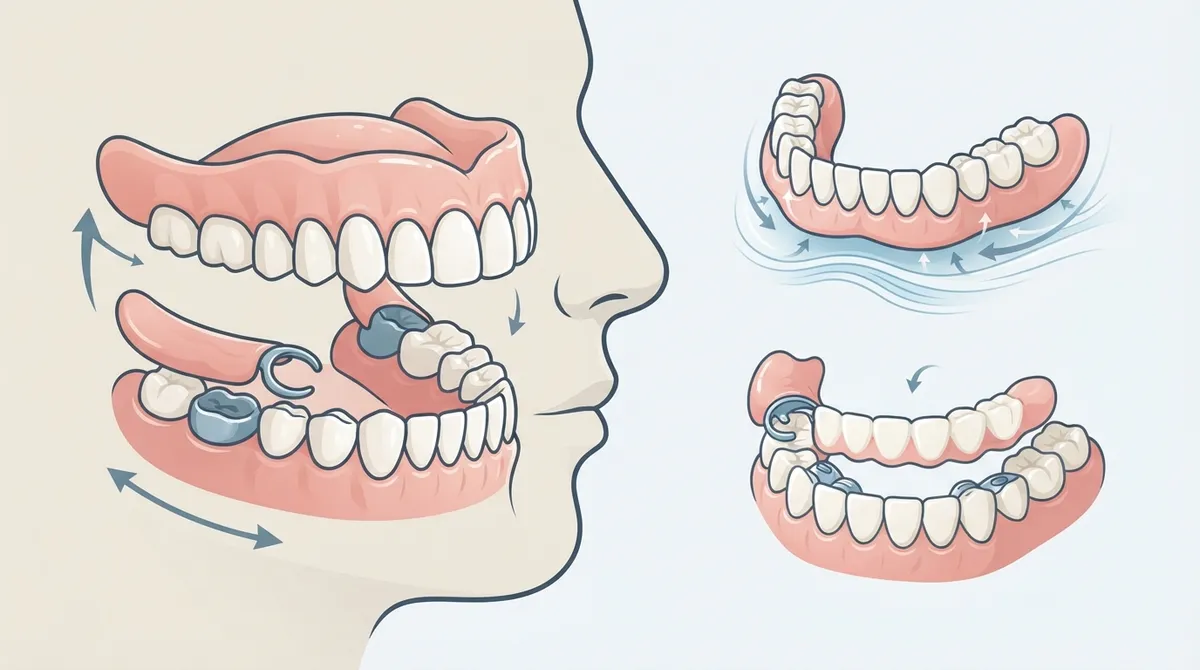
Dentures are custom-made replacement teeth that sit on your gums. A full denture replaces all the teeth on the top or bottom. A partial denture fills in gaps when you still have some natural teeth.
At our practice, we offer dentures that are fitted to look natural and feel comfortable. If you'd like to explore styles and fit, our guide on how to choose the right dentures in Ocoee is a helpful read.
Benefits of Dentures
- They generally do not require implant surgery.
- They can replace many or all teeth at once.
- They are often available more quickly than implant treatment.
- They are removable, which makes cleaning simple.
Drawbacks of Dentures
- They can shift or feel less stable, especially on the lower jaw.
- Your gums and jawbone change over time, so the fit changes too.
- You may need adjustments, relines, or a full replacement down the road.
That last point matters. When teeth are missing, the jawbone slowly changes shape. A denture that fit well last year may feel loose today. That's normal, and it's fixable, but it's good to know up front.
What Are Dental Implants and How Do They Work?
A dental implant is a small post placed into your jawbone. It acts like a replacement tooth root. After healing, a crown, bridge, or denture is attached on top.
Implants can replace one tooth, several teeth, or support a full set of teeth. You can learn more about dental implants on our services page.
Benefits of Implants
- They can improve stability and chewing comfort.
- They can support fixed teeth that you don't remove at home.
- They can anchor a removable denture so it stays put better.
Drawbacks of Implants
- They require surgery and healing time.
- You need enough healthy bone and healthy gums.
- They cost more up front and take longer to complete.
- They need careful daily cleaning and regular professional care.
Implants are not a "set it and forget it" fix. Gum inflammation around an implant can happen. Parts of the crown or screws can also loosen or wear. A good plan includes checkups, just like natural teeth.
Dentures vs. Implants: A Side-by-Side Comparison
Sometimes a simple chart makes things click. Here's how the two options compare in everyday terms.
| Factor | Conventional Dentures | Dental Implants |
|---|---|---|
| Surgery needed | Generally no implant surgery | Yes, placed in the jawbone |
| Treatment time | Often quicker | Longer, due to healing |
| Stability | Can move, especially lower jaw | Usually more secure |
| Upfront cost | Typically lower | Typically higher |
| Bone requirements | Fewer | Needs adequate bone or grafting |
| Daily care | Remove and clean daily | Brush and floss around the implant |
| Future adjustments | Relines and replacements | Maintenance and occasional repairs |
No row in this table makes one option the "winner." It simply shows where each one shines.
What About Success Rates?
Research on implants is encouraging. A review of implant studies from 2010 to 2020 estimated about 96% implant survival at 10 years. Another systematic review found 5- and 10-year survival for single-crown implants of 97.2% and 95.2%.
But here's the part many people miss. "Survival" means the implant itself stayed in place. It does not mean there were zero problems. For example, in one review of implant-supported bridges, the implants survived at 95.6% after 5 years. Yet only about 66% of patients were free of complications in that time. Crown and bridge parts sometimes need repair or replacement.
Small issues, like a loose screw or gum inflammation, can pop up. That's why ongoing care matters so much. You can read more in our post on dental implant mistakes that could cost you thousands.
How Many Teeth Are You Replacing?
The number of missing teeth changes the conversation. Let's break it down.
One Missing Tooth
You might choose an implant crown or a tooth-supported bridge. An implant can protect neighboring teeth from being altered. A bridge can be faster. Our article on dental implants vs. bridges in Ocoee goes deeper. You can also learn about crowns and bridges as an option.
Several Missing Teeth
A partial denture, a bridge, or a few implants may work. Your dentist will look at which teeth remain and how healthy they are.
All Teeth Missing
You generally have three paths:
- Conventional full dentures that rest on your gums.
- Implant-retained overdentures that snap onto implants but can be removed for cleaning.
- Fixed implant-supported teeth that stay in your mouth.
A removable implant overdenture can be a nice middle ground. You get better hold from the implants and still enjoy easy cleaning.
Who May Not Be a Good Candidate for Implants?
Implants are wonderful for many people, but they need a healthy foundation. Certain factors can raise risks or call for extra care first:
- Smoking or tobacco use
- Uncontrolled diabetes
- Active gum disease or other untreated dental problems
- Poor oral hygiene
- Not enough jawbone
If you have bone loss, a bone graft may help, though it adds time and cost. And if you aren't a candidate right now, that's not a closed door. Treating gum disease or stabilizing health conditions can open the way later. Dentures are often a comfortable option in the meantime.
How Long Does Each Option Take?
Time is a real factor, especially for busy families and professionals.
Dentures can often be completed faster. Immediate dentures may even be placed the same day teeth are removed. Just know that your gums will heal and change shape, so later adjustments are common.
Implants take longer because surgery and healing are involved. The timeline varies from person to person. If you need grafting, it can stretch out further. Patience pays off, but it helps to plan ahead.
Thinking About Cost and Payment
Cost often decides the matter, and that's okay. Dentures usually cost less up front. Implants usually cost more at the start, though some people value the added stability and choose to invest.
The good news is you have options for making care fit your budget. Take a look at our insurance and financing options, our dental savings plan, and our payment plans. We also post current specials, including a free implant consultation. For a closer look at pricing, see how much dental implants cost in Ocoee.
Special Considerations for Seniors and Anxious Patients
If you're an older adult, comfort and simplicity probably matter a lot. Some seniors prefer dentures for their lower surgical demands. Others love the secure feel of implant-supported teeth. Both are valid. Our guide to dental care for seniors in Ocoee shares more tips.
If dental visits make you nervous, you're not alone. Our spa-like office offers soothing music, blankets, aromatherapy, and entertainment to help you relax. Dr. Aliuska Lopez is known for gentle, patient care. Learn more about us and our approach.
How to Decide: A Simple 5-Step Approach
Feeling stuck? Walk through these steps:
- Count your missing teeth. One tooth, a few, or all of them changes your options.
- Check your health. Gum disease, diabetes, and smoking all matter.
- Ask about your bone. X-rays can show whether grafting may be needed.
- Set your budget and timeline. Be honest about what works for your life.
- Book a consultation. A dentist can compare options after a proper exam.
That last step is the most important. No article can replace a personal evaluation. Our services cover everything from general dentistry to restorative care, so your whole plan can live under one roof.
Our Take: Which Is Better?
Here's our friendly, honest wrap-up. Dentures are a solid choice if you want a lower-cost, quicker option and prefer to avoid implant surgery. Implants are a strong choice if you want more stability and are healthy enough for surgery and willing to invest in long-term care.
A hybrid, like an implant-retained overdenture, may give you the best of both. The "better" option is the one that fits your mouth, your health, and your life. We'll never push you toward one or the other. We'll help you understand each path so you feel confident.
Curious how patients feel about their experience? You can read what our Charming Smiles of Ocoee patients say on Google. You can also follow us on our Charming Smiles Facebook page and Charming Smiles Instagram page for smile stories and updates.
Ready to Find Your Best Fit?
You don't have to figure this out alone. Our team in Ocoee is here to answer your questions, review your X-rays, and build a plan that feels right. You can book online in just a few minutes, or call us at (407) 378-3704 to talk with a friendly team member. You can also find our location and hours on our website. We'd love to help you smile with confidence again.
FAQs
Q: Are dentures or dental implants better for replacing all teeth?
A: It depends on your health, bone, and budget. Dentures cost less and avoid implant surgery, while implant-supported options offer more stability. A dentist can compare both after an exam.
Q: Are implant-supported dentures removable?
A: Some are, and some aren't. An implant overdenture snaps onto implants but can be removed for cleaning. Fixed implant-supported teeth stay in your mouth and are only removed by your dentist.
Q: Can I get dental implants if I have bone loss?
A: Maybe! If you don't have enough bone, a bone graft may help build it up first. This adds time and cost, so your dentist will review your X-rays and talk you through the options.
Q: How long do dentures and dental implants last?
A: Both can last many years with good care, but neither is permanent. Dentures often need relines or replacement as your gums change, and implant crowns or bridges may need repair over time. Regular checkups help you get the most out of either one.
Q: Who is not a good candidate for dental implants?
A: People with active gum disease, uncontrolled diabetes, poor oral hygiene, or who smoke may face higher risks. Not enough jawbone can also be a hurdle. Many of these can be addressed first, so ask your dentist what's possible for you.