Dental Crown vs Filling: Which One Do You Need?
Wondering about a dental crown vs filling? Learn how dentists decide, what each option protects, and which one fits your tooth best.
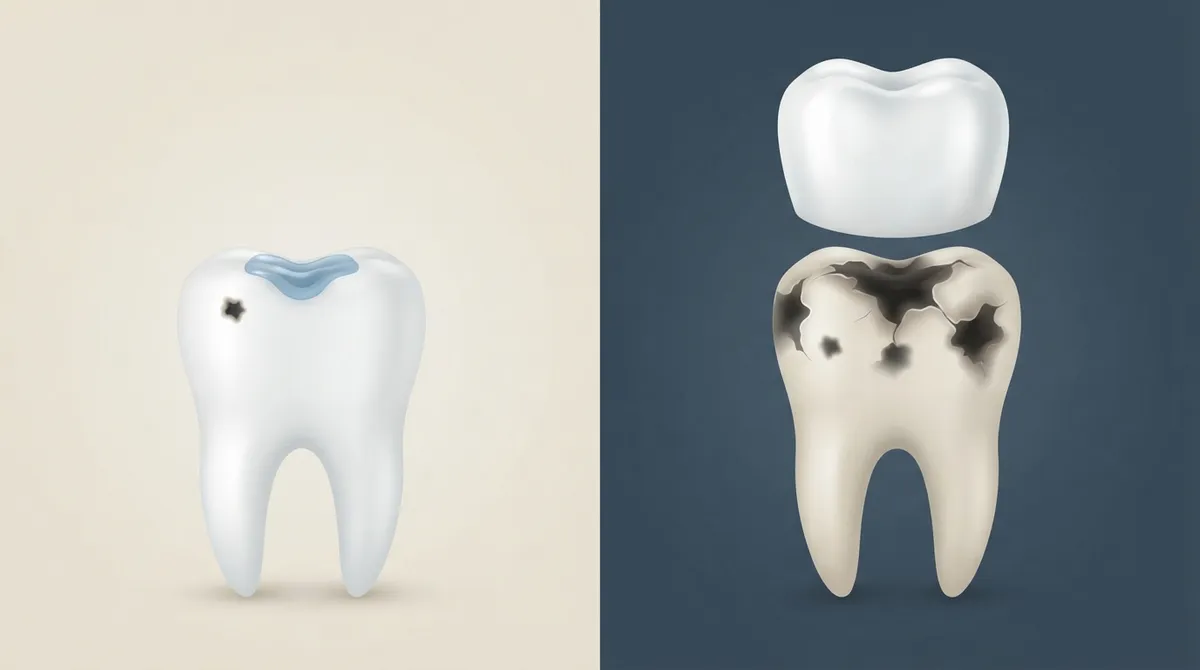
Key Takeaways
- Dentists choose between fillings and crowns based on specific tooth factors: if more than half of the tooth's visible structure needs replacing, a crown typically offers better long-term protection than a filling.
- Fillings work best for small to moderate cavities with minimal healthy tooth removal and can be completed in one visit, while crowns are necessary for large cavities, visible cracks, or teeth that had root canal treatment.
- Research shows crowns last 10-15 years versus fillings lasting 5-10 years, and crowned root-canal teeth have 89% survival at ten years compared to 62% without crowns, especially for molars under heavy chewing pressure.
- Early cavity detection through regular checkups is critical because catching decay early often means a simple filling instead of a more involved and expensive crown procedure.
- Both fillings and crowns require consistent oral care: brush twice daily, floss daily, avoid chewing hard objects, wear a night guard if you grind teeth, and maintain routine dental exams to prevent restoration failure.
- A thorough dental exam with X-rays is the only reliable way to determine whether you need a filling or crown, as tooth location, gum health, bite alignment, and previous treatments all influence the decision.
You just left your checkup and your dentist said the word "crown." But last time, a small cavity only needed a filling. So what changed? If you are trying to sort out the difference between a dental crown vs filling, you are not alone. This is one of the most common questions patients ask at Charming Smiles of Ocoee, and it deserves a clear, simple answer.
The good news is that this decision is not random. Dentists look at specific facts about your tooth to decide which option protects your smile best. In this guide, we will break down how fillings and crowns work, when each one makes sense, and what you can expect if you need either treatment. Whether you are a busy parent, a first-time patient, or someone managing dental anxiety, we want you to walk away feeling confident and informed.
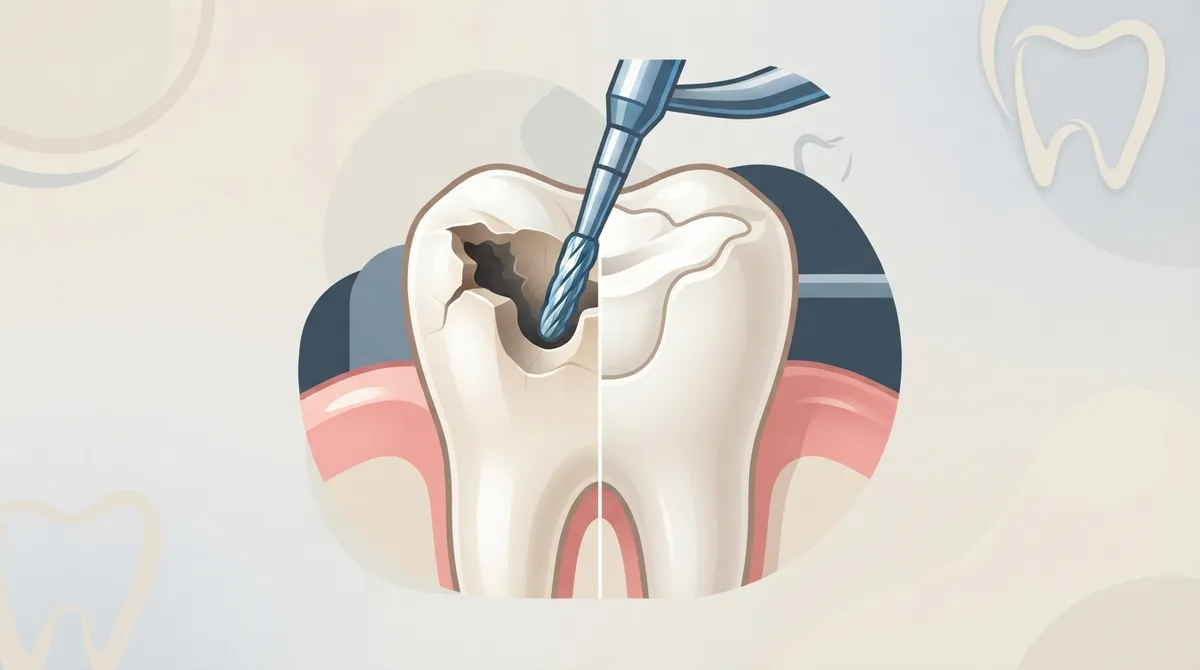
What Is a Dental Filling?
A dental filling is a simple, direct repair for a tooth. Your dentist removes the decayed part of the tooth. Then they fill the empty space with a durable material, often tooth-colored composite resin.
Fillings work best when there is enough healthy tooth left to support the repair. Think of it like patching a small hole in a wall. If the wall is still strong, a patch does the job well. Fillings are usually finished in one visit, and they preserve more of your natural tooth. That is a big win, since your natural enamel is always the strongest option when it can be saved.
When a Filling Makes Sense
- The cavity is small to moderate in size
- Most of the natural tooth structure remains healthy
- There are no major cracks or fractures in the tooth
- The tooth has not had a root canal
- You want a faster, more affordable option
If you are due for a checkup or think you might have a small cavity, our team offers Dental Fillings designed to be comfortable and quick, so you can get back to your day with confidence.
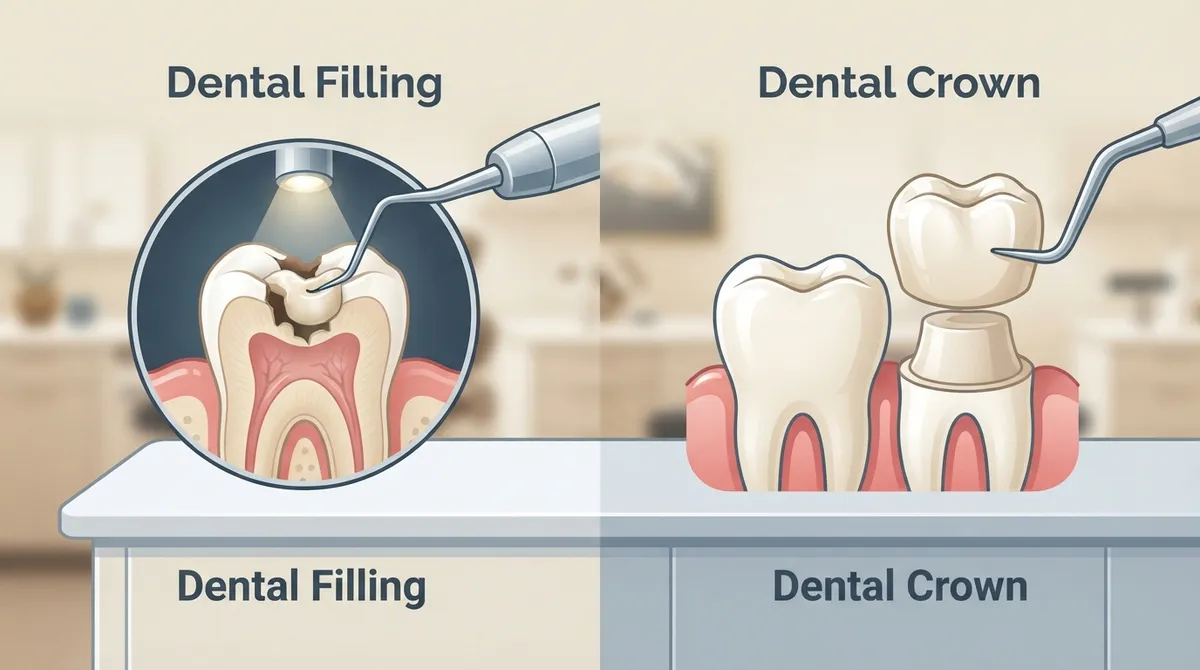
What Is a Dental Crown?
A dental crown is a full-coverage cap. It fits over the entire visible part of your tooth, like a protective helmet. Crowns are custom-made from strong materials such as porcelain, zirconia, or metal alloys.
According to the American Dental Association, crowns are often the better choice when a cavity is too large for a filling, a tooth is cracked, or a big old filling has left very little healthy tooth behind. Crowns are also common after root canal treatment, especially on back teeth that handle a lot of chewing force.
When a Crown Makes Sense
- The cavity is large and has destroyed a big portion of the tooth
- The tooth has visible cracks or fractures
- A previous large filling has failed or weakened the tooth
- The tooth needed a root canal and needs extra protection
- The tooth handles heavy biting or grinding forces
Our Crowns Bridges services use modern materials that look natural and hold up well over time, giving your tooth the strength it needs to keep working for years.
Dental Crown vs Filling: Side-by-Side Comparison
Sometimes seeing the facts laid out side by side makes the decision much clearer. Here is a simple breakdown to help you understand the key differences.
| Feature | Dental Filling | Dental Crown |
|---|---|---|
| Best for | Small to moderate cavities | Large cavities, cracks, or weak teeth |
| Tooth structure removed | Minimal | More extensive reshaping |
| Typical visits needed | Usually one | One to two, unless same-day crown technology is used |
| Average lifespan | About 5 to 10 years | About 10 to 15 years or longer |
| Cost | Generally lower | Generally higher |
| Coverage | Fills only the damaged area | Covers the entire visible tooth |
These numbers are general estimates. Actual results depend on your oral hygiene, bite forces, and how well you care for your teeth after treatment.
How Dentists Decide Between a Crown and a Filling
There is no single rule that works for every tooth. Your dentist looks at several things before making a recommendation. This is part of why a thorough exam matters so much.
Key Factors Your Dentist Considers
- How much healthy tooth structure remains
- Whether there are cracks that could spread
- The tooth's location and how much chewing force it handles
- Your gum health and bite alignment
- Your risk for future cavities
- Whether the tooth has had previous root canal treatment
Some dental teams use a rough guideline that if more than half of the tooth's visible structure needs replacing, a crown may offer better long-term protection. But this is only a starting point, not a strict rule. A tooth with a hidden crack near the gum line might need a crown even with a smaller cavity. On the other hand, a well-placed filling can sometimes save a tooth that looks more damaged than it truly is.
What the Research Says About Crowns and Fillings
Studies give us helpful insight, but they do not offer a one-size-fits-all answer. A Cochrane review on crowns versus fillings for root-filled teeth found there is not enough strong evidence to say one option always wins. Instead, the right choice depends on the tooth's condition and what the patient prefers.
Some studies point to longer survival rates for crowned teeth. One large study reviewed roughly 13.9 million restorations. It found that crowns lasted longer than composite fillings after 15 years. However, the overall survival of the tooth itself was very similar between the two groups. That is an important distinction. A crown may last longer as a restoration, but that does not always mean the tooth itself survives longer.
Other research on root-filled teeth showed five-year survival rates near 94% with crowns, compared to about 77% without them. At ten years, that gap widened to about 89% versus 62%. These numbers suggest crowns can offer strong protection for certain root-filled teeth, especially molars that face heavy chewing pressure.
Common Signs You Might Need a Filling
Not sure which category your tooth falls into? Here are common signs that a filling may be the right fit.
- Mild sensitivity to sweets or temperature
- A small, visible dark spot on the tooth
- Your dentist finds a cavity during a routine X-ray
- No pain when chewing or biting down
Regular visits make a huge difference here. Catching a cavity early often means a simple filling instead of a more involved crown. This is one reason our team encourages consistent Regular Checkups for the whole family.
Common Signs You Might Need a Crown
On the other side, certain symptoms often point toward needing a crown instead.
- Sharp pain when biting down, which can signal a crack
- A large portion of the tooth has broken off
- You have a big old filling that is failing or leaking
- Your tooth recently had a root canal
- Your dentist says the tooth is too weak for a filling alone
If you are dealing with sudden tooth pain or a broken tooth, do not wait. Our Emergency Dentistry team is ready to help you get relief quickly and figure out the best long-term fix.
Caring for Your Filling or Crown
Whether you get a filling or a crown, good habits help it last longer. Both restorations can fail from things like decay around the edges, teeth grinding, or poor oral hygiene.
Simple Habits That Help Both Restorations Last
- Brush twice daily with fluoride toothpaste
- Floss every day to remove plaque near the gum line
- Avoid chewing on ice, pens, or other hard objects
- Wear a night guard if you grind your teeth
- Keep up with routine dental cleanings and exams
These small steps protect your investment and help you avoid needing a second procedure down the road. The CDC's guidance on oral health also supports these daily habits as key ways to prevent future decay.
Why Choose Charming Smiles of Ocoee
Dr. Aliuska Lopez and the team at Charming Smiles of Ocoee take the time to explain your options clearly. We never push a crown when a filling will do the job well, and we never recommend a filling that could put your tooth at risk. Every recommendation is based on what actually protects your smile.
Our Ocoee, FL office offers a relaxing, spa-like setting for patients who feel nervous about the dentist. From soothing music to comfort items in every treatment room, we want your visit to feel calm from start to finish. You can book online anytime that works for your schedule.
Curious what other patients say about their experience? Feel free to visit us on Google — Charming Smiles of Ocoee to read real reviews from families across Ocoee. You can also follow along on our Charming Smiles Facebook page or check out smile transformations on our Charming Smiles Instagram page.
Making the Right Choice for Your Smile
The truth is, both fillings and crowns are excellent tools when used correctly. A filling that fits the situation can protect a tooth for many years. A crown that fits the situation can save a tooth that would otherwise be at risk of breaking or needing extraction.
The best move is always a proper exam. If you are noticing tooth pain, sensitivity, or a visible crack, do not guess at home. Our team can look closely, take any needed X-rays, and walk you through your options with zero pressure. We also offer insurance & financing options to help make treatment easier on your budget, along with a dental savings plan for patients without insurance.
Ready to get answers about your tooth? Give us a call and call us at (407) 378-3704 to schedule your visit at Charming Smiles of Ocoee today. Your comfortable, healthy smile is waiting for you.
FAQs
Q: Is a crown better than a filling for a large cavity?
A: For larger cavities, a crown often protects the tooth better because it covers and strengthens the whole visible surface. A filling may not hold up as well if too much healthy tooth is gone. Your dentist will check the exact size and location before recommending either option.
Q: How do I know if I need a crown or a filling?
A: The only way to know for sure is through a dental exam and X-rays. Your dentist looks at how much healthy tooth remains, whether there are cracks, and how much force the tooth handles when you chew. We are always happy to walk you through the reasoning behind our recommendation.
Q: Can a large filling replace a dental crown?
A: Sometimes, but it depends on how much healthy tooth structure is left. If too little natural tooth remains, a large filling can crack or fail under normal chewing pressure. In those cases, a crown usually offers more reliable, long-term protection.
Q: Is a crown necessary after a root canal?
A: Not always, but it is common, especially for back teeth that face strong chewing forces. Some root canal teeth do fine with a filling if enough structure remains. Your dentist will look at the specific tooth to make the safest recommendation.
Q: Which lasts longer, a dental crown or a filling?
A: Crowns typically last around 10 to 15 years, while fillings usually last 5 to 10 years. That said, actual results depend a lot on your oral hygiene, diet, and whether you grind your teeth at night. Good habits can help either restoration last longer than average.