Dental Bridge Near Me: What Should You Know First?
Searching for a dental bridge near me? Learn the types, timeline, costs, and care tips, plus how Charming Smiles of Ocoee can help you smile again.
Key Takeaways
- A traditional dental bridge typically takes several visits, with the lab needing about two to four weeks to make the final bridge after your teeth are prepared and scanned.
- Expect to pay roughly $2,000 to $5,000 for traditional or cantilever bridges, $1,500 to $2,500 for Maryland bridges, and $5,000 to $15,000 for implant-supported bridges.
- Dental insurance often covers about 50% to 80% of bridge costs, but annual maximums and waiting periods vary, so confirm your benefits before starting treatment.
- Bridges typically last 5 to 15 years, and daily cleaning under the pontic with a floss threader, water flosser, or interdental brush helps extend their life.
- A traditional bridge may require permanently reshaping the healthy teeth beside the gap, so ask your dentist about alternatives like implants or partial dentures before deciding.
- When choosing a dentist, request an in-person exam and a written treatment estimate rather than relying on generic online prices, and confirm they accept your insurance.
Missing a tooth can feel bigger than it looks. Maybe you notice it every time you smile. Maybe chewing your favorite foods has become a chore. Or maybe the gap just feels strange when your tongue finds it. If you have ever typed dental bridge near me into your phone, you are in good company. Plenty of people in 2026 are looking for a simple, lasting way to fill a gap and feel like themselves again.
The good news is that a dental bridge is a well-known, trusted option. It closes the space, helps you chew, and restores your smile. The even better news is that the whole process is easier to understand than most people expect.
In this friendly guide, we will walk through what a bridge is, the different types, how long the process takes, what it costs, and how to find the right dentist close to home. Think of it as a chat with a helpful friend who happens to know a lot about teeth. Let's get started.
What Is a Dental Bridge?
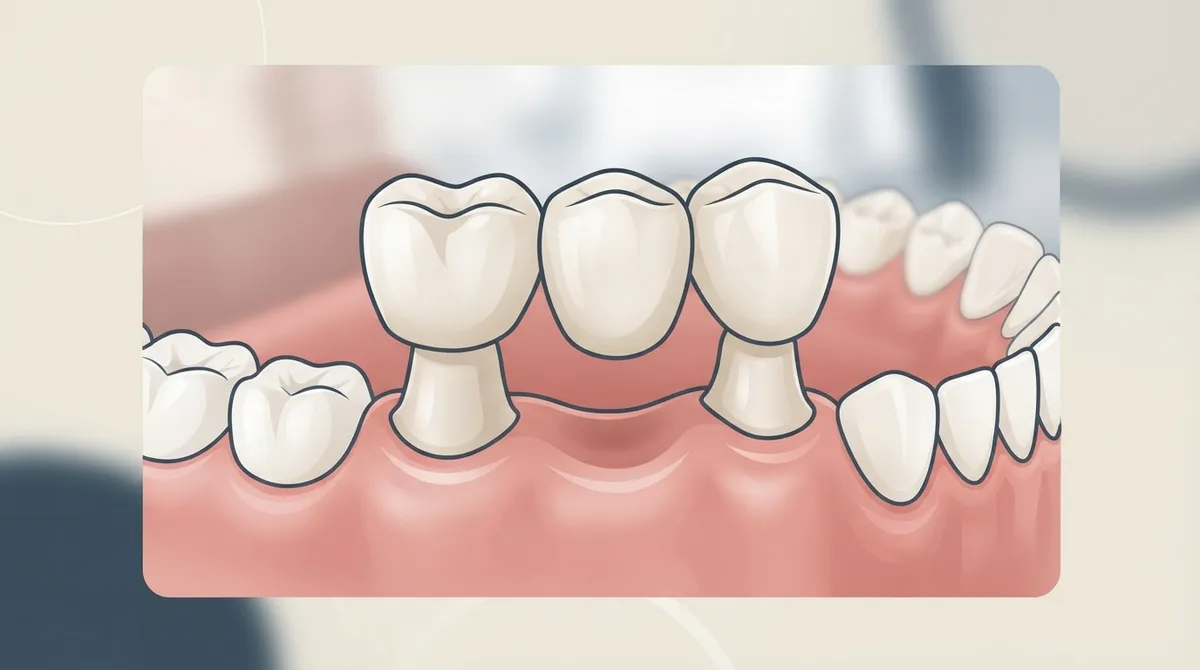
A dental bridge is a fixed restoration that replaces one or more missing teeth. It literally "bridges" the gap. A bridge usually includes one or more artificial teeth, called pontics. These pontics are held in place by natural teeth or dental implants on either side of the space.
Because it is fixed, you do not take it out at night like a removable partial denture. You brush and floss around it, and it stays put. Most people say it feels natural after a short adjustment period.
Why Fill the Gap at All?
It might seem easy to leave a missing tooth alone. But gaps can cause real trouble over time. Here are a few common reasons people choose a bridge:
- Easier chewing: A full row of teeth helps you eat a wider range of foods.
- A confident smile: Filling the space can lift your self-esteem right away.
- Clearer speech: Some gaps change the way certain sounds come out.
- Stable bite: Neighboring teeth can drift toward an empty space, which may shift your bite.
What Types of Dental Bridges Are There?
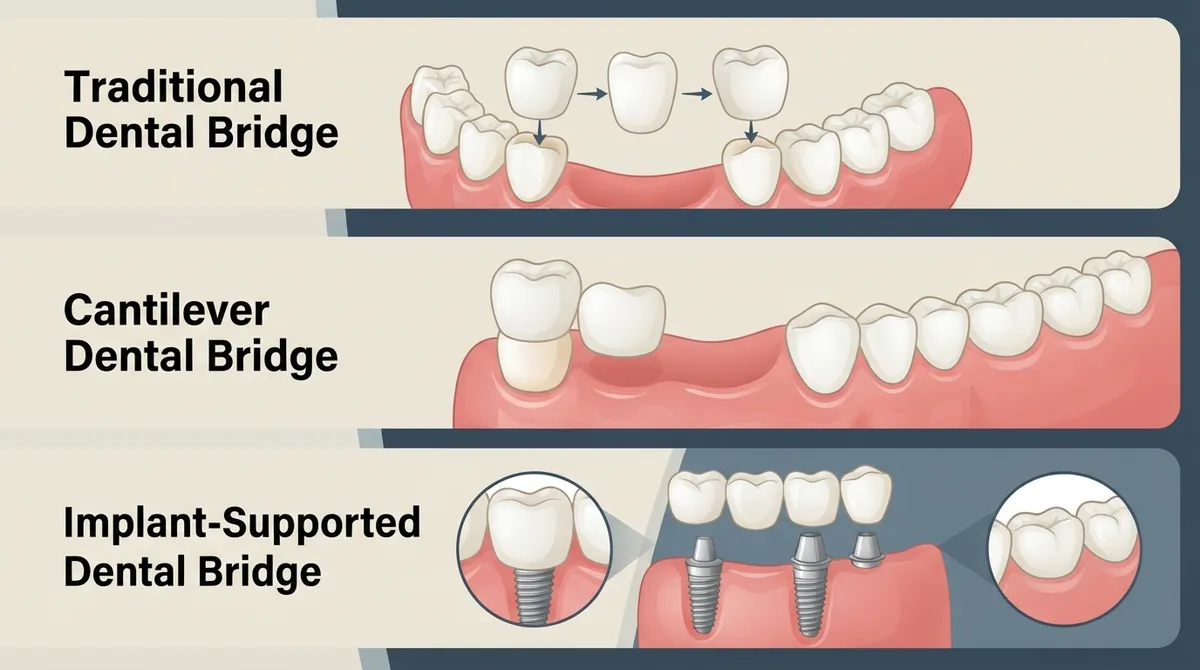
Not every bridge is the same. The right one depends on where the gap is, the health of nearby teeth, and your goals. Your dentist will look at your bite, your gums, and the supporting teeth before making a suggestion.
| Bridge Type | How It Works | Often Considered For |
|---|---|---|
| Traditional | Crowns on the teeth on both sides of the gap hold the pontic | Gaps with healthy teeth on both sides |
| Cantilever | Supported by a crown on only one side | Gaps with a neighboring tooth on just one side |
| Maryland (resin-bonded) | Bonded wings attach to the backs of nearby teeth | Often front teeth |
| Implant-supported | Attached to dental implants instead of natural teeth | Multiple missing teeth or when you want to protect neighboring teeth |
One thing to know: a traditional bridge may require reshaping the healthy teeth beside the gap. That removes a small amount of enamel for good. This is one reason your dentist will talk through alternatives, such as an implant or a removable partial denture, before you decide. If you want to learn more about replacing a missing tooth with a long-term fix, you can read about dental implants and how they compare.
How Does the Dental Bridge Process Work?
Getting a bridge is not a one-and-done visit in most cases. A conventional bridge is usually made over several appointments. Here is what the journey often looks like:
- Exam and planning. Your dentist checks your gums, bite, and supporting teeth. X-rays or scans help map out the best plan.
- Preparing the supporting teeth. The teeth that will hold the bridge are gently reshaped so crowns can fit over them. Numbing keeps you comfortable.
- Impressions or digital scans. These record the exact shape of your teeth and bite for a custom fit.
- Temporary bridge. A temporary is often placed to protect your teeth and keep your smile intact while you wait.
- Lab fabrication. A dental laboratory creates your final bridge. Cleveland Clinic reports this typically takes about two to four weeks.
- Final fitting. Your dentist checks the fit, color, and bite, then secures the permanent bridge.
Many patients ask, "Does getting a dental bridge hurt?" Most people feel pressure rather than pain, because the area is numbed. Some mild tenderness afterward is normal and usually settles within a few days.
How Long Does a Dental Bridge Last?
Bridges are built to last, but they are not forever. Cleveland Clinic gives an average lifespan of about five to 15 years. Your results can land on either side of that range.
A few things influence how long your bridge stays strong:
- The type of bridge you choose
- How well you brush, floss, and clean under the artificial tooth
- Your bite forces, including habits like teeth grinding
- The health of the supporting teeth and gums
The takeaway is simple. Good daily habits and regular checkups can help your bridge go the distance.
How Much Does a Dental Bridge Cost?
Cost is usually the next question, and it is a fair one. Prices vary by location, materials, the number of teeth being replaced, and any prep work you might need, such as treating gum disease. Humana's published estimates give a helpful ballpark, but remember these are broad numbers and not a local quote.
| Bridge Type | Estimated Cost Range |
|---|---|
| Traditional or cantilever | About $2,000 to $5,000 |
| Maryland (resin-bonded) | About $1,500 to $2,500 |
| Implant-supported | About $5,000 to $15,000 |
Will Insurance Help?
Often, yes. Delta Dental states that its plans typically cover about 50% to 80% of bridge costs, depending on plan details. Annual maximums, waiting periods, and your share of the bill can differ from policy to policy, so it pays to confirm your benefits.
At Charming Smiles of Ocoee, we accept many major plans, including MetLife, Aetna, Cigna, Delta Dental, Guardian, Humana, and more. You can review our insurance and financing options to see what fits. We also offer flexible payment plans and an in-house dental savings plan for patients without insurance. And if you want a head start, check out our current specials.
How Do You Find a Good Dental Bridge Dentist Near You?
Searching "dental bridge near me" gives you lots of results. So how do you choose? Rather than relying on a generic price you saw online, ask for an in-person exam and a written treatment estimate. Here is a simple checklist to guide you:
- Check credentials and experience. Ask how often the office places the type of bridge you need.
- Read recent patient feedback. Look for comments about comfort, honesty, and follow-up care.
- Confirm insurance. Make sure the office accepts your plan or offers clear financing.
- Look at convenience. Easy parking, flexible scheduling, and a friendly front desk make a big difference.
- Ask about comfort. If dental visits make you nervous, find a team that treats anxiety with care.
You can also read our guide on how to find the best dentist near you for more tips.
Why Choose Charming Smiles of Ocoee for Your Bridge?
At Charming Smiles of Ocoee, we believe a trip to the dentist should feel more like a spa visit than a chore. Led by Dr. Aliuska Lopez, known as a "smile expert," our team combines modern technology with gentle, personal care. You will find soothing music, streaming entertainment, pillows, blankets, and aromatherapy to help you relax. That is especially helpful if you have felt nervous about dental work before.
Our crowns and bridges care is designed around you. We take time to explain your options, talk through the pros and cons, and build a plan that matches your health, schedule, and budget. Whether you are a busy parent, a senior wanting comfortable care, or someone who just wants to smile again, you will be welcomed here. You can also learn more about us and our approach.
If you want to explore related reading, our article on getting a dental bridge in Ocoee goes a little deeper. And if you are weighing options, this comparison of dental implants versus bridges can help.
How Do You Care for a Dental Bridge?
Once your bridge is in place, a little daily care goes a long way. The supporting teeth and gums need protection, because bridges do not stop decay or gum disease from forming around them.
- Brush twice a day with a soft brush and fluoride toothpaste.
- Clean under the pontic. Use a floss threader, a water flosser, or an interdental brush to reach the space beneath the artificial tooth.
- Watch what you chew. Be gentle with very hard or sticky foods, especially early on.
- Keep your checkups. Regular exams and cleanings catch small problems before they grow.
For a deeper look at daily habits, see our tips on building a dental hygiene routine.
Dental Bridge vs. Implant vs. Partial Denture
Many people wonder if a bridge is the best choice or if another option fits better. Here is a quick comparison to get you thinking:
| Option | Key Benefit | Key Consideration |
|---|---|---|
| Dental bridge | Fixed, natural look, shorter timeline than an implant | May need reshaping of neighboring teeth |
| Dental implant | Replaces the root and protects nearby teeth | Usually a longer process and higher upfront cost |
| Partial denture | Often the most budget-friendly choice | Removable and may feel less secure |
There is no single "best" answer. The right pick depends on your gum health, the teeth around the gap, your budget, and your comfort. A personal exam is the only way to know for sure.
Ready to Fill the Gap and Smile Again?
A missing tooth does not have to hold you back. With the right plan, a dental bridge can help you chew comfortably, speak clearly, and show off your smile with confidence. The key is starting with a friendly, honest conversation and a clear written estimate.
We would love to meet you. Call us at (407) 378-3704 or book online to schedule your visit. You can find our location at 315 West Rd in Ocoee, or visit us on Google — Charming Smiles of Ocoee to see what our neighbors say. Follow along on the Charming Smiles Facebook page and the Charming Smiles Instagram page for smile stories and updates. Your charming smile is waiting.
FAQs
Q: How much does a dental bridge cost near me?
A: Costs vary by bridge type, materials, and how many teeth are involved. Humana's estimates run about $2,000 to $5,000 for traditional or cantilever bridges, $1,500 to $2,500 for Maryland bridges, and $5,000 to $15,000 for implant-supported ones. The best way to know your real price is an exam and a written estimate.
Q: Does dental insurance cover a dental bridge?
A: Often it does. Delta Dental says its plans typically cover about 50% to 80% of bridge costs, depending on the plan. Annual maximums and waiting periods differ, so we are happy to help you check your benefits before you start.
Q: How long does it take to get a dental bridge?
A: A conventional bridge usually takes several visits. After your teeth are prepared and scanned, the lab typically needs about two to four weeks to make the final bridge. A temporary bridge keeps your smile looking great in the meantime.
Q: Does getting a dental bridge hurt?
A: Most patients feel pressure, not pain, because the area is numbed. You may feel some mild tenderness for a few days afterward, which is normal. If you get nervous at the dentist, tell us and we will make the visit as calm as possible.
Q: How do I clean under a dental bridge?
A: Brush twice a day, then clean beneath the artificial tooth with a floss threader, water flosser, or interdental brush. This protects the supporting teeth and gums. Regular checkups and cleanings help your bridge last longer.