Can Invisalign Really Fix Severe Tooth Crowding?
Learn if Invisalign can fix severe tooth crowding, what affects success, and how Charming Smiles of Ocoee evaluates each case in Ocoee, FL.
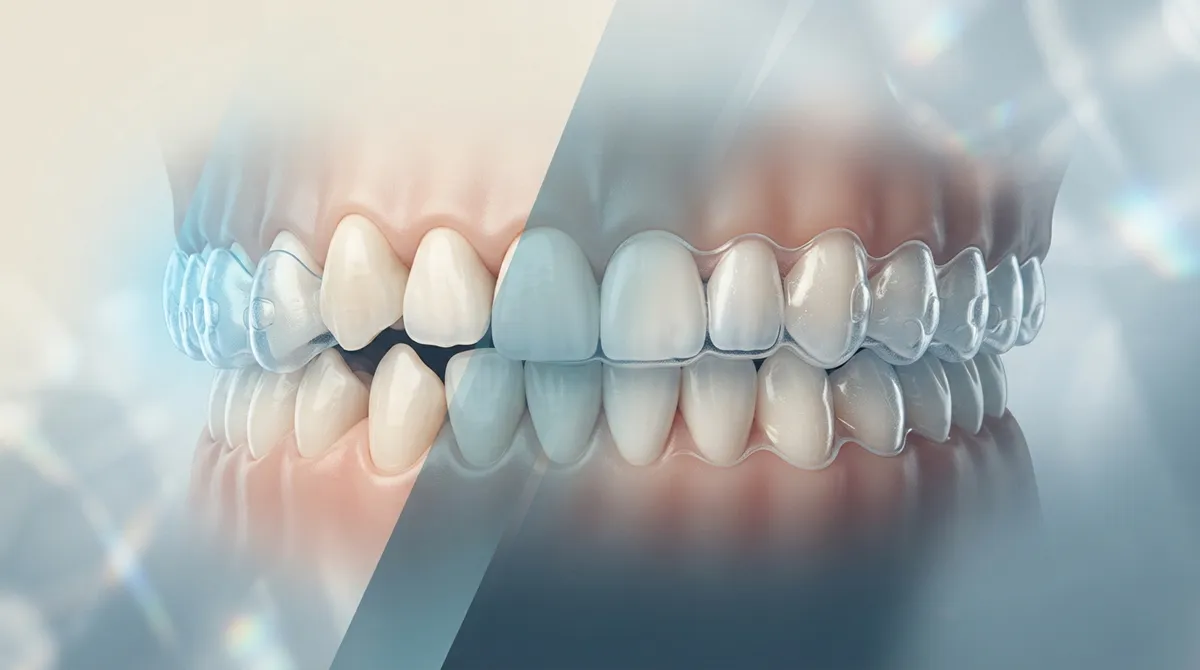
Key Takeaways
- Invisalign successfully treats severe crowding in many cases with 87% predictability in the upper arch and 81% in the lower arch, but arch expansion is far less reliable at only 49-83% depending on location.
- Severe crowding is defined as a gap of 6+ millimeters of missing arch space, and treatment success depends on multiple factors including location, bite relationship, gum health, and patient compliance with 20-22 hours daily wear.
- Space-making methods include interproximal reduction (IPR), arch expansion, proclination, distalization, or tooth extraction, with IPR being the least predictable technique requiring experienced provider expertise.
- A thorough evaluation with digital scans, X-rays, bite analysis, and periodontal exam is critical to identify cases where aligners alone won't work versus those needing braces, extractions, or combination approaches.
- Traditional braces often provide better control for severe rotations, difficult tooth movements, and extraction space closure, though patients report higher satisfaction with clear aligners overall despite lower predictability.
- Retainers are essential indefinitely after treatment to prevent relapse, and treatment duration for severe cases is longer than advertised timelines, with skipped wear time requiring additional refinement trays.
If you look in the mirror and see teeth stacked on top of each other, twisted sideways, or pushed out of line, you are not alone. Severe crowding is one of the most common concerns we hear at Charming Smiles of Ocoee. Many patients want to know if Invisalign for severe crowding is actually possible, or if metal braces are their only option. The good news is that clear aligners have come a long way. The tricky part is that severe crowding is complicated, and not every case fits neatly into a simple treatment box.
In this guide, we will break down what severe crowding really means, how Invisalign works to create space for your teeth, and when other tools like braces or extractions might be needed. We will also share real numbers from dental research so you know what to expect. Our goal is to help you feel confident and informed before you ever sit in the chair. Let's get started.
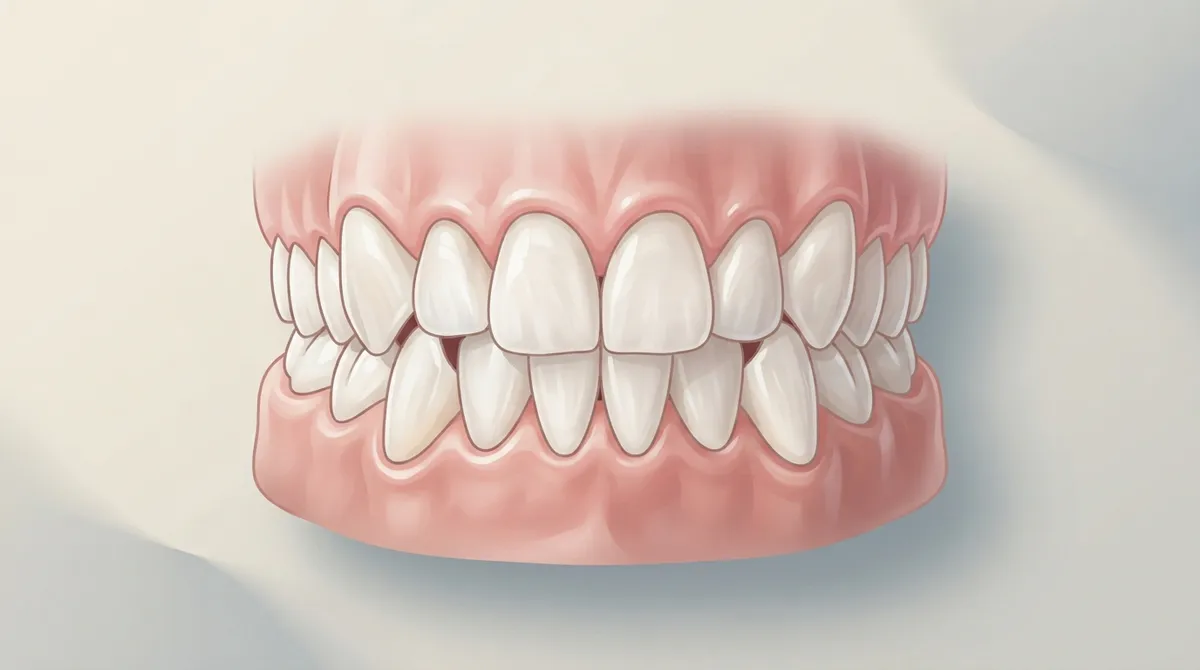
What Does Severe Crowding Actually Mean?
Crowding happens when your jaw does not have enough room for all your teeth. This causes teeth to twist, overlap, or push out of the dental arch. Dentists measure this space problem in millimeters, and it is called "arch-length discrepancy."
Most orthodontic experts agree that a gap of about 6 millimeters or more counts as severe crowding. But there is no single cutoff that applies to everyone. Your dentist needs to look at digital scans, X-rays, and your bite to know exactly how severe your case is.
Common Signs of Severe Crowding
- Teeth that overlap noticeably, especially in the front
- Teeth rotated so they face sideways instead of forward
- A tooth pushed completely outside the arch line
- Difficulty flossing because teeth sit too close together
- A smile that looks uneven or bunched up
- Teeth that erupted in the wrong position as a child or teen
If any of these sound familiar, a full evaluation is the best next step. Our team at orthodontics services can measure your crowding accurately and explain your options in plain language.
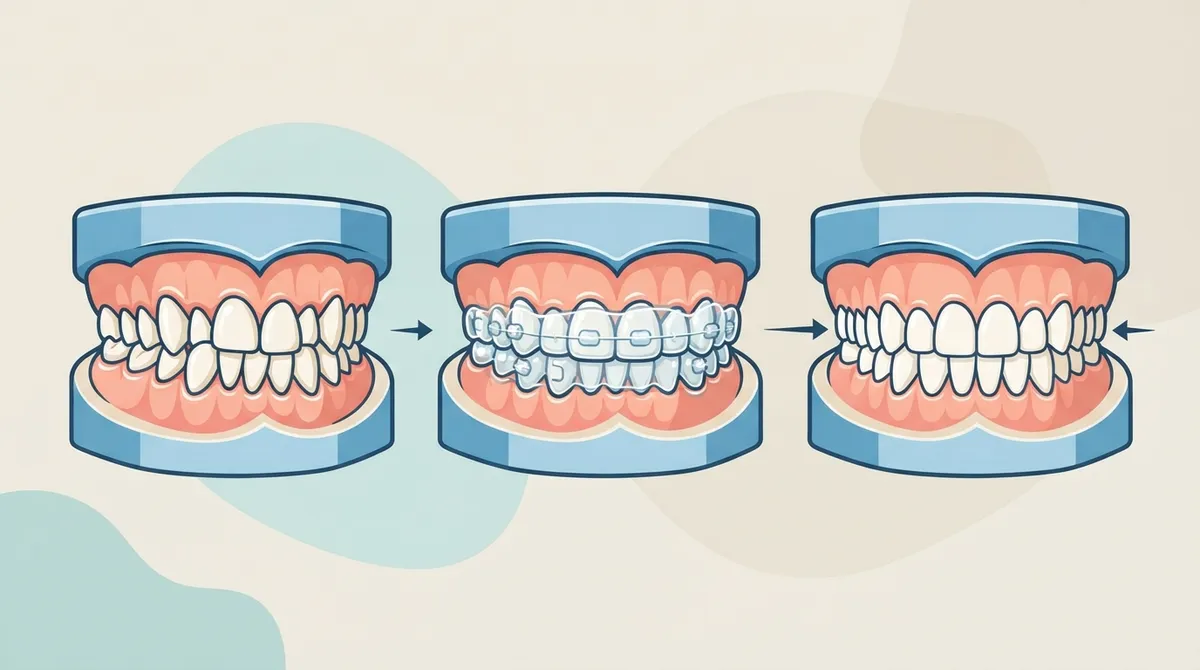
Can Invisalign Treat Severe Crowding?
Yes, in many cases Invisalign can treat severe crowding. But it is not automatic. Your dentist has to look at several factors before recommending clear aligners over traditional braces.
A 2022 study looked closely at how well clear aligners resolve crowding. Researchers found aligners were about 87% predictable in the upper arch and 81% predictable in the lower arch. That is a strong success rate for many patients. However, the same study found that widening the arch, called expansion, was far less reliable. Expansion predictability ranged from about 59% to 83% in the upper arch and only 49% to 67% in the lower arch, depending on which teeth were involved.
Factors That Affect Invisalign Success for Crowding
- How much space is missing (the more severe, the harder to treat with aligners alone)
- Where the crowding is located in your mouth
- Your bite relationship, including overbite or underbite issues
- The health of your gums and supporting bone
- Whether your case needs tooth extraction to create room
- Your commitment to wearing the trays as directed
This is why a personal consultation matters so much. What works for one patient may not work for another, even if their teeth look similar at first glance.
How Invisalign Creates Space for Crowded Teeth
Clear aligners cannot magically make your jaw bigger. Instead, your dentist uses one or more strategies to make room for your teeth to move into better positions.
Space-Making Methods Used With Aligners
- Interproximal reduction (IPR): Removing a tiny bit of enamel between teeth to create small gaps
- Arch expansion: Gently widening the arch to fit more teeth comfortably
- Proclination: Slightly tipping front teeth forward to gain space
- Distalization: Moving back teeth further back in the mouth
- Extraction: Removing one or more teeth in severe cases
Interestingly, research shows that IPR is actually the least predictable of these methods. This means your dentist needs real skill and careful planning to use it correctly. This is one reason why choosing an experienced provider matters so much for complex cases.
Invisalign vs Braces for Severe Crowding: A Quick Comparison
Many patients want to know which option gives better results. The truth is that both have strengths. Here is a simple breakdown.
| Factor | Invisalign (Clear Aligners) | Traditional Braces |
|---|---|---|
| Appearance | Nearly invisible | Visible metal or ceramic brackets |
| Removability | Removable for eating and brushing | Fixed in place until treatment ends |
| Control over rotation | Good for mild rotations, harder for severe ones | Stronger control, especially for canines and premolars |
| Extraction cases | Possible with attachments and elastics | Often more predictable for closing extraction spaces |
| Patient compliance needed | High (20-22 hours daily wear) | Low (fixed appliance, no removal) |
| Best for | Mild to moderate crowding, select severe cases | Complex bite issues, major tooth movement |
A 2018 clinical review found the strongest evidence for Invisalign was in non-extraction cases with mild-to-moderate crowding in adults whose jaws had stopped growing. This does not mean severe cases are hopeless. It simply means your dentist needs to weigh the evidence carefully for your specific mouth.
When Extractions May Be Needed
Some patients with severe crowding need a tooth removed to make enough room. This is more common when the crowding measurement is very high, or when there is simply no other way to fit all the teeth properly.
Aligners can sometimes close extraction spaces, but this requires extra tools like attachments (small tooth-colored bumps that grip the aligner), elastics, and careful staging of your treatment plan. A 2024 comparison of complex orthodontic cases found that fixed braces often gave better control over these tricky movements, though patients tended to report higher satisfaction with clear aligners overall. Every case is different, so this is not a hard rule, just something worth discussing with your provider.
Movements That Are Generally Harder for Aligners
- Bodily movement of tooth roots (not just the crown)
- Root torque adjustments
- Difficult rotations, especially on canines and premolars
- Extrusion (pulling a tooth down into position)
- Closing large extraction gaps
- Major bite corrections involving the jaw
An expert-consensus report from 2025 specifically noted that aligners are not recommended for certain situations, such as clinically short crowns or cases needing a lot of posterior tooth movement. This is exactly why a hands-on exam matters more than any online quiz or photo review.
What Happens During Your Invisalign Evaluation
At Charming Smiles of Ocoee, we never guess. A proper evaluation includes several steps to make sure Invisalign is the right fit for your smile goals.
Steps in a Thorough Invisalign Consultation
- Full photographs of your face, smile, and bite
- Digital intraoral scan or physical impressions of your teeth
- X-rays to check root position and bone health
- Bite analysis to spot any overbite, underbite, or crossbite issues
- Periodontal exam to check gum health
- Discussion of your goals, timeline, and budget
- A clear treatment plan showing which movements are predictable
This process helps us catch things like impacted teeth, bone limits, or signs of gum disease before starting treatment. Skipping these steps can lead to disappointing results or a longer treatment time than expected.
How Long Does Invisalign Take for Severe Crowding?
This is one of the most common questions we get, and honestly, there is no single answer. Severe crowding usually needs more aligner trays and more refinements along the way compared to mild cases. Advertised timelines you might see online for simple crowding do not apply to complex cases.
Wearing your aligners for the recommended 20 to 22 hours a day is critical. If you skip wear time or lose trays often, your treatment can stretch out or lose accuracy. This is called poor "tracking," and it usually means you will need extra refinement trays to get back on schedule.
Tips to Keep Your Treatment on Track
- Wear your aligners as close to full-time as possible
- Only remove them to eat, drink (except water), and brush
- Switch to new trays exactly when instructed
- Keep a spare case so you never lose a tray
- Attend every check-in appointment, even if things feel fine
Our team helps patients stay on schedule with reminders and regular monitoring, so your treatment moves forward smoothly.
Risks and Realistic Expectations
Like any dental treatment, Invisalign comes with some risks worth knowing about. Being informed helps you make the best decision for your smile.
- Temporary discomfort or pressure when switching to new trays
- Risk of cavities if you do not clean your teeth and trays properly
- Possible gum recession in patients who are already prone to it
- Rare risk of root resorption during major tooth movement
- Bite changes that may need adjustment after treatment
- Relapse if retainers are not worn as directed afterward
Retainers are almost always needed after treatment ends, often on a long-term or even indefinite basis. Think of retainers as ongoing maintenance, similar to how you keep visiting for cleanings even after your teeth are healthy.
Why Choose Charming Smiles of Ocoee for Your Invisalign Journey
Dr. Aliuska Lopez and our team have built a reputation as trusted smile experts in Ocoee, Florida. We combine advanced digital scanning technology with a calming, spa-like office to make your visits comfortable, even if you feel nervous about dental work. If you are dealing with dental anxiety, our gentle approach and relaxing amenities can make a real difference.
We proudly serve patients from all over the Ocoee area, and we welcome the chance to review your specific crowding case in detail. You can explore our full Invisalign program to learn more about how treatment works from start to finish. We also invite you to visit us on Google — Charming Smiles of Ocoee to read real reviews from patients who have walked this same path.
Other Services That Support a Healthy, Aligned Smile
- General dentistry checkups to catch issues early
- Cosmetic dentistry for a complete smile makeover
- Dental implants for missing teeth alongside orthodontic care
- Teeth whitening services once your alignment is complete
- Pediatric dentistry for younger family members
You can also learn more about affordable options through our insurance & financing options or ask about our dental savings plan if you do not have insurance. We also regularly post updates and patient stories on our Charming Smiles Facebook page and Charming Smiles Instagram page, so feel free to follow along for tips and smile transformations.
Making Your Decision With Confidence
Severe crowding does not have a one-size-fits-all answer. Some patients are excellent candidates for Invisalign alone. Others may need a combination approach involving IPR, expansion, or even extractions. A smaller group may benefit more from traditional braces or a referral for jaw-related concerns. The only way to know for sure is a professional evaluation with digital imaging and a real conversation about your goals.
According to the American Dental Association, successful orthodontic outcomes depend heavily on accurate diagnosis and consistent follow-through, regardless of which appliance is used. This lines up exactly with what we see in our own practice every day.
Ready to find out if Invisalign can fix your severe crowding? You can easily book online for a consultation, or reach out directly and call us at (407) 378-3704 to speak with our friendly team. We also invite you to stop by our location near Publix in Ocoee to see our comfortable, welcoming office for yourself. Your straighter, more confident smile is closer than you think, and we would love to help you get there.
FAQs
Q: Can Invisalign fix severe crowding without extractions?
A: Sometimes, yes! It really depends on how much space your teeth need. Your dentist may use expansion, interproximal reduction, or mild tooth movement to avoid pulling a tooth. But in some very tight cases, extraction might still be the best path to a healthy, stable smile.
Q: How much crowding is too severe for Invisalign?
A: There is no exact cutoff, but many dentists consider about 6 millimeters or more of missing space to be severe. Even then, Invisalign can sometimes work with the right plan. The only way to know for sure is a hands-on exam with digital scans and X-rays.
Q: Is Invisalign or braces better for severe crowded teeth?
A: Both can work well, and it truly depends on your unique case. Braces often give more control for tricky rotations and extraction spaces, while Invisalign offers a more discreet, removable option. We will walk you through the pros and cons for your specific smile during your consultation.
Q: How long does Invisalign take for severe crowding?
A: Severe cases usually take longer than mild ones because more trays and refinements are often needed. We cannot give you an exact timeline without seeing your teeth first, but we promise to give you an honest, realistic estimate at your visit.
Q: Will I need a retainer after Invisalign treatment for crowding?
A: Yes, almost everyone needs a retainer after active treatment ends. Think of it as protecting your investment. Teeth naturally want to shift back over time, so wearing your retainer as directed helps keep that beautiful new smile in place for years to come.