Can Dental Implants Really Fix Your Speech?
Discover how dental implants can improve speech clarity, what to expect during adjustment, and why Charming Smiles of Ocoee is trusted for implant care.

Key Takeaways
- Dental implants restore stable tongue contact points, allowing clearer formation of sounds like 's,' 'f,' 'v,' and 'th' that are typically distorted by missing teeth or loose dentures.
- Most patients adapt to new implants within 2-4 weeks; temporary speech changes like mild lisps are normal and resolve through daily practice like reading aloud for 10-15 minutes.
- Unlike removable dentures that shift and create clicking sounds, fixed implants provide consistent, predictable airflow and tongue contact for naturally confident speech.
- Implants benefit adults with long-term denture issues, seniors with age-related tooth loss, those missing front teeth, and voice professionals who rely on clear speech for their work.
- All-on-4 implants replacing a full arch may have slightly longer adjustment periods but show similar speech improvement timelines with consistent practice and patience.
- Adjustment techniques like practicing tricky words in a mirror, speaking slowly initially, and asking your dentist for small restoration adjustments can accelerate the speech adaptation process.
Have you ever noticed someone talking with a whistle-like sound or a slight slur after losing a tooth? Missing teeth do more than change your smile. They change how you talk, too. If you have gaps in your smile or wear loose dentures, you may already know this problem firsthand. The good news? Improved speech with implants is a real benefit that many patients notice, often within just a few weeks of treatment.
At Charming Smiles of Ocoee, we hear this question a lot. Patients want to know if dental implants can help them speak more clearly, especially if they have struggled with slipping dentures or missing teeth for years. Dr. Aliuska Lopez and our team understand how much speech affects your confidence at work, at home, and in social settings. Let's break down exactly how implants can help your speech, what to expect during healing, and how to get the smoothest results possible.
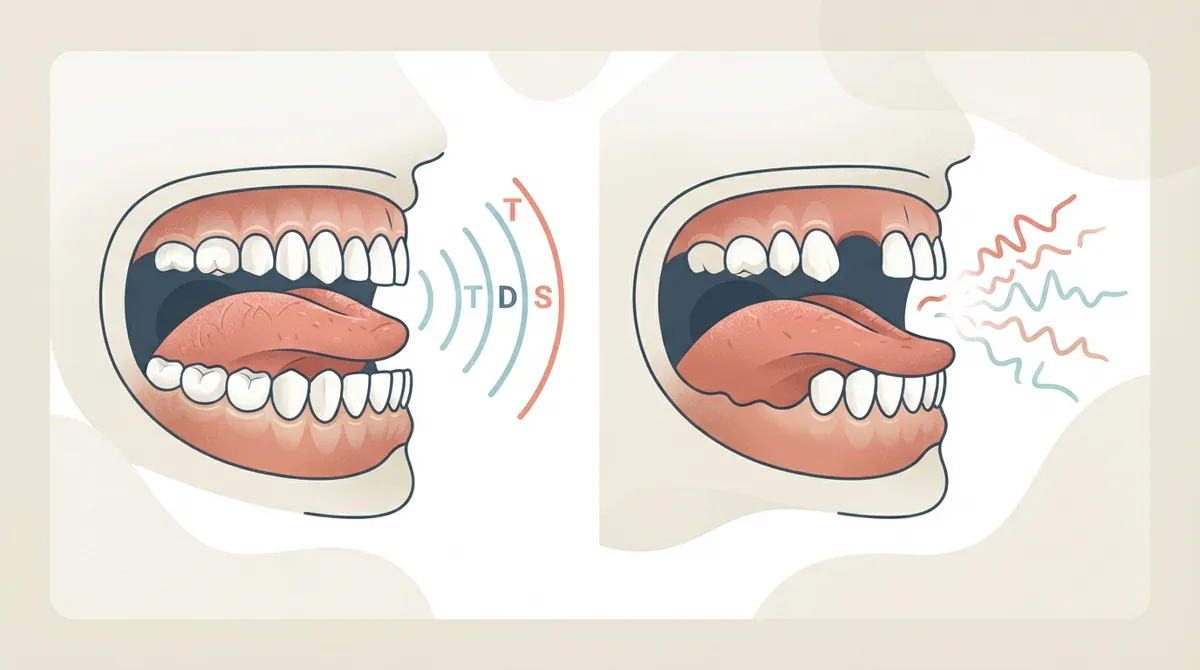
Why Missing Teeth Change the Way You Talk
Your teeth play a bigger role in speech than most people realize. Your tongue touches your teeth to make certain sounds. Air flows around your teeth to shape words. When teeth go missing, this whole system gets thrown off.
Here's what typically happens when teeth are missing:
- The tongue loses its normal contact points, making some sounds harder to form
- Air escapes in the wrong places, creating whistling or hissing noises
- Certain letters become tricky, especially "s," "f," "v," and "th" sounds
- Speech may sound mumbled or unclear, especially in the front of the mouth
- Confidence drops, so people may talk less or avoid certain words
This is common in patients dealing with tooth loss from age, injury, or gum disease. It's also a frequent complaint among denture wearers, since removable dentures can shift while talking.
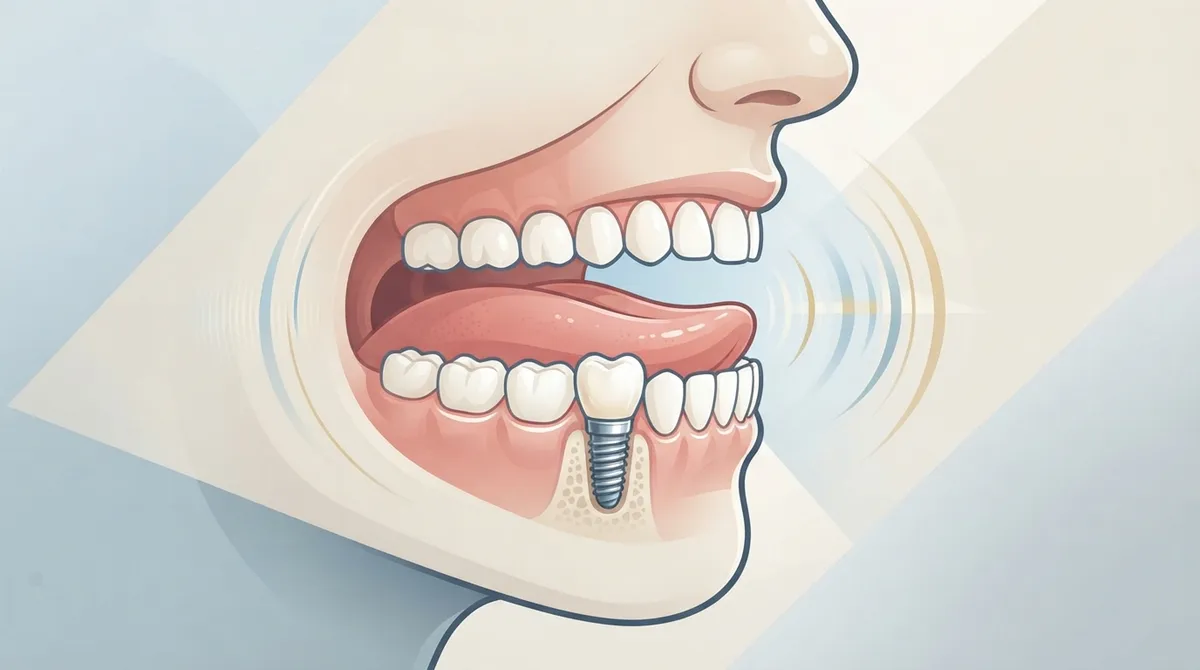
How Dental Implants Support Clearer Speech
Dental implants are designed to act like natural tooth roots. They are placed directly into the jawbone and topped with a crown, bridge, or implant-supported denture. Because they are fixed in place, they give your tongue something stable to work with again.
Here is how implants help improve speech over time:
- Stable tongue contact points return. Your tongue can touch the implant-supported teeth just like it would touch natural teeth.
- Airflow becomes more predictable. With teeth back in their proper position, air moves the way it should when you talk.
- No more slipping or clicking. Unlike removable dentures, implants don't move around, so your speech doesn't get interrupted by shifting appliances.
- Facial structure gets support. Implants help hold your lips and cheeks in a natural position, which affects how words come out.
- Confidence grows. As speech becomes more natural, many patients feel more comfortable talking in meetings, on the phone, and in social settings.
What to Expect During the Adjustment Period
It's normal to feel like your speech is a little off right after getting implants or a new implant-supported restoration. This is not a sign that something went wrong. Your mouth simply needs time to adjust to the new shape and feel of your teeth.
Common short-term speech changes include:
- A slight lisp when saying words with "s" sounds
- Trouble with "f" and "v" sounds at first
- Feeling like your tongue doesn't know where to go
- Speaking a little more slowly than usual while you adjust
According to dental clinic patient guides, most people notice these speech differences lasting about one to two weeks, with the majority adapting fully within two to four weeks. Patients who receive All-on-4 implants often report similar timelines, with speech becoming much more natural as they get used to their new teeth.
Why This Adjustment Period Happens
Think of it like getting new shoes. At first, they feel different under your feet. After a week or two of walking in them, you stop noticing them at all. Your mouth works the same way with new teeth or implants.
Your brain needs to relearn where your tongue should go for each sound. This is completely normal and expected. The muscles in your tongue, lips, and cheeks are adjusting to a new "map" of your mouth.
Timeline: From Placement to Clear Speech
Understanding the full implant timeline helps set realistic expectations. Here is what the process generally looks like:
| Stage | What Happens | Speech Impact |
|---|---|---|
| Implant Placement | Implant post is placed into the jawbone | Minimal speech change if temporary teeth are used |
| Healing/Osseointegration | Implant fuses with the bone, usually over 3-6 months | Speech may vary depending on temporary restoration |
| Final Restoration Placed | Crown, bridge, or denture is attached | Speech changes are most noticeable here at first |
| Adjustment Period | Tongue and lips adapt to new teeth | Most speech issues resolve within 2-4 weeks |
| Fully Adapted | Speech feels normal and natural | Clear, confident speech restored |
This timeline can vary based on how many teeth are being replaced and the type of restoration used. Patients getting a single implant crown often adjust faster than those getting a full arch of implant-supported dentures.
Simple Ways to Speed Up Speech Adjustment
You don't have to just wait it out. There are practical steps you can take to help your mouth adjust faster and get back to clear speech sooner.
- Read out loud daily. Spending 10 to 15 minutes reading aloud each day helps train your tongue and lips to work with your new teeth.
- Practice tricky words. Focus on words with "s," "f," "v," and "th" sounds, since these are usually the hardest at first.
- Talk slowly at first. Speaking a bit slower gives your tongue time to find the right position.
- Repeat sounds in front of a mirror. Watching your mouth move can help you notice small adjustments you need to make.
- Stay patient with yourself. Give your mouth time. Most people see real improvement within a few weeks.
- Ask about small adjustments. If speech issues linger, your dentist may be able to make small changes to the fit of your restoration.
Dental Implants vs. Dentures: Speech Comparison
Many patients switching from dentures to implants ask how the speech experience compares. Here's a simple breakdown:
| Factor | Removable Dentures | Dental Implants |
|---|---|---|
| Stability While Talking | May shift or slip | Fixed in place, no movement |
| Clicking Sounds | Common issue | Rarely happens |
| Tongue Contact | Less predictable | More natural, consistent feel |
| Long-Term Speech Clarity | Can vary day to day | Tends to stay consistent once adapted |
| Confidence in Conversation | May cause hesitation | Often improves over time |
This is one reason so many patients at our Ocoee practice choose to move from dentures to implants. If you're weighing your options, our team can walk you through what to expect based on your specific case. Feel free to explore dentures and dental implants to compare both paths.
Who Benefits Most from Improved Speech with Implants
While anyone missing teeth can experience speech changes, certain groups tend to notice the biggest improvement after getting implants.
- Adults who have worn loose or ill-fitting dentures for years
- Seniors dealing with tooth loss from age or gum disease
- Patients missing front teeth, which play a big role in certain sounds
- People who use their voice professionally, like teachers or salespeople
- Anyone who has felt embarrassed or self-conscious about speaking clearly
If you fall into any of these categories, it may be worth scheduling a consultation to see if implants are a good fit for you. Our dental savings plan and insurance & financing options can also help make treatment more affordable.
All-on-4 Implants and Speech: What's Different?
Patients getting All-on-4 implants, which replace a full arch of teeth using just four implants, sometimes experience a slightly longer adjustment period. This is because more teeth are being replaced at once, which means more changes for your tongue and lips to get used to.
Most patients with All-on-4 implants report mild, temporary speech changes that improve within a few weeks. The key is patience and practice. Reading aloud, repeating tricky words, and giving your mouth time to adapt all help speed up the process, just like with single implants.
Why Choose Charming Smiles of Ocoee for Your Implant Journey
Dr. Aliuska Lopez and our team at Charming Smiles of Ocoee understand that getting implants is about more than just your smile. It's about your confidence, your comfort, and your ability to communicate clearly with the people you love. We take time to explain what to expect at every step, from placement through healing to your final restoration.
Our spa-like office near Publix in Ocoee is designed to make every visit relaxing, especially for patients who feel nervous about dental work. We offer amenities like soothing music, comfy blankets, and streaming entertainment to help you feel at ease. You can read what our patients say by checking out testimonials or visit us on Google — Charming Smiles of Ocoee to see real reviews from our community.
We also share regular updates and patient stories on our Charming Smiles Facebook page and Charming Smiles Instagram page, so you can see behind-the-scenes moments and smile transformations.
Steps to Get Started with Implants at Charming Smiles
If you're ready to explore how implants could improve your speech and your smile, here's what the process looks like at our Ocoee office:
- Schedule a free dental implant consultation to discuss your goals
- Get a full exam, including any needed X-rays, to check your jawbone health
- Review your treatment plan and financing options with our team
- Have your implant placed by our experienced clinical team
- Heal for a few months while your implant bonds with your jawbone
- Receive your final crown, bridge, or implant-supported denture
- Practice speech exercises during your adjustment period
- Enjoy clearer speech and a more confident smile
Right now, we're offering a free dental implant consultation and $200 off dental implants for new patients. This is a great time to find out if implants are right for you, especially if speech clarity is one of your goals.
Frequently Asked Questions About Speech and Implants
We'll cover common questions from patients below, but feel free to call us at (407) 378-3704 if you have more specific concerns about your own situation.
A Word on Realistic Expectations
It's important to know that speech improvement is a gradual process, not an instant fix. Most patients see steady progress over two to four weeks. Staying consistent with practice and giving your mouth time to adjust makes a big difference in how quickly you feel comfortable talking again.
Our team is here to support you through every stage, from your first consultation to your final follow-up visit. We want you to feel confident not just in how your smile looks, but in how it sounds when you talk, laugh, and connect with the people around you.
Ready to Talk with Confidence Again?
Missing teeth shouldn't hold back your voice or your confidence. Dental implants offer a stable, natural-feeling solution that can help restore clear speech along with a beautiful smile. If you've been dealing with slipping dentures, gaps in your smile, or speech that just doesn't feel right, our team at Charming Smiles of Ocoee is ready to help.
Take the first step toward clearer speech and a more confident smile. Visit our location in Ocoee to learn more about our free implant consultations, or reach out today to get your questions answered by our friendly team.
FAQs
Q: How do dental implants improve speech?
A: Dental implants give your tongue stable contact points again, just like natural teeth. This helps you form sounds more clearly and control airflow better when you talk, which many patients notice within a few weeks of adjusting.
Q: Can dental implants make speech worse at first?
A: Yes, it's common to notice small speech changes right after getting your final restoration. This is temporary and usually gets better within one to four weeks as your tongue and lips adjust to your new teeth.
Q: How long does it take to speak normally after dental implants?
A: Most patients feel back to normal within two to four weeks. Practicing by reading aloud and repeating tricky sounds each day can help speed up this process.
Q: Are implants better than dentures for speech?
A: Many patients find implants easier to talk with because they don't slip or click like removable dentures can. Since implants stay fixed in place, your tongue has a more predictable surface to work with.
Q: Can speech therapy help after dental implant treatment?
A: For most patients, simple practice like reading aloud is enough to adjust. In rare cases where speech issues linger, your dentist may suggest small adjustments to your restoration or additional practice techniques.