Bridge vs Implant: Which Is Better for Your Smile?
Bridge vs implant: which is better? Compare timelines, risks, costs, and care to find the best way to replace a missing tooth in Ocoee, FL.
Key Takeaways
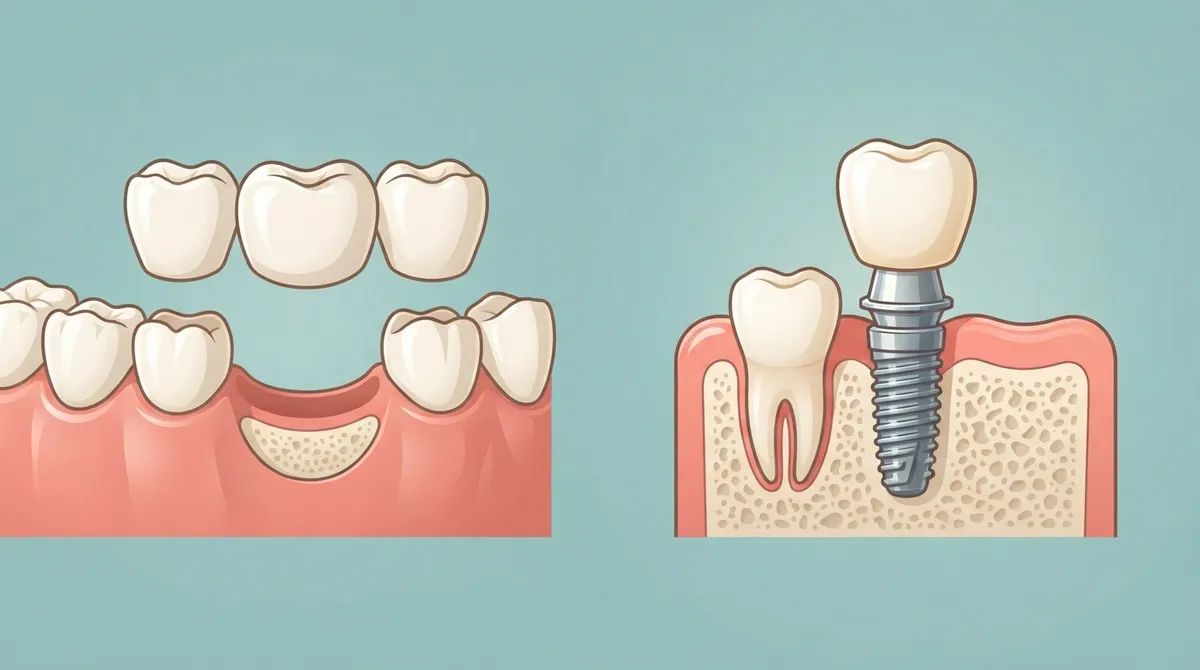
- Neither a bridge nor an implant is best for everyone; the right choice depends on neighboring teeth, jawbone and gum health, medical history, timeline, budget, and goals.
- A bridge usually requires reshaping healthy neighboring teeth for crowns, while an implant stands alone and leaves those teeth untouched.
- Implants typically take several months because the post must bond with the jawbone, whereas bridges are often completed sooner and usually avoid surgery.
- Long-term survival is similar: a 2018 review found no statistically significant difference between tooth-supported and implant-supported three-unit bridges (about 96-97% yearly survival).
- Only an implant replaces the tooth root and can help preserve jawbone at the gap, which bridges cannot do.
- Ask your dentist for a written, case-specific cost estimate, since upfront price differences and long-term maintenance, repairs, and grafting can change the total picture.
Losing a tooth can feel like a big deal. Maybe it happened after an accident, a stubborn cavity, or years of wear and tear. Now you are staring at a gap and wondering what to do next. Two options come up again and again: a dental bridge or a dental implant. So, bridge vs implant, which is better? The honest answer is that it depends on you.
Here is the good news. Both options can bring back your smile, your bite, and your confidence. They just work in different ways. In this friendly guide, we will walk through how each one works, the pros and cons, timelines, costs, and the questions to ask your dentist. By the end, you will feel ready to talk about your options with a trusted team like Charming Smiles of Ocoee.
The Short Answer: Is a Bridge or an Implant Better?
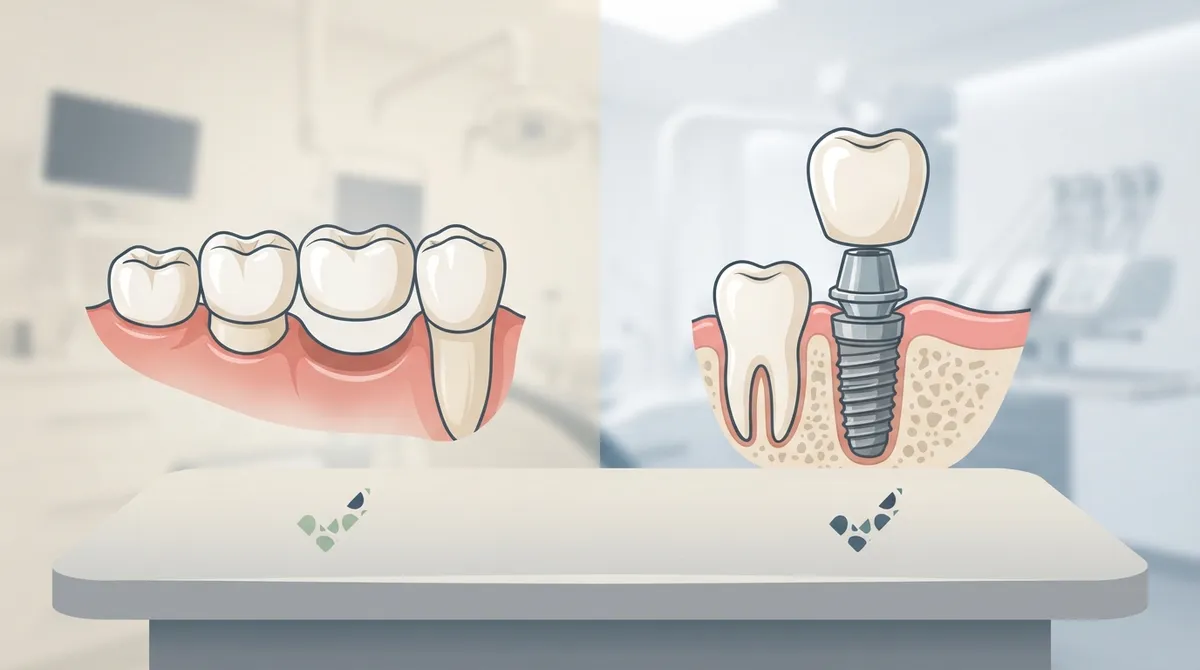
Neither choice wins for everyone. Research does not show that one option is best for every patient. The right pick depends on the teeth next to the gap, your jawbone and gum health, your medical history, your timeline, your budget, and your personal goals.
A dentist needs to examine your mouth before making a call. Think of it like choosing shoes. A great pair for one person may pinch another. The goal is to find the fit that works for your mouth.
How Does a Dental Bridge Work?
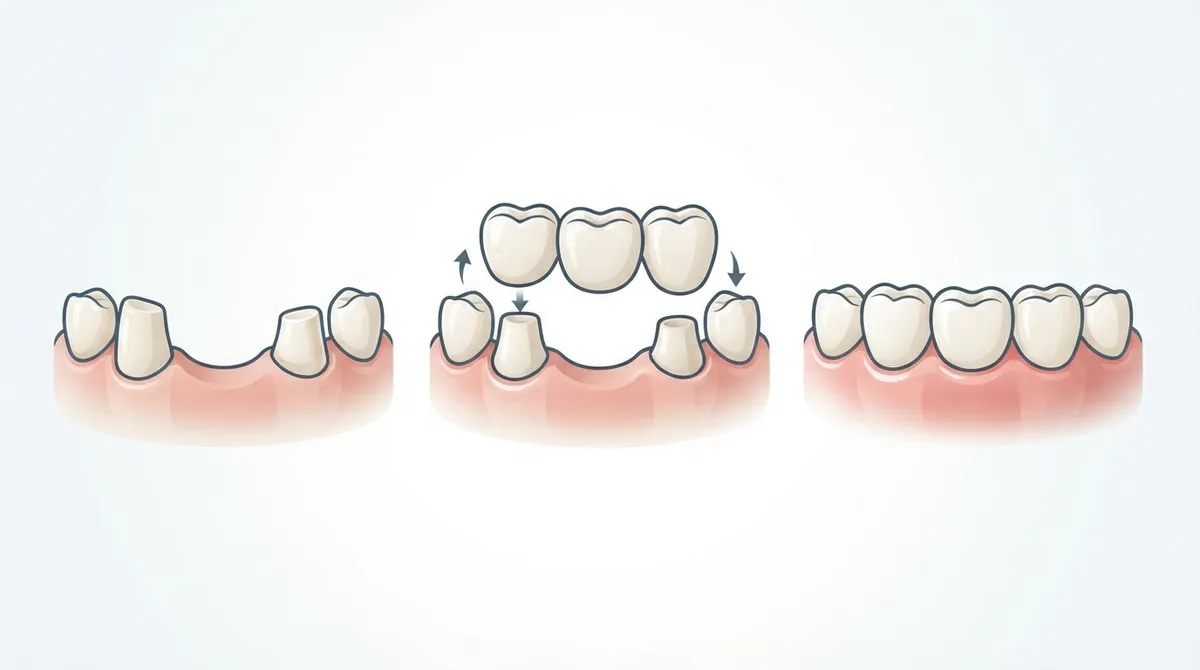
A dental bridge fills the gap from a missing tooth by "bridging" the space. A conventional bridge replaces the visible part of the tooth, but not the root. It is usually held in place by crowns placed on the teeth on each side of the gap. Those neighboring teeth are called abutment teeth.
What Happens During Bridge Treatment
- Your dentist examines your teeth, gums, and X-rays.
- The neighboring teeth are reshaped so crowns can fit over them.
- Impressions or digital scans are taken of your mouth.
- A temporary bridge protects your teeth while the final one is made.
- The final bridge is checked, adjusted, and cemented in place.
Many patients like that a bridge can often be finished sooner than an implant, depending on the case. If you want to learn more about this option, take a look at our crowns & bridges page.
Pros and Cons of a Dental Bridge
- Pro: No surgery is needed in most cases.
- Pro: Treatment is often faster than an implant.
- Pro: It may suit patients who cannot have implant surgery.
- Con: Healthy neighboring teeth usually must be reshaped.
- Con: Those supporting teeth can face a higher risk of decay, root canal problems, or fractures.
- Con: It does not replace the tooth root, so it does not stimulate the jawbone in the gap.
- Con: You need to clean carefully under the bridge every day.
How Does a Dental Implant Work?
A dental implant replaces the root of the missing tooth. A small fixture is placed into the jawbone, and over time it bonds with the bone. A crown is then attached on top. Because it stands on its own, an implant does not rely on the teeth next to it.
If you want a deeper look at the procedure, visit our dental implants page.
What Happens During Implant Treatment
- You have an exam and imaging to check bone and gum health.
- The implant is placed in the jawbone during a minor surgical visit.
- You heal for a period of time while the implant fuses with the bone.
- A connector piece called an abutment is attached.
- Your custom crown is placed to complete the tooth.
Pros and Cons of a Dental Implant
- Pro: It does not require reshaping the teeth next to the gap.
- Pro: It can help preserve bone at the missing tooth site.
- Pro: It looks, feels, and functions much like a natural tooth.
- Con: It requires surgery and enough healthy bone and gum tissue.
- Con: It often takes several months from start to finish.
- Con: Costs are often higher at the start.
Bridge vs Implant: A Side-by-Side Comparison
Sometimes a quick table makes things click. Here is how the two options compare on the points most patients ask about.
| Factor | Dental Bridge | Dental Implant |
|---|---|---|
| What it replaces | The visible tooth only | The root and the visible tooth |
| Neighboring teeth | Usually reshaped for crowns | Not reshaped |
| Surgery needed | Usually no | Yes, minor oral surgery |
| Typical timeline | Often completed sooner | Often several months |
| Bone support | Does not replace the root | Can help preserve bone |
| Upfront cost | Often lower | Often higher |
| Daily care | Clean beneath the bridge | Brush, floss, and keep up checkups |
Remember, this table gives general trends. Your own case may look a little different.
Which Lasts Longer?
This is one of the most common questions we hear. The research gives us some helpful numbers, but they are study estimates, not promises for any one person.
- A 2008 meta-analysis reported a 5-year survival rate of 96.8% for implants supporting single crowns.
- A 2018 systematic review of three-unit bridges found yearly survival estimates of 96.4% for tooth-supported bridges and 97.4% for implant-supported bridges, with no statistically significant difference.
- A 2024 long-term study estimated 25-year survival of 84% for tooth-supported single crowns and 87% for implant-supported single crowns.
So both options can last many years with good care. Long-term results depend on the type of restoration, how well the patient is chosen for the treatment, and how well it is maintained. Neither choice is immune to repairs or replacement down the road.
What Risks Should You Know About?
Every dental treatment comes with some risk. Being informed helps you feel more at ease.
Implant Risks
Implant surgery can carry risks such as infection, nerve or sinus injury, and failure of the implant to bond with the bone. Over time, an implant can also develop gum and bone inflammation, called peri-implant disease. The same research summary reported peri-implantitis or soft-tissue complications around 9.7% of single crowns at five years. Screw or abutment loosening was reported in 12.7% by five years. These numbers vary by study.
Bridge Risks
A bridge can loosen or fail over time. The supporting teeth can also develop decay, need a root canal, or fracture. That is why careful cleaning matters so much with a bridge.
If you are thinking about any procedure, it also helps to read about common mistakes. Our article on 5 Dental Implant Mistakes That Could Cost You Thousands is a great place to start.
How Long Does Each Treatment Take?
Time matters, especially if you have a big event coming up or just want the gap filled soon.
A bridge can often be completed sooner, depending on your situation. An implant takes longer because the fixture needs time to bond with your bone. Cleveland Clinic patient guidance notes that implant treatment may take up to six months from start to finish. If you need bone grafting or other prep work, that timeline can stretch further.
So if speed is your top priority, a bridge may feel more convenient. If you are willing to wait for a solution that does not touch the neighboring teeth, an implant may be worth it.
What About Cost and Insurance?
Implants often cost more upfront than bridges, and insurance coverage can differ between the two. But the full picture is bigger than the first bill. Lifetime cost depends on maintenance, repairs, possible replacement, and any extra procedures like bone grafting.
The best move is to ask for a written, case-specific estimate. General price comparisons can be misleading because every mouth is different.
We want cost to feel manageable. Explore our insurance & financing options, our payment plans, and our dental savings plan. You can also check our current specials, which include a free dental implant consultation. For local pricing insight, see How Much Do Dental Implants Cost in Ocoee, FL?
How Do You Care for a Bridge or an Implant?
Good habits protect your investment, no matter which option you choose.
- Brush twice a day with a soft toothbrush.
- Clean between your teeth daily. With a bridge, use a floss threader or water flosser to reach under it.
- With an implant, floss or use interdental brushes around the crown and gumline.
- Keep up with regular checkups and professional cleanings.
- Tell your dentist right away if something feels loose or sore.
Both options need ongoing care and professional maintenance. Small habits really do add up to a longer-lasting smile.
Who Is a Better Candidate for Each Option?
Here are a few general ideas. Your dentist will confirm what fits your case.
A Bridge May Be a Good Fit If You:
- Have neighboring teeth that already need crowns.
- Prefer to avoid surgery.
- Want a faster treatment timeline.
- Have health or bone concerns that make implants less suitable.
An Implant May Be a Good Fit If You:
- Have healthy neighboring teeth you want to leave untouched.
- Have enough jawbone and healthy gums, or are open to grafting.
- Want a long-term solution that acts like a natural tooth.
- Are comfortable with a longer treatment timeline.
Concerned about gum health or bone loss? That does not always rule out an implant, but it does mean you need a careful exam first. Seniors in particular often ask about this, and our guide on dental care for seniors in Ocoee can help.
Not Sure Yet? Start With a Conversation
If you feel nervous about any dental choice, you are not alone. At Charming Smiles of Ocoee, Dr. Aliuska Lopez and the team focus on gentle, personalized care in a calm, spa-like setting. We take time to explain your options, answer questions, and help you feel at ease. Learn more about the doctor in Who Is Dr. Aliuska Lopez and Why Do Patients Love Her?
You can also see what neighbors say about us. Read reviews and visit our Charming Smiles of Ocoee location on Google. Want a closer look at how the two options stack up locally? Check out Dental Implants vs. Bridges in Ocoee: Which Wins?
Ready to Choose Between a Bridge and an Implant?
So, back to the big question: bridge vs implant, which is better? The best answer is the one that fits your teeth, your health, your schedule, and your budget. A bridge may be quicker and avoids surgery. An implant protects neighboring teeth and replaces the root. Both can give you a smile you are proud to share.
The next step is simple. Come in for an exam so we can look at your mouth and talk through the details. We are happy to help you feel informed and comfortable every step of the way. You can book online or call us at (407) 378-3704. You can also find our location at 315 West Rd, Ocoee, FL 34761. Follow along on the Charming Smiles Instagram page for smile tips and updates.
FAQs
Q: Is a dental bridge or implant better for one missing tooth?
A: Neither is better for everyone. An implant avoids reshaping the neighboring teeth, while a bridge is often faster and avoids surgery. Your dentist can check your bone, gums, and nearby teeth to help you choose.
Q: Which lasts longer, a dental bridge or a dental implant?
A: Both can last many years with good care. One 2018 review found no statistically significant difference in survival between tooth-supported and implant-supported bridges. Results depend on your health, habits, and upkeep.
Q: Does a dental bridge damage the teeth next to the gap?
A: A conventional bridge usually requires reshaping the neighboring teeth so crowns can fit over them. That can raise the risk of decay or damage to those supporting teeth. Careful cleaning and regular checkups help protect them.
Q: Can I get a dental implant if I have bone loss or gum disease?
A: Possibly. Gum disease usually needs to be treated first, and bone loss may call for bone grafting before an implant. A full exam and imaging will show whether an implant is a safe choice for you.
Q: How long does it take to get a bridge versus an implant?
A: A bridge can often be finished sooner, depending on your case. An implant often takes several months because the fixture needs time to bond with your bone, and grafting can add more time.