8 Invisalign for Children Facts Parents Need in 2026
Discover how Invisalign for children works, the right age to start, and what Ocoee parents should know before choosing early orthodontic care.
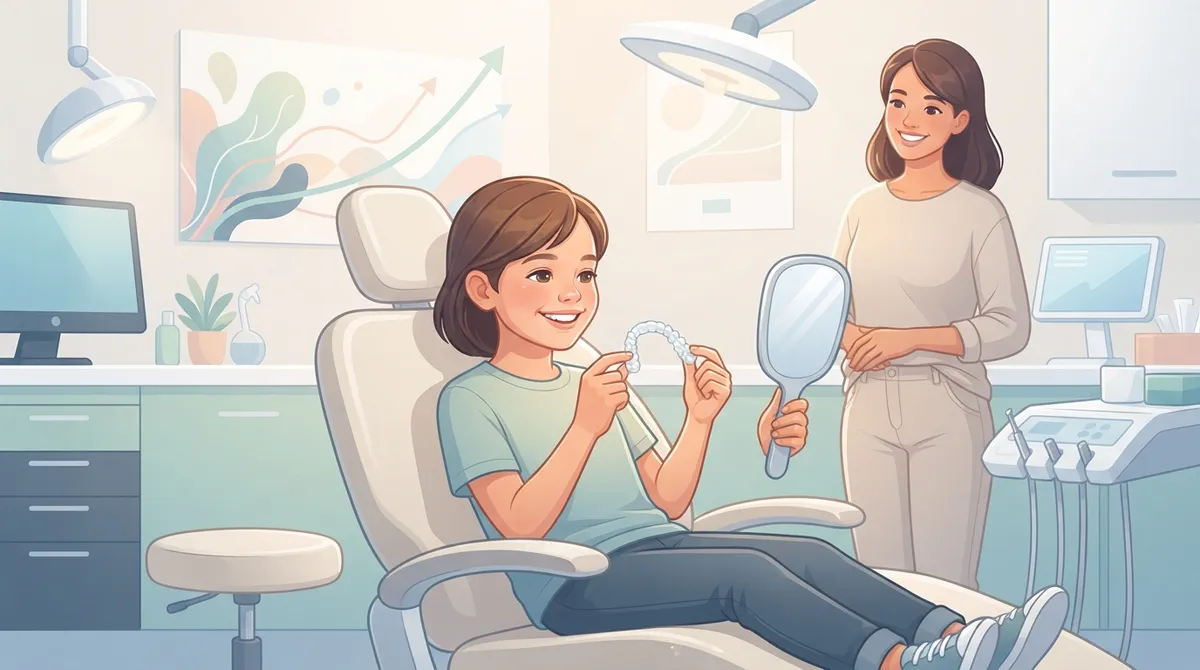
Key Takeaways
- The American Association of Orthodontists recommends a first orthodontic checkup by age 7 to catch developing problems early while there is still room to guide jaw growth naturally, often leading to simpler treatment later.
- Invisalign First is designed for children ages 6-10 with mixed dentition and includes special features to hold space for unerupted teeth, addressing crowding, spacing, crossbites, and harmful habits like thumb sucking.
- Treatment duration varies significantly by issue: anterior crossbite typically takes 3-6 months, habit-related treatments 6-12 months, and arch-length problems 1-2 years, requiring patience as each mouth develops at its own pace.
- Children must wear aligners 20-22 hours daily for optimal results, with parent involvement crucial for younger kids; aligners can be removed for meals, allowing normal eating unlike traditional braces.
- Many children require Phase 2 treatment during teenage years after early Phase 1 treatment completes, as permanent teeth continue erupting and jaws keep growing, making ongoing dental monitoring essential.
- Treatment cost depends on case complexity and duration, with many insurance plans offering partial coverage; flexible payment plans and dental savings plans can help spread costs for families without insurance.
Does your child have crowded baby teeth or a bite that just looks a little off? You are not alone in wondering what to do next. Many parents in Ocoee are discovering that Invisalign for children can gently guide young smiles in the right direction, often before permanent teeth even finish coming in. At Charming Smiles of Ocoee, we love helping families understand their options in a warm, no-pressure way, because your child's comfort and confidence matter just as much as their smile.
This guide breaks down everything you need to know about clear aligners for kids, from the right age to start to what happens after treatment ends. We will keep things simple and friendly, just like a chat with a trusted neighbor who happens to know a lot about teeth. By the end, you will feel ready to talk with an orthodontic team about whether this path fits your child.
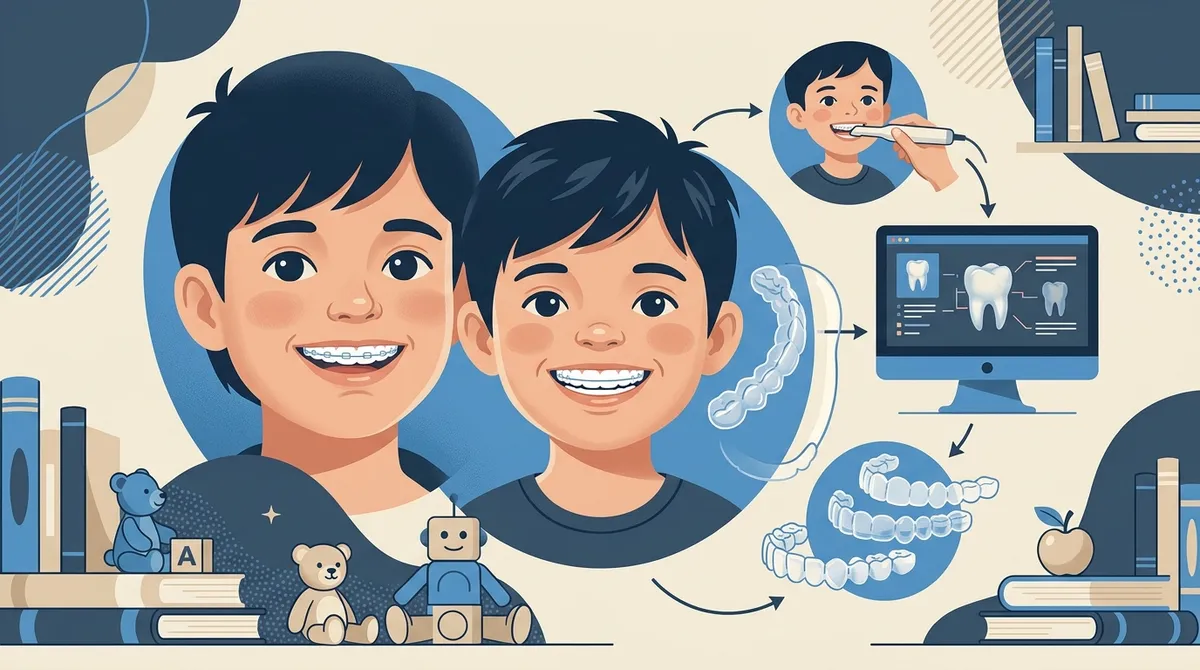
1. What Invisalign First Actually Is
Invisalign First is the version of clear aligners made just for younger kids. It is built for children roughly ages 6 to 10, including those who still have baby teeth mixed in with new permanent ones. This stage is called mixed dentition, and it is a busy, ever-changing time for little mouths.
Unlike aligners for teens or adults, Invisalign First is designed to work with a child's growing jaw. The trays help guide space and position while teeth are still shifting naturally. Our team at orthodontics services often explains this to parents as giving nature a gentle nudge in the right direction.
Who Might Be a Good Fit
Not every child needs this treatment, and that is perfectly okay. Good candidates often show these signs:
- Crowded or overlapping front teeth
- Noticeable gaps between teeth
- A narrow upper or lower arch
- Crossbite where top and bottom teeth meet oddly
- Thumb sucking or tongue thrusting habits affecting tooth position
Every child is different, so a real exam is the only way to know for sure. You can learn more about our approach to young smiles through pediatric dentistry care built around comfort and patience.
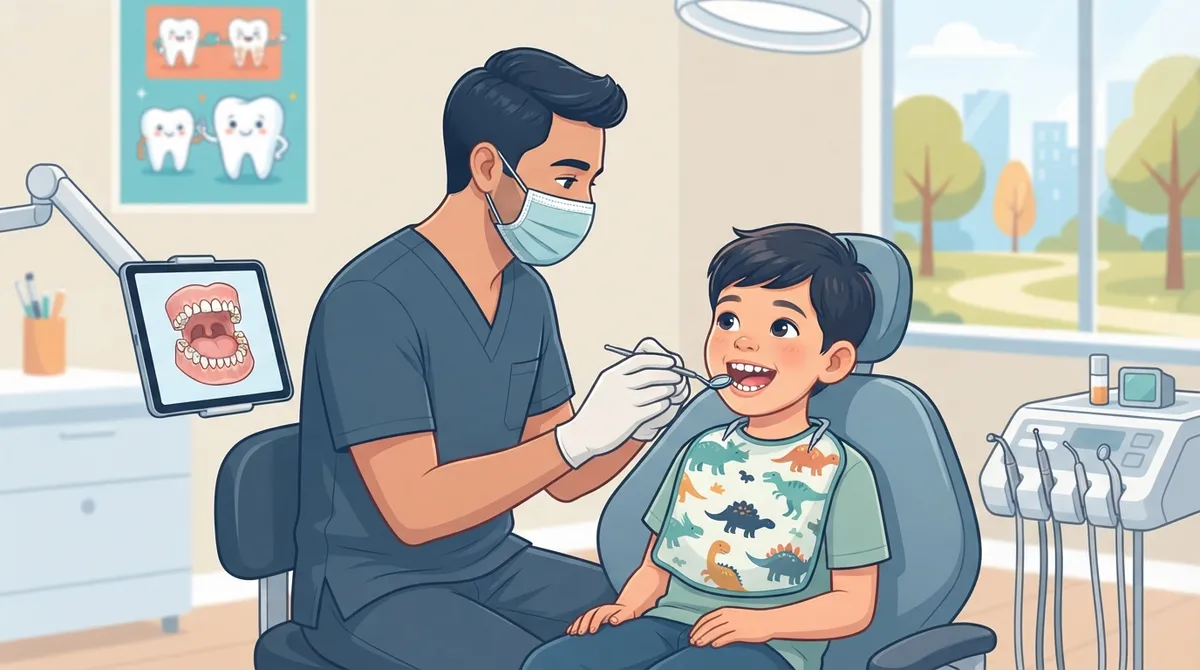
2. Why Age 7 Matters So Much
The American Association of Orthodontists recommends that kids get their first orthodontic checkup by age 7. That might sound early, but there is good reason behind it. At this age, dentists can spot developing problems long before they become bigger headaches later.
This does not mean your seven-year-old needs braces or aligners right away. Many kids just need watching for a few more years. The exam simply helps catch issues while there is still room to guide growth naturally.
Straight Teeth Are Not the Only Goal
Parents sometimes assume the checkup is only about crooked teeth. Actually, dentists are checking several things at once:
- How permanent teeth are coming in
- Whether jaw growth looks balanced
- If there is enough space for adult teeth
- Signs of harmful habits like thumb sucking
- Early bite problems such as crossbite or open bite
Catching these early can sometimes mean simpler treatment down the road. This proactive approach is part of what makes early evaluation so valuable for busy families juggling school, sports, and everything else.
3. How Invisalign First Differs From Other Aligner Types
Parents often ask how Invisalign First compares to Invisalign Teen or the regular adult version. The short answer is that each one is built for a different stage of dental development. Here is a simple breakdown to make it clearer.
| Aligner Type | Typical Age Range | Main Purpose |
|---|---|---|
| Invisalign First | 6 to 10 years old | Guide growth, create space, address early bite issues |
| Invisalign Teen | 11 to 18 years old | Align permanent teeth, compliance indicators included |
| Invisalign (adult) | 18 and older | Full alignment for mature, fully erupted teeth |
Invisalign First trays often include special features to help hold space for teeth that have not erupted yet. This is different from later treatments that focus more on final positioning. If you want to explore options once your child grows into the teen stage, our page on Invisalign treatment covers those details too.
4. What Early Treatment Can and Cannot Fix
It helps to have realistic expectations from the start. Early or Phase 1 treatment is not usually about creating a perfectly finished smile. Instead, it focuses on guiding development while there is still growth happening.
Here is what early treatment commonly addresses:
- Crowding caused by narrow arches
- Spacing problems between teeth
- Crossbites affecting jaw alignment
- Arch width that is too narrow for incoming teeth
- Harmful oral habits like prolonged thumb sucking
- Issues with how permanent teeth are erupting
A 2024 review of pediatric orthodontic care found that treatment length can vary quite a bit depending on the issue. Anterior crossbite cases often took about 3 to 6 months, while arch-length problems sometimes needed 1 to 2 years. Every mouth moves at its own pace, so patience really is part of the process.
5. How Long Treatment Usually Takes
Parents always want a timeline, and that makes total sense. The truth is that duration depends on the specific problem being treated. Still, some general patterns show up in research and clinical practice.
- Anterior crossbite corrections often take 3 to 6 months
- Habit-related treatments may take 6 to 12 months
- Arch-length or spacing issues can take 1 to 2 years
- General mixed-dentition treatment often falls between 6 and 12 months
A 2025 clinical report described one case where treatment took about 1 year and 8 months. Interestingly, that same case needed a bit of extra work later because a newly erupted tooth had rotated. This is a great reminder that even successful early treatment does not always mean the story is fully finished.
6. Daily Wear and Care Habits That Matter
Clear aligners only work if they are worn consistently. This is where parent involvement becomes so important, especially with younger children who may need reminders.
Wear Time Guidelines
Most orthodontic teams recommend children wear their aligners for about 20 to 22 hours each day. That leaves just enough time for meals, drinks other than water, and brushing. Missing too many hours can slow progress or affect results.
Simple Daily Habits That Help
Here are a few easy habits that make a big difference:
- Brush and floss before putting aligners back in
- Keep a small case handy for removal during meals
- Set phone reminders for younger kids who forget easily
- Rinse aligners with lukewarm water, never hot
- Bring aligners to school in a labeled container
One nice perk of clear aligners is that your child can still enjoy their favorite foods. Since the trays come out for eating, there is no need to avoid sticky or crunchy snacks like with traditional braces.
7. What Happens if an Aligner Breaks or Gets Lost
Kids lose things. It happens, and it is nothing to panic about. If an aligner goes missing or gets damaged, contact your dental office right away for guidance.
In many cases, your child may need to wear the previous set of aligners for a few extra days while a replacement is made. This helps prevent unwanted shifting during the gap. Being proactive here keeps the whole treatment plan on track.
Our team believes gentle, judgment-free guidance makes these bumps in the road much less stressful for families. If something like this happens, do not hesitate to reach out through general dentistry support for quick help.
8. Will Your Child Still Need Phase 2 Treatment Later
This is one of the most common questions parents ask, and it deserves an honest answer. Early treatment often helps guide development, but it does not always eliminate the need for more treatment later.
As permanent teeth continue to erupt and the jaw keeps growing, some children need Phase 2 treatment during the teenage years. This second phase focuses on finishing alignment and perfecting the bite once all adult teeth are in place.
Think of Phase 1 as building a strong foundation. Phase 2, if needed, is more like finishing touches on that foundation. Regular monitoring throughout childhood helps your dental team know exactly when and if that second phase becomes necessary.
Choosing the Right Team for Your Child's Smile
Not every dental office has the training needed to treat growing children with clear aligners. It really does matter to work with a team experienced in pediatric orthodontic care. Growth patterns shift quickly, so treatment plans sometimes need adjustments along the way.
At Charming Smiles of Ocoee, Dr. Aliuska Lopez and her team combine gentle care with real expertise in guiding young smiles. Families across Ocoee trust our spa-like environment to make appointments feel calm rather than stressful. You can browse our gallery to see the kind of comfortable space we have created for patients of all ages.
If you are unsure whether Invisalign First is right for your child, a simple complimentary consultation can answer a lot of questions. We also offer flexible insurance and financing options to make treatment easier to manage for busy households.
Cost Considerations for Families
Cost is always on parents' minds, and that is completely understandable. Pricing depends on the complexity of your child's case and how long treatment will run. Many dental insurance plans offer partial coverage for orthodontic treatment, so it is worth checking your benefits early.
We accept a wide range of insurance providers and also offer our own dental savings plan for families without insurance. Flexible payment plans can also help spread out costs over time, so finances do not stand in the way of your child's healthy smile.
Bringing It All Together
Invisalign for children is not a one-size-fits-all answer, and that is actually a good thing. Every child's mouth grows differently, which is why personalized evaluation matters so much. What works beautifully for one seven-year-old might look completely different for another.
The most important step is simply starting the conversation. An early check-up does not commit you to anything. It just opens the door to information, and information is always empowering for parents trying to make the best choice for their kids.
Curious what people in our community are saying? You can visit us on Google — Charming Smiles of Ocoee to read real reviews from local families. We also share smile transformations and helpful tips on our Charming Smiles Facebook page and Charming Smiles Instagram page, so feel free to follow along for more friendly dental advice.
According to the Invisalign First program overview, early treatment is designed specifically to work with a child's natural growth process rather than against it. The National Institutes of Health review on pediatric orthodontic trends also confirms that early evaluation plays a valuable role in long-term oral health outcomes.
Ready to find out if Invisalign First is right for your child? You can easily book online for a friendly consultation with our Ocoee team. If you would rather talk it through first, feel free to call us at (407) 378-3704, and we will happily answer any questions you have about your child's smile journey.
FAQs
Q: What is the youngest age a child can get Invisalign?
A: Invisalign First is generally designed for children around ages 6 to 10, though it really depends on how their teeth and jaw are developing. Some kids are ready a bit earlier, others a bit later. The best way to know for sure is a friendly evaluation with an orthodontic team who works with growing smiles.
Q: Is Invisalign First safe and effective for children with baby teeth?
A: Yes, it is actually designed specifically for kids who still have a mix of baby and permanent teeth. The aligners are built to work gently with your child's natural growth. Of course, every case is unique, so a proper exam helps confirm it is the right fit.
Q: How does Invisalign First differ from Invisalign Teen or regular Invisalign?
A: Invisalign First focuses on guiding early growth and creating space during the mixed-dentition stage. Invisalign Teen is for older kids with more permanent teeth in place, while regular Invisalign is meant for fully grown adult smiles. Each version is tailored to where your child is in their dental journey.
Q: How many hours a day does a child need to wear Invisalign aligners?
A: Most dental teams recommend around 20 to 22 hours of daily wear for the best results. That leaves just enough time for meals, drinks besides water, and good brushing habits. Sticking close to this schedule really helps keep treatment moving along smoothly.
Q: Will my child still need braces or a second phase of treatment after Invisalign First?
A: Sometimes, yes. Early treatment often builds a strong foundation, but as more permanent teeth come in, some kids need a second phase during their teenage years. Regular check-ins with your dental team will help you know if that next step becomes necessary.