7 Dental Implants Payment Plan Options in Ocoee (2026)
Explore 7 dental implants payment plan options in Ocoee, from in-house plans to financing, insurance, and HSA funds. Smile now, pay over time.
Key Takeaways
- Distinguish between deferred-interest promotions and true 0% APR loans before signing—deferred interest can charge retroactively if you don't pay the full balance by the deadline, while minimum payments may not cover the balance in time.
- Request a written, itemized estimate that includes all treatment components: implant fixture, abutment, crown, imaging, extractions, bone grafting, anesthesia, and follow-up visits—the real total often exceeds initial quotes that exclude the crown.
- Combine multiple payment sources strategically: use dental insurance for covered portions, HSA/FSA pre-tax funds for your share, and monthly payment plans for the remainder to keep individual payments manageable.
- Verify dental insurance benefits before treatment—many plans have annual caps of $1,000-$2,000, exclude implants entirely, or have waiting periods and deductibles, leaving significant gaps despite partial coverage.
- Compare total repayment cost rather than monthly payment amount, as low monthly payments may mask longer terms and higher overall interest, making APR the true measure of affordability.
- Explore in-house dental office payment plans as a flexible alternative to third-party lenders—they often have simpler terms, may not require credit checks, and allow you to work directly with your dental team.
Let's be honest: the price tag on dental implants can make your jaw drop. But here's the good news. You don't have to pay it all at once. A smart dental implants payment plan can turn one big bill into smaller, friendlier pieces that fit your life.
Maybe you lost a tooth years ago and kept hiding your smile. Maybe you're a senior tired of loose dentures. Or maybe you're a busy parent who finally has a moment to take care of yourself. Whatever brought you here, you deserve a clear, honest look at how to pay for implants without the stress.
In this guide, we'll walk through seven real ways to pay for implants, what to ask before you sign anything, and the traps that can cost you extra. We'll keep it simple, friendly, and jargon-free. Ready? Let's make your smile plan work for your budget.

What Does a Dental Implants Payment Plan Really Mean?
A dental implants payment plan lets you spread the cost of treatment over time. Instead of paying one lump sum, you pay in smaller amounts. Plans can come from your dental office, a third-party lender, your insurance, or a mix of all three.
Availability and approval rules vary by practice and lender. That's why it helps to compare your choices side by side. Implant treatment also happens in stages, so the full cost may include several parts.
What Your Implant Quote Might Include
Before you compare plans, ask for a written, itemized estimate. A quoted price may cover only some pieces of the puzzle. Here's what the total could include:
- The implant fixture (the small post placed in the jaw)
- The abutment (the connector piece)
- The crown (the tooth-shaped cap you see)
- Imaging and X-rays
- Extractions, if a damaged tooth must come out first
- Bone grafting, if your jaw needs support
- Anesthesia or sedation
- Follow-up visits
For a closer look at local pricing, check out how much dental implants cost in Ocoee, FL.
How Much Do Dental Implants Cost?
Costs vary a lot from person to person. According to CareCredit's published cost guide, the national average for a single-tooth implant component is $2,143, with a reported range of $1,646 to $4,175. That figure excludes the crown and may exclude other treatment and office fees.
Crowns add more. The same guide reports crown costs ranging from $488 to $3,254, depending on the material. So the real total for one tooth is often higher than the first number you see.
| Cost Component | Reported Range | Notes |
|---|---|---|
| Implant (single-tooth component) | $1,646 – $4,175 | National average about $2,143; crown not included |
| Crown | $488 – $3,254 | Varies by material |
| Extras (grafting, imaging, extractions) | Varies | Depends on your mouth and needs |
These numbers come from a national guide, so your local quote may differ. The only way to know your true cost is a personalized exam and estimate.
7 Dental Implants Payment Plan Options to Consider
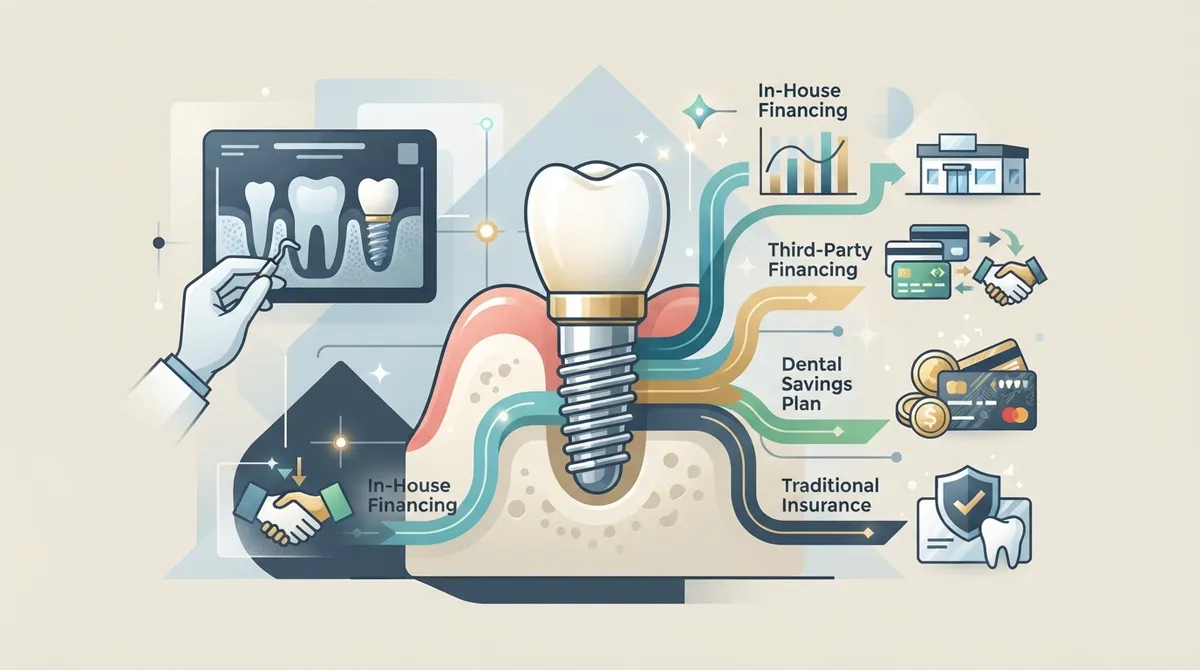
Here are seven ways patients commonly pay for implants. You can use one or combine several.
1. In-House Payment Plans at Your Dental Office
Some practices offer their own installment plans. These can be simple and flexible, since you work directly with the office team. Terms differ from third-party credit, so ask good questions.
- Is a credit check required?
- Is a deposit due up front?
- When do payments begin?
- What happens if treatment is delayed or the plan changes?
At Charming Smiles of Ocoee, you can explore our payment plans and talk with our friendly team about what fits your budget.
2. Third-Party Dental Financing
Lenders like CareCredit, Alphaeon Credit, and Cherry Financing specialize in healthcare costs. You apply, get a decision, and then pay the dental office with the approved funds or credit line. Our practice works with these options to help patients manage treatment over time. You can read more on our insurance and financing options page.
Promotional offers, such as 6, 12, 18, or 24 months, may apply to qualifying purchases of $200 or more at participating providers. But read the fine print, because not every promotion works the same way. We'll cover that trap in a moment.
3. Dental Insurance Benefits
Coverage for implants depends entirely on your plan. Some plans exclude implants. Others may cover certain parts, but with deductibles, waiting periods, coinsurance, frequency limits, and annual maximums.
Healthinsurance.org reports that many dental plans have annual benefit caps around $1,000 to $2,000. That can leave a big gap, even when some implant-related services are covered. Always confirm benefits with your insurer and ask your dentist to request a predetermination when it's available.
We accept many major plans, including MetLife, United Healthcare, Aetna, Guardian, Cigna, Delta Dental, Humana, and more. Not sure about yours? Call us at (407) 378-3704 and we'll verify your benefits.
4. HSA and FSA Funds
You may be able to use eligible Health Savings Account (HSA) or Flexible Spending Account (FSA) dollars for qualified dental expenses. These accounts use pre-tax money, which can stretch your budget. Rules and tax requirements apply, so verify eligibility with your plan administrator or a tax professional before you count on it.
5. A Dental Savings Plan
A dental savings plan isn't insurance. It's a membership that gives you included services plus a discount on other care. Our in-house plan for adults and seniors is $360 per year and includes exams, cleanings, X-rays, and fluoride, plus 25% off most other dental procedures. That can lower the cost of the care that surrounds your implant journey. Learn more about our dental savings plan.
6. Current Specials and Promotions
Sometimes the easiest savings come from timing. We currently offer a free dental implant consultation and $200 off dental implants, with flexible financing available. Check our current specials to see what's available when you visit.
7. A Combination Approach
Many patients mix and match. For example, you might use insurance for covered parts, HSA funds for your share, and a monthly payment plan for the rest. Mixing sources can keep each monthly payment small and manageable.
Deferred Interest vs. 0% APR: Know the Difference
This is the most important thing to understand before you sign. A promotional financing offer is not always the same as a true 0% APR installment loan.
With a deferred-interest offer, interest may build up from your purchase date. If you don't pay the full promotional balance by the deadline, that interest can be charged retroactively. The Consumer Financial Protection Bureau explains that these products can charge interest on the original purchase if the balance isn't paid off before the promotional period ends.
Here's the sneaky part: minimum monthly payments may not be enough to clear the balance in time. So do the math before you commit.
| Feature | Deferred-Interest Promo | True 0% APR Loan |
|---|---|---|
| Interest during promo | May accrue in the background | None charged |
| If balance remains at deadline | Interest may be added from purchase date | Normal terms apply going forward |
| Minimum payment | May not clear balance in time | Fixed payments designed to finish on schedule |
| Best for | Patients who can pay in full before the deadline | Patients who want predictable payments |
What to Ask Before You Sign Any Financing Agreement
A friendly dental team will welcome your questions. Use this checklist to compare plans fairly.
- What is the APR? Ask for the exact number, not just the monthly payment.
- How long is the promotional period? And what happens when it ends?
- Are there fees? Look for application, late, or processing fees.
- What is the total repayment amount? Compare this, not only the monthly figure.
- Does the plan cover the full treatment? Some stages, like grafting or crowns, may need separate financing.
- What are the late-payment terms? One missed payment can change your rate.
A low monthly payment can look great, but it may hide a longer term and more interest. Total cost is the true measure.
Tips for Different Patients
Every smile story is different, so here are a few quick pointers.
- Seniors: If you're replacing missing teeth or upgrading from dentures, ask about combining Medicare-eligible coverage options you may have, savings plans, and monthly payments. Our team is patient and gentle with every question.
- Busy families: Consider using HSA or FSA funds to stretch your household budget, and ask about staging treatment over time.
- Anxious patients: Don't let fear or cost stop you. Start with a free consultation so you can ask questions in a calm, spa-like setting with no pressure.
- Emergency situations: If a broken or lost tooth brings you in, an emergency dentistry visit can help you stabilize things before you plan your implant payments.
Can You Get Implants With Bad Credit?
It's a common worry. Approval depends on the lender and the practice. Some in-house plans may not require a traditional credit check, while many third-party lenders do. The best move is to ask the office what options they offer and what approval requires. If one option doesn't work, another might. Don't give up after a single "no."
It also helps to avoid costly mistakes along the way. Take a peek at 5 dental implant mistakes that could cost you thousands before you decide.
Why Start With a Consultation?
A personalized exam is the key that unlocks real numbers. Your dentist can check your bone health, decide whether grafting is needed, and build an itemized plan. Then you can match that plan with the payment option that feels right.
Dr. Aliuska Lopez, our "smile expert," is known for gentle, compassionate care and for helping patients feel at ease. Learn more about us, and explore our dental implants page to see how the process works. You can also see what our patients say by visiting us on Google — Charming Smiles of Ocoee, or follow our smile stories on the Charming Smiles Facebook page and Charming Smiles Instagram page.
Ready to Plan Your Payments?
A great smile shouldn't depend on having thousands of dollars sitting in your account. With the right dental implants payment plan, you can move forward at a pace that feels comfortable. Get an itemized estimate, compare total costs, watch for deferred interest, and combine options when it helps.
We'd love to help you map it all out. Book online for your free implant consultation, call us at (407) 378-3704, or find our location at 315 West Rd, Ocoee, FL 34761. Your confident smile is closer than you think.
FAQs
Q: Do dentists offer payment plans for dental implants?
A: Yes, many do. Options can include in-house installments, third-party financing, or a mix of insurance and personal funds. Ask your dental office what's available and what approval requires, since terms vary by practice and lender.
Q: Does dental insurance cover dental implants?
A: It depends on your plan. Some exclude implants, while others cover certain parts with deductibles, waiting periods, and annual maximums. Confirm benefits with your insurer and ask for a predetermination so you know your out-of-pocket cost.
Q: What is the difference between deferred-interest financing and a 0% APR loan?
A: With deferred interest, interest may build up from the purchase date and be charged if you don't pay the balance in full by the deadline. A true 0% APR loan doesn't charge interest during the promotional term. Always read the terms before you sign.
Q: Can I use an HSA or FSA to pay for dental implants?
A: Often, yes. Eligible HSA or FSA funds may be used for qualified dental expenses, subject to account rules and tax requirements. Check with your plan administrator or a tax professional to be sure before relying on those funds.
Q: What should I ask before signing a dental implant financing agreement?
A: Ask about the APR, the promotional period, fees, late-payment terms, and the total repayment amount. Also confirm whether the plan covers your full treatment or only part of it. Comparing total cost, not just the monthly payment, keeps surprises away.