6 Smart Ways to Close Gaps With Dental Crowns
Discover 6 proven ways dental crowns and related treatments close smile gaps, from bridges to implants, at Charming Smiles of Ocoee.
Key Takeaways
- Dental crowns work differently depending on the gap cause: they reshape healthy teeth with small spaces, but cannot fill empty space where a tooth is missing—use bridges or implant crowns for missing teeth instead.
- Implant crowns are often better than bridges for single missing teeth because they don't require grinding down healthy neighboring teeth, though the process takes several months for bone healing.
- For small gaps between healthy teeth, gentler alternatives like bonding, veneers, or Invisalign preserve natural enamel and should be considered before crowns, which permanently remove tooth structure.
- Treatment choice depends on evaluating the gap's root cause, bite alignment, bone health, gum disease status, and your budget—skipping proper diagnosis can lead to treatments that fail over time.
Got a gap in your smile that bugs you every time you look in the mirror? You're not alone. Lots of folks in Ocoee ask us about dental crowns for gaps because they want a fix that actually lasts. But here's the thing: crowns work differently depending on why that gap is there in the first place. Some gaps come from missing teeth. Others are just small spaces between teeth that are still healthy and strong.
At Charming Smiles of Ocoee, we believe you deserve real answers before any drill touches your teeth. Dr. Aliuska Lopez and her team take time to figure out exactly why your gap exists. Then we walk you through every option, not just the most expensive one. This guide breaks down six smart, proven ways crowns (and related treatments) can help close your gap for good.
Understanding What Causes Your Tooth Gap
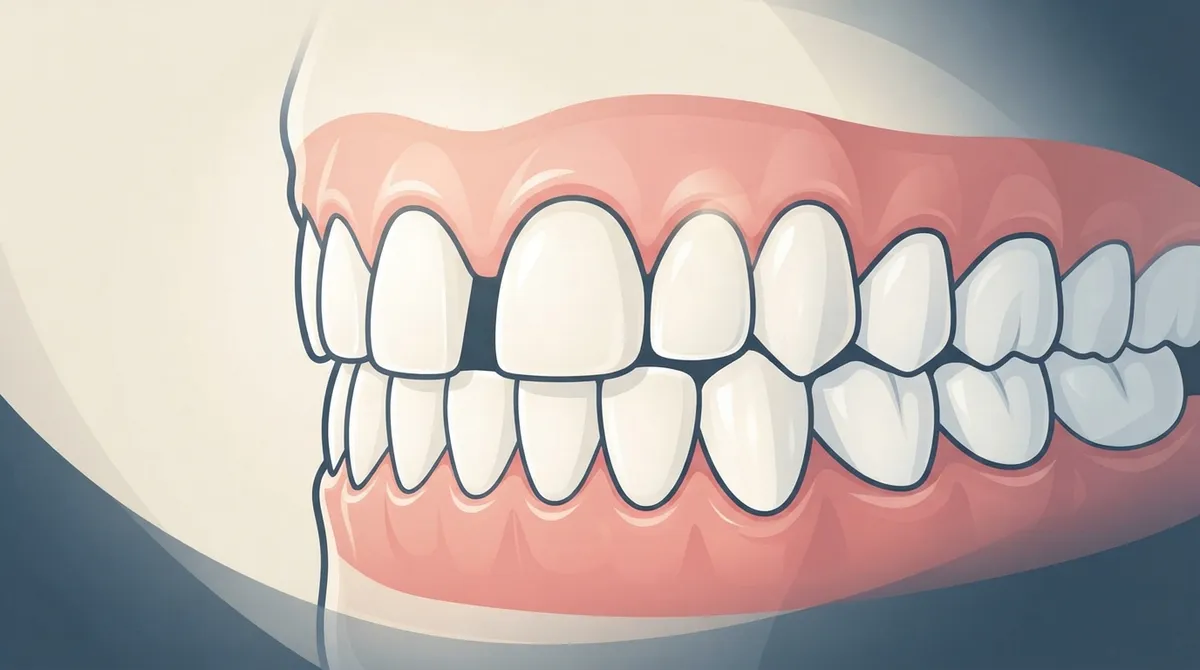
Before picking a treatment, it helps to know why the gap showed up. A gap, called a diastema by dentists, can come from several things. Your teeth might just be smaller than your jaw needs. You could have a thick piece of gum tissue called a frenum pulling your front teeth apart. Gum disease, missing teeth, or even thumb-sucking habits from childhood can all play a role.
This matters a lot because the fix for a healthy-tooth gap is very different from the fix for a missing-tooth gap. A regular dental crown covers a tooth that's still there. It cannot magically fill empty space where a tooth used to be. That's a common mix-up we clear up during consultations every week.
1. Traditional Dental Crowns for Reshaping Small Gaps
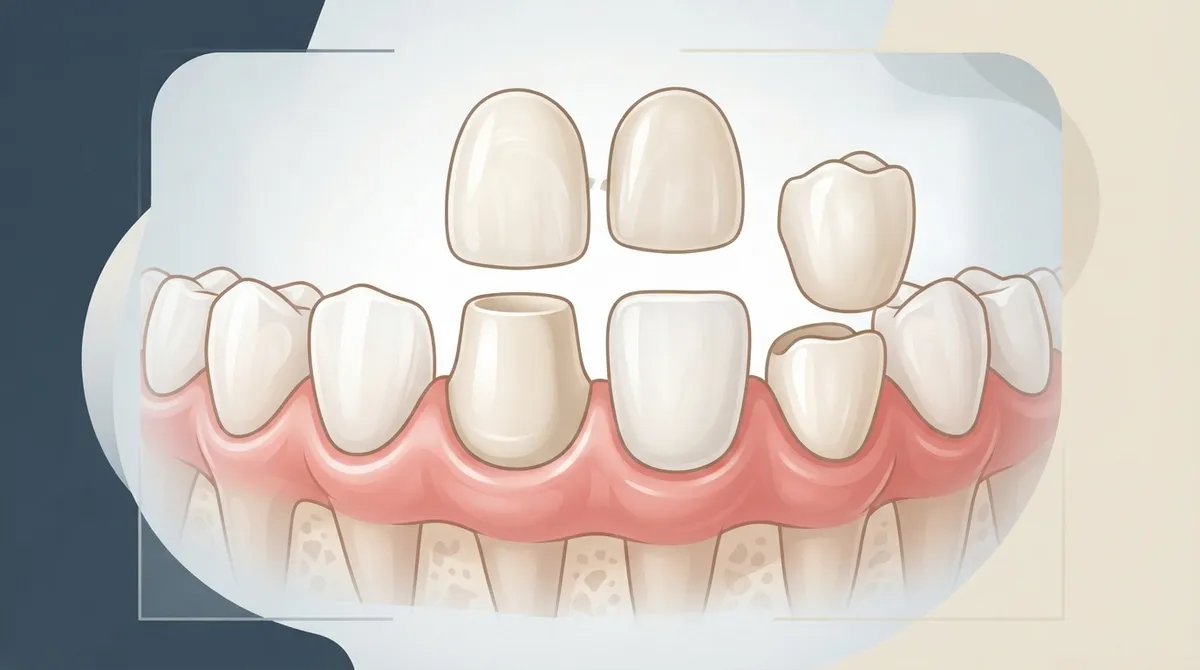
If your teeth are healthy but there's a small space between them, crowns can sometimes help by reshaping the teeth on either side. This widens the teeth slightly so they meet in the middle, closing the visible gap.
That said, this isn't always the best first choice. Crowns require your dentist to remove some healthy tooth enamel to make room for the crown material. Once that enamel is gone, it doesn't grow back. So we usually save this crown-only approach for teeth that already need help, like ones with old fillings, cracks, or heavy wear. For a small gap between otherwise perfect teeth, we often suggest gentler options first.
2. Dental Bridges: Crowns Working as a Team
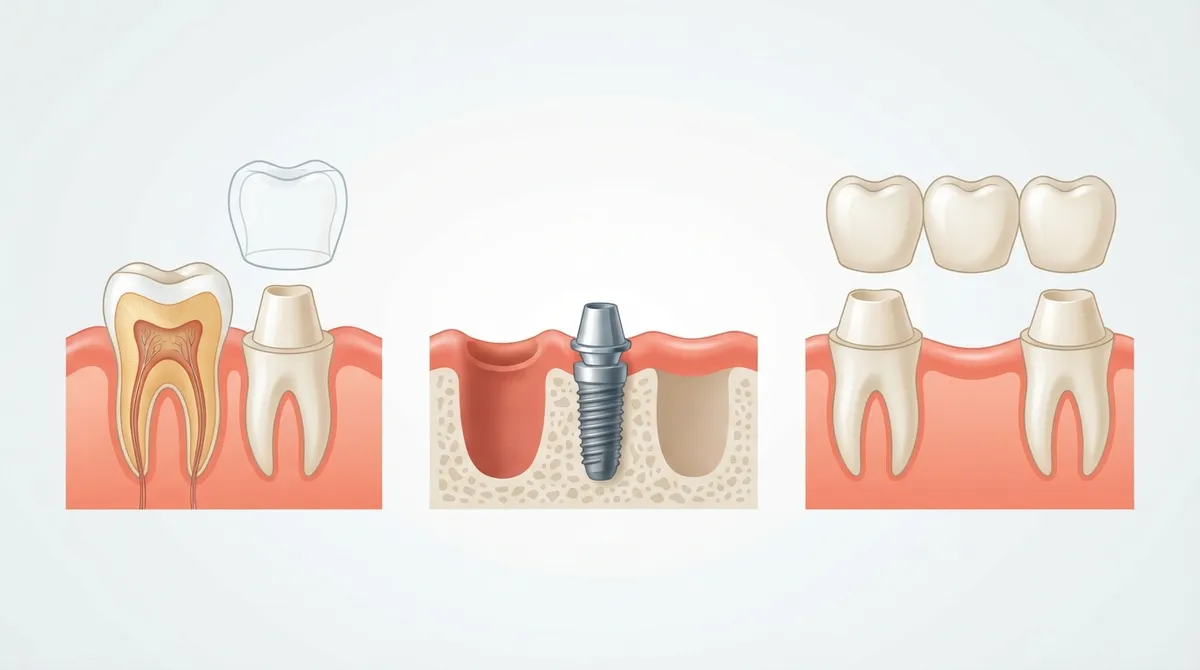
Here's where crowns really shine for gap closure. If you're missing a tooth, a dental bridge uses crowns on the teeth next to the gap to hold a replacement tooth in place. Think of it like two anchors holding up a floating tooth in the middle.
A standard bridge setup uses two crowned teeth and one replacement tooth, called a pontic. This tried-and-true method has helped patients for decades. The downside is that the two neighboring teeth need to be prepared and crowned, even if they were perfectly healthy before. Still, for many patients, a bridge offers a fast, reliable way to close a missing-tooth gap. Learn more about how crowns & bridges work together in our detailed guide.
3. Implant Crowns: The Modern Missing-Tooth Solution
Many of our Ocoee patients now choose implant crowns instead of bridges. Here's why: an implant crown replaces just the missing tooth. It does not touch your healthy neighboring teeth at all.
The process happens in stages. First, a small titanium post gets placed into your jawbone. Then you wait for healing, which lets the bone fuse tightly around the post. Finally, we attach a custom crown on top that matches your other teeth perfectly. The whole timeline depends on your bone health and whether you need any grafting first.
According to the Cleveland Clinic, both a dental bridge and an implant topped with a crown are accepted treatment options when a missing tooth causes a gap in your smile. Our team can help you weigh the pros and cons of each based on your mouth, budget, and goals. Explore our dental implants page to see if this path fits your needs.
4. Orthodontic Treatment: Closing Gaps Without Crowns
Sometimes the best fix for a gap doesn't involve crowns at all. Moving teeth together with braces or clear aligners preserves your natural enamel completely. No drilling, no shaving down teeth.
For adults and teens who want a discreet option, Invisalign has become a popular choice in Ocoee. Clear aligners gradually shift your teeth into place, closing small to moderate gaps over several months. This route takes patience, but it keeps your teeth exactly as nature made them, just repositioned.
5. Bonding and Veneers: Gentle Alternatives to Crowns
If your gap is small and your teeth are otherwise strong, composite bonding or porcelain veneers might do the job with less tooth removal than a crown. Bonding uses tooth-colored resin applied directly to your teeth, sculpted to close the gap. It's quick and often done in a single visit.
Veneers cover just the front surface of your teeth, unlike crowns which wrap around the entire tooth. This means less of your natural structure gets removed. Many cosmetic patients love how natural veneers look while still closing gaps beautifully. If you're weighing bonding versus veneers versus crowns, our cosmetic team can walk you through samples and pricing during a consultation.
6. Partial Dentures for Multiple Missing Teeth
When several teeth are missing and creating larger gaps, a removable partial denture can be a practical solution. Unlike a fixed bridge or implant, partials can be taken out for cleaning, which some patients find easier to manage.
This option works well for patients who aren't ready for implant surgery or want a less invasive, more budget-friendly path. Our dentures team fits each partial carefully so it feels comfortable and looks natural.
Comparing Your Gap-Closing Options
Here's a quick side-by-side look to help you understand which option might fit your situation best.
| Treatment | Best For | Tooth Preparation Needed | Typical Timeline |
|---|---|---|---|
| Crown reshaping | Healthy teeth with small gaps | Moderate | 1-2 visits |
| Dental bridge | One missing tooth | High (neighboring teeth) | 2-3 visits |
| Implant crown | One missing tooth | None on neighbors | Several months (staged) |
| Orthodontics/Invisalign | Small to moderate gaps, healthy teeth | None | Several months to a year |
| Bonding or veneers | Small cosmetic gaps | Low to minimal | 1-2 visits |
| Partial denture | Multiple missing teeth | None (removable) | 2-4 visits |
What Your Dentist Checks Before Recommending a Crown
Picking the right gap treatment isn't a one-size-fits-all decision. Here's what Dr. Lopez and our team evaluate during your visit:
- The root cause of your gap, whether it's genetics, gum disease, or a missing tooth
- Your bite and how your teeth come together when you chew
- The size and shape of your existing teeth
- Bone health, especially if implants are being considered
- Your gum health and whether any disease needs treatment first
- How easy the area will be to keep clean long-term
- Your budget and insurance or financing options
Skipping this evaluation can lead to treatments that don't hold up over time. That's why we always start with a thorough exam before suggesting any fix.
Caring for Crowns and Bridges Long-Term
Once you've closed your gap, keeping it looking great takes just a bit of daily effort. Follow these simple steps:
- Brush twice daily with a soft-bristle brush around crown edges
- Floss carefully under bridge pontics using a floss threader or water flosser
- Avoid biting down on very hard foods like ice or hard candy
- Wear a nightguard if you grind your teeth while sleeping
- Keep up with regular general dentistry checkups every six months
Good habits protect your investment and keep gum disease or decay from causing new problems around your restoration.
Why Choose Charming Smiles of Ocoee for Your Gap Treatment
Every smile is different, and so is every gap. That's why our team never pushes a one-size-fits-all fix. We take the time to explain your options in plain language, show you realistic before-and-after examples, and build a treatment plan around your goals and comfort level.
Our Ocoee office offers a relaxing, spa-like setting designed to ease dental anxiety, complete with soothing amenities for nervous patients. We also accept many major insurance plans and offer flexible insurance & financing options, plus a helpful dental savings plan for patients without insurance. Check out our current specials, including a free cosmetic consultation, to see how affordable closing your gap can be. You can also book online at a time that works for your schedule.
Curious what real patients say about their experience? Check out the Charming Smiles Facebook page or browse smile transformations on our Charming Smiles Instagram page. You can also visit us on Google — Charming Smiles of Ocoee to read reviews from families right here in Ocoee.
Ready to Close Your Gap for Good?
Gaps in your smile don't have to stick around forever, and now you know there's more than one way to fix them. Whether a crown, bridge, implant, or a gentler cosmetic option is right for you, our team is ready to guide you every step of the way. Give call us at (407) 378-3704 to schedule your consultation, or stop by our location near Publix in Ocoee to meet Dr. Lopez and see why so many families trust us with their smiles.
FAQs
Q: Can dental crowns close a gap between my front teeth?
A: Sometimes! If your front teeth are healthy but have a small gap, crowns can be reshaped to close that space. But if the gap comes from a missing tooth, you'll likely need a bridge or implant crown instead. We're happy to check your smile and tell you exactly which option fits best.
Q: Can a crown replace a missing tooth on its own?
A: Not by itself, no. A regular crown covers a tooth that's still there. To replace a missing tooth, you'll need either a bridge (crowns supporting a false tooth) or an implant crown (a crown attached to a surgical post). Both give you a natural-looking result that fills the empty space.
Q: What's the difference between a crown, a bridge, and an implant crown?
A: Great question! A crown covers one existing tooth. A bridge uses two crowned teeth to hold up a replacement tooth in between. An implant crown sits on a small post placed in your jawbone, so it doesn't touch your neighboring teeth at all. Each has its own pros depending on your situation.
Q: Are crowns the best choice for a small gap in healthy teeth?
A: Not always. Since crowns need some healthy enamel removed, we often suggest gentler options first, like bonding, veneers, or Invisalign, especially if your teeth are otherwise in great shape. Crowns tend to work best when a tooth already needs extra support.
Q: How long does treatment take to close a gap from a missing tooth?
A: It depends on the treatment! A bridge can often be completed in just a couple of visits over a few weeks. Implant crowns take longer, usually several months total, because your jawbone needs time to heal around the implant post before we attach the final crown.