6 Facts About Invisalign for Rotated Teeth (2026)
Learn how Invisalign treats rotated teeth, why some rotations are harder, and what tools help fix them at Charming Smiles of Ocoee.
Key Takeaways
- Invisalign achieves 65% average accuracy for rotated teeth, with success heavily dependent on tooth type and rotation severity; mild to moderate rotations respond better than severe rotations over 20 degrees.
- Attachments bonded to teeth significantly improve rotation outcomes, with optimized weekly attachment changes achieving 81.5% success versus 63.1% with conventional attachments.
- Front teeth (incisors) rotate more predictably than canines and premolars due to their shape; round-shaped canines and premolars require extra tools like attachments or elastics for successful correction.
- Digital treatment previews show intended plans with 75-78% actual predictability; refinement aligners and check-in appointments allow course corrections when teeth don't track as planned.
- Wearing aligners 20-22 hours daily and following the exact change schedule is critical for rotation success, as these movements are especially sensitive to consistency and timing.
- Rotated teeth have strong relapse tendency after treatment; long-term nightly retainer wear (removable, bonded, or both) is essential to prevent teeth from drifting back to original positions.
Got a tooth that seems to twist a little sideways when you smile? You are not alone, and you have more options than you might think. Rotated teeth are one of the most common reasons people search for Invisalign near Ocoee, FL, and the good news is that clear aligners can fix many of these cases. But rotation is also one of the trickier tooth movements in orthodontics, so it helps to know what really works before you start.
At Charming Smiles of Ocoee, Dr. Aliuska Lopez and her team have guided many patients through this exact question. Some rotated teeth straighten out beautifully with Invisalign. Others need a little extra help, like attachments or a longer treatment plan. This friendly guide breaks down six important facts about Invisalign for rotated teeth, backed by real research, so you can walk into your consultation feeling confident and informed.
1. Invisalign Can Fix Many Rotated Teeth, But Not All Rotations Are Equal
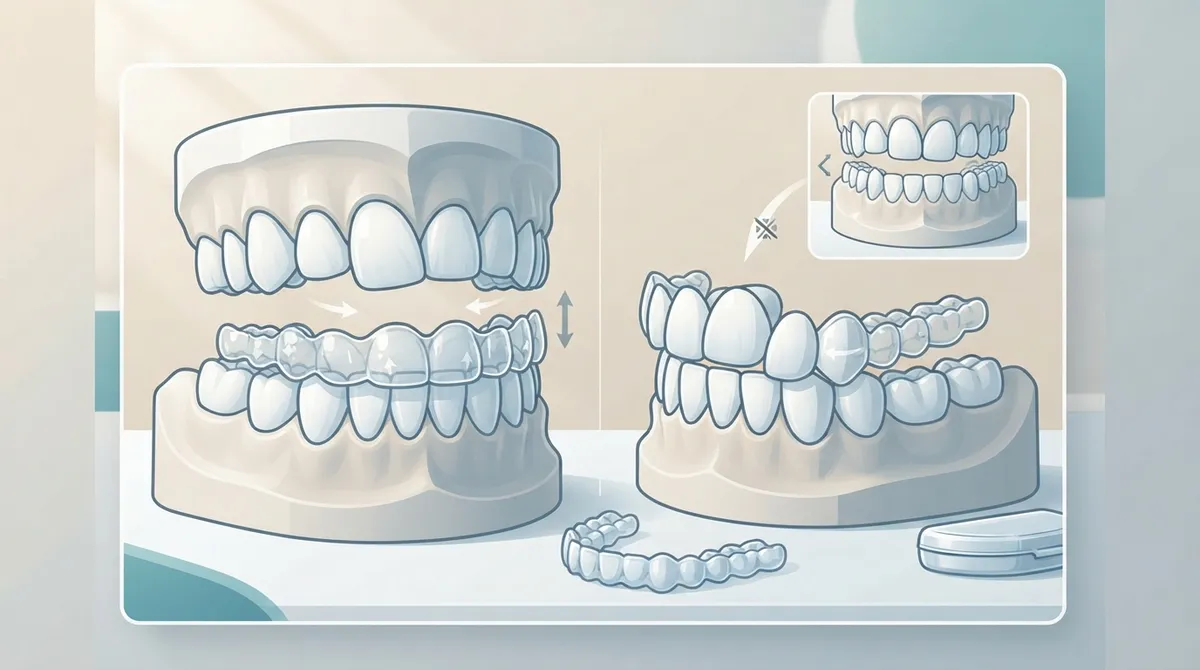
Clear aligners are genuinely good at moving teeth in many directions. Rotation, though, is one of the harder jobs for any aligner system. A 2025 systematic review looked at many studies on rotational movement with clear aligners. It found accuracy ranging from 36% to 85%, with an average close to 65%. That is a wide range, and it tells us something important: results depend heavily on your specific tooth, its shape, and how much it needs to turn.
Mild to moderate rotations tend to respond well. Severe rotations, especially past 20 degrees, are much harder to correct with aligners alone. This is exactly why a real exam matters so much before starting treatment.
Why Some Teeth Rotate More Easily Than Others
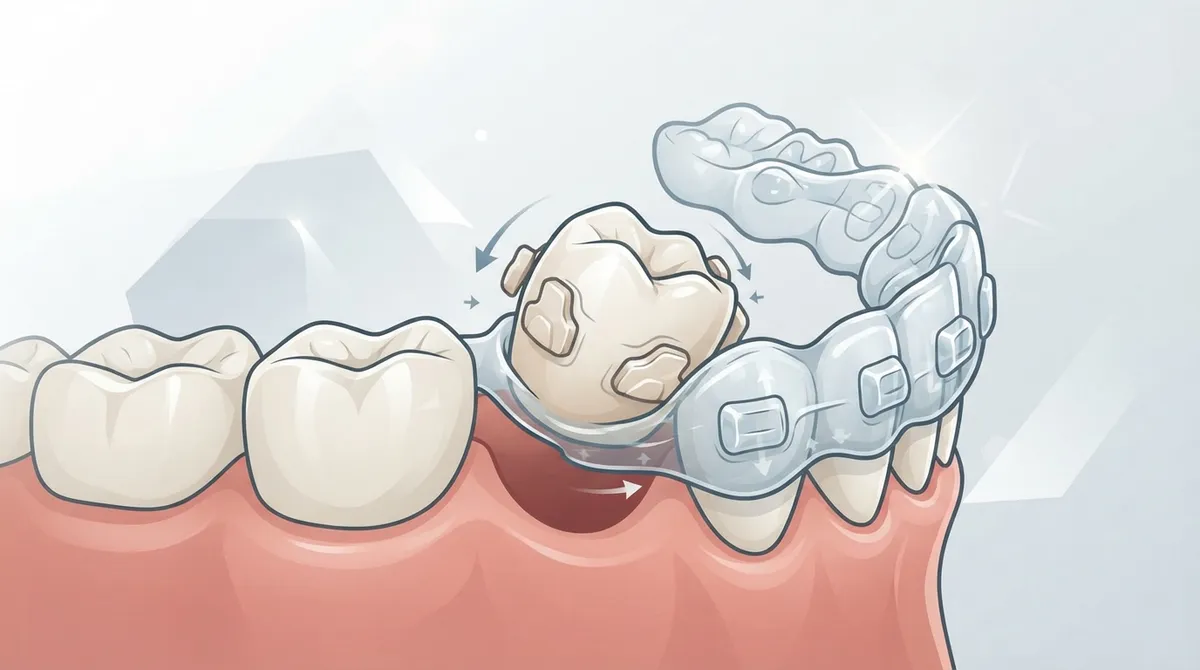
Front teeth, like incisors, are usually easier to rotate. Their shape gives the aligner tray something to grip. Canines and premolars are a different story.
- Canines have a rounded, cone-like shape that aligners struggle to grip
- Premolars often have a similar rounded profile near the gumline
- Round teeth let the aligner slip instead of gripping firmly
- Molars can also be tricky, especially second molars
- Incisors usually rotate more predictably than canines or premolars
A 2025 research review confirmed this pattern. It found that incisors and molars generally moved more predictably than maxillary canines and premolars. So if your rotated tooth happens to be a canine, do not worry. It can still often be treated. It may just need some extra tools, which we will cover next.
2. Attachments and Other Tools Help Aligners Grip Rotated Teeth
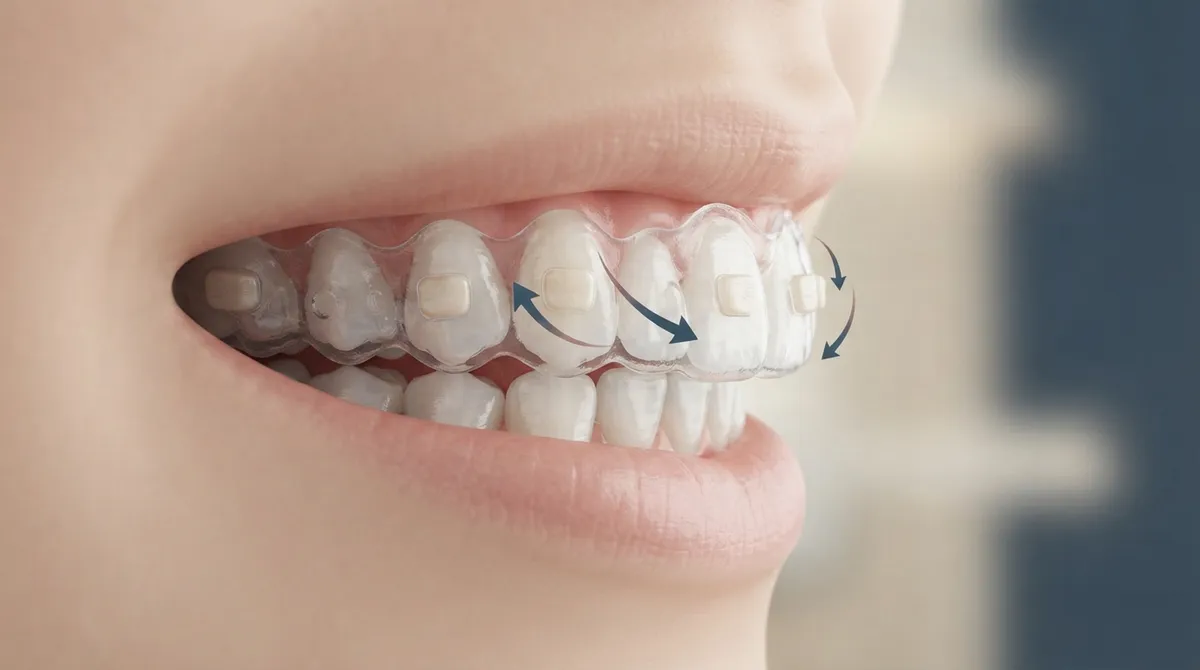
Since aligners can struggle to grip round teeth, dentists use small helpers called attachments. These are tiny, tooth-colored bumps bonded to your tooth. They give the aligner tray something solid to push against.
Here are the main tools your dentist might use for rotation:
- Composite attachments bonded directly to the tooth surface
- Interproximal reduction, which gently removes tiny amounts of enamel between teeth to create space
- Elastics to add extra pulling force in certain directions
- Overcorrection, where the aligner plans to rotate the tooth slightly past the goal, since some rebound is expected
- Slower staging, meaning smaller movements per aligner and more trays overall
- Refinement aligners, which are extra sets made partway through treatment to fine-tune results
One study on attachment protocols found that changing optimized attachments weekly led to an 81.5% rotation success rate. Attachments changed every 14 days had a 76.5% rate. Conventional attachments only reached 63.1%. These numbers come from one specific study, so they should not be treated as a guarantee. But they do show that attachment design and wear schedule genuinely matter for rotation success.
3. Your Dentist Needs a Full Exam Before Planning Treatment
You cannot just glance at a rotated tooth and know if Invisalign will work. A proper evaluation looks at much more than the twist itself.
| What Gets Checked | Why It Matters |
|---|---|
| Digital scans and photos | Map out the exact position and angle of the rotated tooth |
| Dental X-rays | Show root position and any hidden issues below the gumline |
| Gum and bone health | Confirms teeth have healthy support before movement begins |
| Bite assessment | Checks how upper and lower teeth meet during chewing |
| Available space | Determines if there is enough room to rotate the tooth fully |
Your dentist also needs to rule out untreated decay, active gum disease, or impacted teeth before moving forward. Skipping this step is one of the biggest mistakes people make with clear aligners. If you want a full rundown of common pitfalls, check out our article on 9 Invisalign Near Ocoee Mistakes That Hurt Your Smile.
4. The Digital Preview Is a Plan, Not a Promise
When you start Invisalign, your dentist shows you a digital simulation of your future smile. It looks amazing, and it is genuinely exciting. But here is the honest truth: that preview shows the intended plan, not a guaranteed outcome.
A 2024 clinical study found overall rotational predictability of 78.6% in the lower arch and 75.0% in the upper arch. Second molars had the lowest accuracy of all tooth types studied. No planned movement in the study reached 100% predictability. That does not mean Invisalign fails. It means some teeth may need adjustments along the way.
This is why check-in appointments matter so much. Your dentist tracks how well your teeth are following the plan. If a rotated tooth is not tracking well, additional scans and refinement aligners can fix the course. Research reviews commonly report tooth-movement predictability somewhere between 55% and 72% across different studies, movements, and aligner brands. These numbers remind us that orthodontic treatment is a partnership between technology and professional judgment, not a fully automatic process.
5. Wearing Your Aligners Correctly Makes a Real Difference
Even the best treatment plan needs your cooperation to work. Rotation movements are especially sensitive to how consistently you wear your trays.
Here are the wear habits that support successful rotation:
- Wear each aligner for about 20 to 22 hours per day
- Follow your dentist's schedule for changing to the next tray
- Avoid removing aligners more often than necessary
- Seat each aligner fully using chewies if recommended
- Attend every check-in appointment on schedule
- Never skip ahead to a new tray early, even if the current one feels loose
Studies on rotation protocols often use staging of about 2 degrees per aligner tray, with wear intervals between 7 and 14 days. That pace is intentional. Rushing it, or removing trays too much, can cause a rotated tooth to fall behind schedule. If tracking issues come up, your Ocoee dentist can adjust your plan with refinement trays rather than starting over completely.
6. Long-Term Retention Keeps Rotated Teeth From Turning Back
Here is something many patients do not expect: rotated teeth have a strong memory. The fibers around a rotated tooth can pull it back toward its old position even after treatment ends. This is called relapse, and it is very common without proper retention.
That is why retainers are not optional after Invisalign. They are part of the treatment itself. Your dentist may recommend:
- A removable clear retainer worn nightly
- A fixed bonded retainer behind the front teeth
- A combination of both, depending on your relapse risk
- Regular retainer check appointments to confirm proper fit
Skipping retainers is one of the most common reasons people see their rotated teeth shift back over time. Committing to retention protects the investment you made in your new smile.
Is Invisalign or Braces Better for Severely Rotated Teeth?
For mild to moderate rotations, Invisalign usually works great. For very severe rotations, traditional braces sometimes offer more direct control, since brackets and wires can apply continuous force in ways aligners cannot always match. Some patients even use a combination approach, starting with braces for the hardest movements, then switching to aligners to finish. This is exactly the kind of decision that benefits from a personalized consultation rather than guesswork. Our team can walk you through orthodontics options that fit your specific rotation pattern.
What This Means for Ocoee Patients Considering Invisalign
If you live in Ocoee and have a rotated tooth bothering you, you are in a great spot. Charming Smiles of Ocoee combines advanced digital scanning with Dr. Lopez's experienced eye to build a plan that accounts for your tooth shape, root position, and bite. The practice's spa-like environment also helps if dental visits make you nervous, with soothing extras designed to make every appointment feel calm and easy.
Curious what other patients have experienced? You can visit the Charming Smiles Facebook page or browse the Charming Smiles Instagram page to see real smile transformations. You can also see what our Charming Smiles of Ocoee patients say by visiting our Google Business Profile for Charming Smiles of Ocoee.
For general background on orthodontic treatment planning, the peer-reviewed research on clear aligner limitations offers helpful context on why some tooth movements are harder than others.
Ready to Find Out If Invisalign Can Fix Your Rotated Tooth
Rotated teeth do not have to hold your smile back. With the right evaluation, tools like attachments, and a treatment plan built specifically for your mouth, many rotation cases respond really well to clear aligners. The best next step is simply getting a professional opinion.
Charming Smiles of Ocoee currently offers a free Invisalign consultation, plus $200 off Invisalign treatment for new patients. Ready to see your options? Book your consultation online today, or feel free to call us at (407) 378-3704 to ask questions about your specific rotation case. Our friendly Ocoee team is ready to help you get the confident, straight smile you deserve.
FAQs
Q: Can Invisalign fix a rotated tooth?
A: Yes, in many cases! Invisalign can correct mild to moderate rotations, especially on front teeth. Canines and premolars are trickier because of their rounded shape, but attachments and a well-designed plan often get the job done.
Q: How much does Invisalign cost for rotated teeth?
A: Cost depends on how complex your rotation is and how many teeth need treatment. Charming Smiles of Ocoee offers a free Invisalign consultation and $200 off treatment, so you can get a personalized price without any pressure.
Q: How long does Invisalign take to rotate teeth?
A: Rotation often takes longer than other movements because it is harder to control. Many patients see progress over several months, though your exact timeline depends on the severity of the rotation and how consistently you wear your aligners.
Q: Are rotated canine or premolar teeth harder to treat with Invisalign?
A: Yes, canines and premolars have a rounded shape that makes it harder for aligners to grip. Your dentist may add attachments or plan for a longer treatment to help these teeth rotate successfully.
Q: Can rotated teeth move back after Invisalign treatment?
A: They can if you skip your retainer. Rotated teeth have a strong memory and can drift back toward their old position. Wearing your retainer as directed is the best way to protect your results for good.