12 Facts About What Happens Under a Crown in 2026
Discover what really happens under a dental crown, from hidden decay risks to nerve health, and how Charming Smiles of Ocoee keeps your smile protected.
Key Takeaways
- Decay can form under a crown at the margin where it meets the gum line, affecting about 1.3% of crowns over five years, so regular dental checkups are essential to catch problems early.
- Your natural tooth with its nerve still exists under the crown; unless you've had a root canal, the nerve remains alive and can become infected, requiring root canal treatment if decay reaches it.
- Early decay under a crown often causes no pain or symptoms, making professional exams and X-rays critical for detection since you may feel fine while a problem develops underneath.
- Daily habits like brushing with fluoride toothpaste, flossing, limiting sugary foods, and wearing a night guard if you grind your teeth protect the tooth structure hidden under your crown.
- Crowns have strong survival rates of 90-97% after five years when properly cared for, but loss of retention (crown loosening) is the leading failure cause, not decay, so avoid grinding and excessive force.
- Warning signs requiring immediate dental attention include worsening pain, facial swelling, pus, a very loose crown, or trouble swallowing, as these indicate spreading infection needing emergency care.
Have you ever wondered what's really going on under that dental crown you got years ago? You're not alone. Many folks in Ocoee walk around with crowns and never think twice about the tooth hiding underneath. But here's the thing: your crown is just a cap. What's happening beneath it matters just as much as the crown itself.
At Charming Smiles of Ocoee, we see patients every week who are surprised to learn their crowned tooth can still get a cavity, get infected, or need extra care. The good news? Understanding what's under your crown helps you protect it for years to come. Let's break down exactly what's happening beneath the surface, why it matters, and what you can do about it.
1. Your Natural Tooth Is Still There
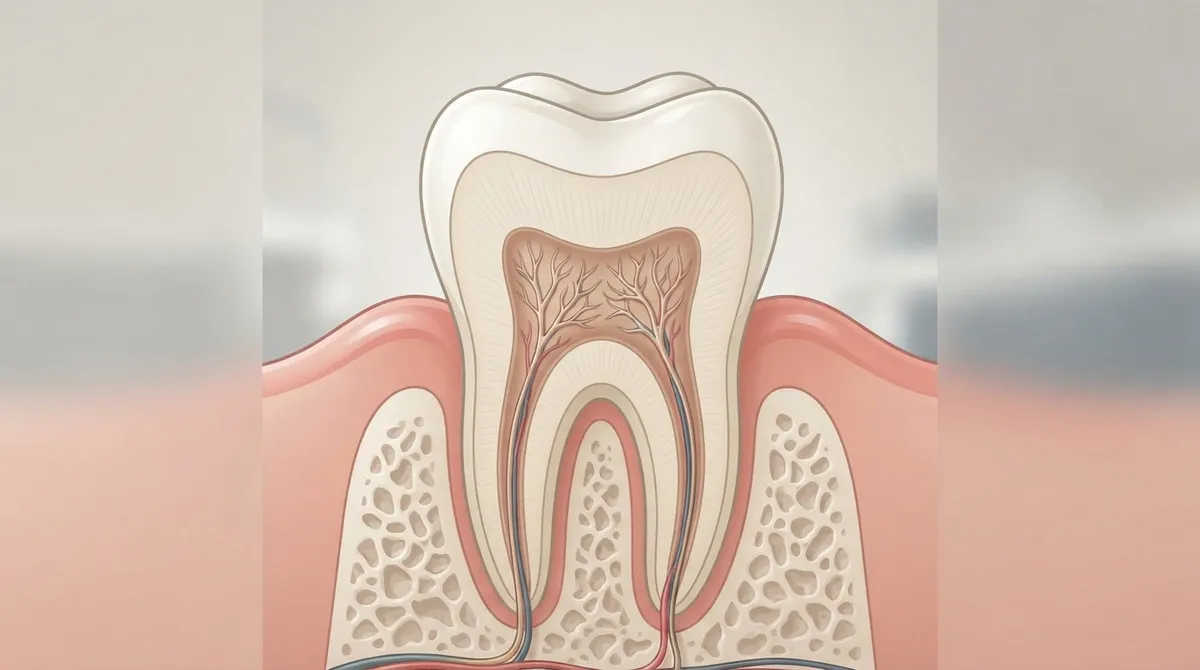
A dental crown is a cap. It sits on top of your real tooth. Under that crown is your actual tooth structure, made of enamel and dentin. Your dentist shapes and trims this tooth before placing the crown, but the tooth itself doesn't disappear.
Think of a crown like a helmet for your tooth. It protects what's inside, but it doesn't replace the tooth. This is why care still matters, even after you get a crown from a trusted crowns and bridges specialist.
2. Sometimes There's a Filling or Core Buildup Underneath
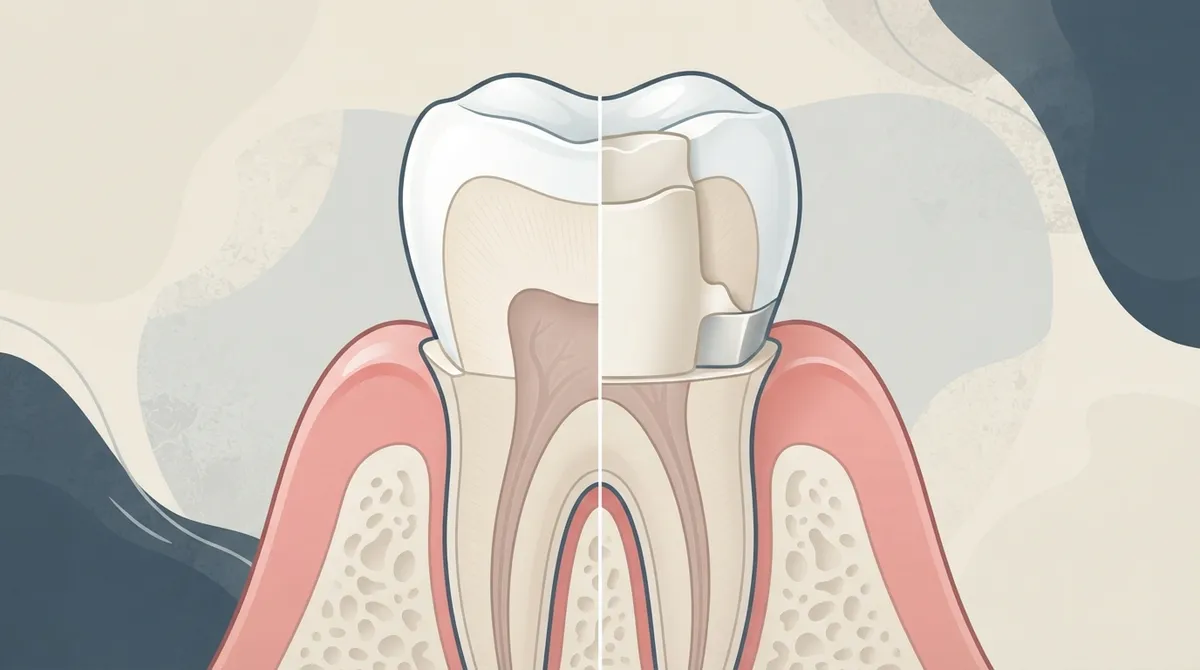
If your tooth had a big cavity or crack, your dentist may have added a filling or core buildup before placing the crown. This gives the crown a strong base to sit on. Without this step, the crown might not stay in place as well.
This buildup becomes part of the tooth structure under your crown. It works together with your natural tooth to support the crown's shape and strength.
3. The Nerve May Still Be Alive
Here's something many patients don't know. Unless you've had a root canal, the nerve inside your tooth is still alive under the crown. This nerve, along with blood vessels, makes up what dentists call the pulp.
A crown does not treat nerve problems. If your tooth pulp becomes infected or badly inflamed, the crown alone won't fix it. You would need root canal treatment to save the tooth.
4. Decay Can Still Form Under a Crown
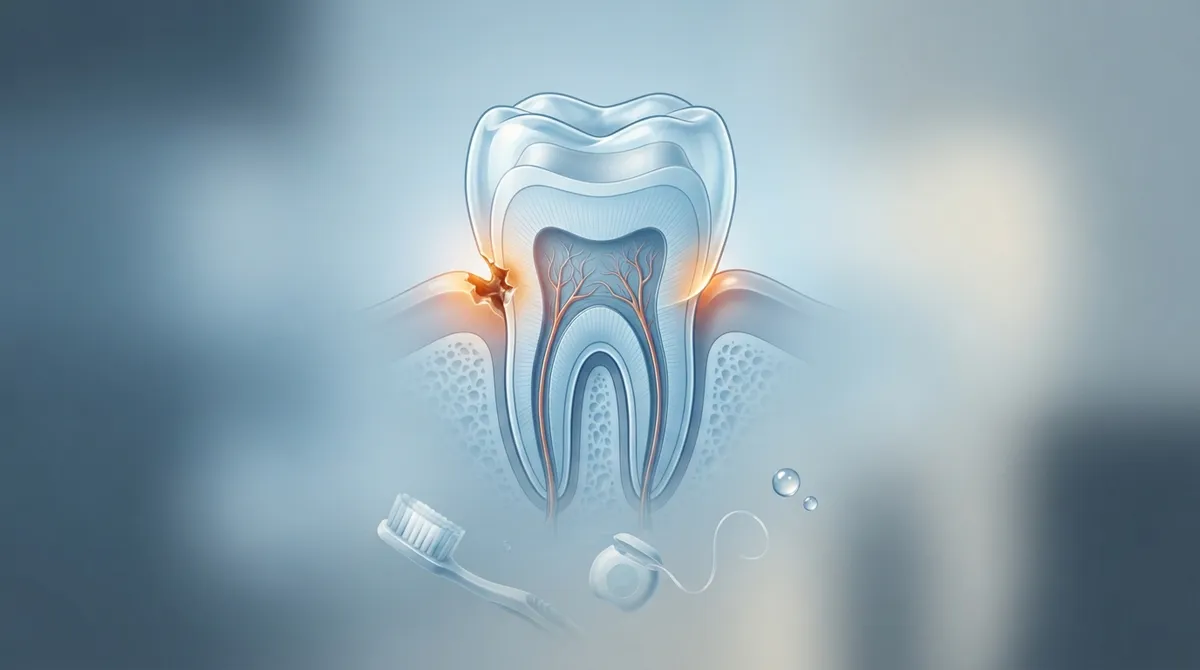
This surprises a lot of people. Yes, you can still get a cavity under a crown. Decay usually starts at the edge where the crown meets your gum line. This spot is called the margin.
Bacteria and food particles can sneak into tiny gaps at the margin. Over time, this leads to what dentists call recurrent decay or secondary caries. Studies show recurrent caries happens in about 1.3% of crowns over a five-year period, based on a large clinical study of nearly 1,000 crowns. That's a small number, but it's still a real risk worth watching.
5. Warning Signs Are Often Silent at First
Early decay under a crown often causes zero pain. That's the tricky part. You might feel totally fine while a problem grows underneath. This is why regular checkups matter so much.
Still, some signs can show up as the issue gets worse. Watch for these symptoms:
- New sensitivity to hot, cold, or sweet foods
- Pain when you bite down
- Food or floss getting stuck at the gum line near the crown
- Gums that bleed or look swollen around the crown
- A bad taste or smell near the tooth
- The crown feeling loose or wiggly
- Dark discoloration at the edge of the crown
If you notice any of these, don't wait. Reach out to your dental team right away for an exam.
6. Your Dentist Uses Exams and X-Rays to Check
Since decay under a crown can hide from view, your dentist relies on more than just looking at your smile. A full check usually includes:
- A close look at the crown margins and gum tissue
- Checking your bite to see if anything feels off
- Testing if the tooth is still alive and responding normally
- Taking dental X-rays when needed to see under the crown
Sometimes, the only way to know the full extent of a problem is to remove the crown. This lets your dentist see the tooth structure clearly and make the right treatment plan.
7. Treatment Depends on How Much Healthy Tooth Remains
Not every problem under a crown needs the same fix. Your dentist will look at how much healthy tooth is left before deciding on treatment. Here's a simple breakdown of common options:
| Situation | Likely Treatment |
|---|---|
| Small, easy-to-reach decay | Minor repair at the margin |
| Moderate decay with enough healthy tooth left | Remove decay, rebuild tooth, place a new crown |
| Infected or badly inflamed nerve | Root canal treatment, then a new crown |
| Tooth too damaged to save | Extraction, followed by an implant or bridge |
This is why regular visits matter. Catching issues early often means simpler, less costly treatment.
8. Crowns Have a Strong Track Record
Good news: crowns generally last a long time when cared for properly. Research shows metal-ceramic crowns have about a 94.7% survival rate after five years. All-ceramic crowns range from roughly 90.7% to 96.6% survival, depending on the material used.
Another study found five-year survival rates of 96.4% for front teeth crowns and 97.5% for back teeth crowns. After ten years, those numbers were still strong at 92.3% and 95.9%. These numbers show that with proper care, your crown can serve you well for many years.
9. Loss of Retention Is a Common Reason Crowns Fail
Interestingly, decay isn't the top reason crowns fail. One study of 230 crown failures found that loss of retention, meaning the crown becomes loose, along with tooth loss and fracture were the leading causes. Recurrent decay accounted for about 8.7% of failures in that group.
This tells us that keeping your crown properly bonded and avoiding excess force on it (like grinding your teeth) is just as important as fighting decay.
10. Daily Habits Protect What's Under Your Crown
Since your natural tooth is still under there, your daily habits still matter a lot. Here's what helps protect that hidden tooth structure:
- Brush twice daily with fluoride toothpaste
- Clean between your teeth every day with floss or a water flosser
- Keep up with regular dental exams and cleanings
- Limit sugary snacks and drinks throughout the day
- Wear a night guard if you grind your teeth
These simple steps go a long way in keeping the tooth under your crown healthy and strong for years to come.
11. Some Warning Signs Need Urgent Attention
Most crown issues can wait for a regular appointment. But some symptoms mean you need help fast. Call your dentist right away if you notice:
- Pain that keeps getting worse
- Swelling around the tooth or face
- Pus or a bad taste near the crown
- A crown that feels very loose or falls off
- Trouble opening your mouth fully
If you have facial swelling, trouble swallowing, or trouble breathing, this could mean the infection is spreading. This needs emergency care right away. Our team offers emergency dentistry services for exactly these kinds of situations.
12. Regular Checkups Are Your Best Defense
The single best thing you can do for the tooth under your crown is to keep up with regular dental visits. Since early decay often shows no symptoms, your dentist may be the only one who can catch a problem before it grows.
At Charming Smiles of Ocoee, we make these visits easy and stress-free. Our office near Publix in Ocoee offers a calming, spa-like setting with soothing music, cozy blankets, and gentle care from a team that truly listens. Whether you're due for a checkup or worried about a crown, we're here to help.
Why Choose Charming Smiles of Ocoee for Crown Care
Dr. Aliuska Lopez and her team understand that crowns are an investment in your smile. That's why we take extra care to check under and around every crown during your visits. We use modern imaging and gentle techniques to catch problems early, before they turn into bigger, more costly issues.
Our practice also makes dental care easier to afford. We offer insurance and financing options, a helpful dental savings plan, and flexible payment plans to fit your budget. Be sure to check our current specials, including our $129 Adult Complete Checkup, which includes an exam and X-rays to check the health of your existing crowns.
Curious what other patients say about their experience? You can visit us on Google — Charming Smiles of Ocoee to read real reviews from our Ocoee community. You can also follow us on the Charming Smiles Facebook page or the Charming Smiles Instagram page to see smiles we've helped restore.
For more general background on tooth structure and decay, the National Institute of Dental and Craniofacial Research offers helpful patient resources worth exploring.
Take the Next Step for Your Smile
Your crown does a great job protecting your tooth from daily wear and tear. But it can't do all the work alone. The tooth, gums, and even the nerve underneath still need your attention and your dentist's care.
If it's been a while since your last checkup, or if you've noticed any changes near a crowned tooth, don't wait for pain to force your hand. You can easily book online for a convenient time that works for you. Or, if you'd rather speak with our friendly team directly, feel free to call us at (407) 378-3704 to schedule your visit today. We can't wait to help you keep your smile healthy, comfortable, and confident for years to come.
FAQs
Q: Can a tooth decay under a dental crown?
A: Yes, it definitely can! Decay usually sneaks in at the edge where the crown meets your gum line. That's why we always check those margins carefully during your checkup here at Charming Smiles of Ocoee.
Q: What does a dentist put under a crown?
A: Under your crown is your natural tooth, made of enamel and dentin. Sometimes there's also a filling or core buildup if the tooth needed extra support before the crown went on.
Q: Does the nerve remain under a dental crown?
A: In most cases, yes! Unless you've had a root canal, the nerve and blood vessels are still alive inside your tooth. A crown protects the outside but doesn't treat nerve problems on its own.
Q: How can I tell if I have decay or an infection under my crown?
A: Watch for new sensitivity, pain when biting, swollen gums, bad taste, or a loose feeling crown. Since early decay often has no symptoms at all, regular checkups are your best way to catch issues early.
Q: Will I need a root canal if decay reaches beneath my crown?
A: It depends on how deep the decay goes. If it reaches the nerve and causes infection or inflammation, then yes, a root canal is usually needed to save the tooth before placing a new crown.