11 Facts on How Long Implant Recovery Really Takes
Discover how long implant recovery really takes, from initial healing to full osseointegration, with expert insight from Charming Smiles of Ocoee.
Key Takeaways
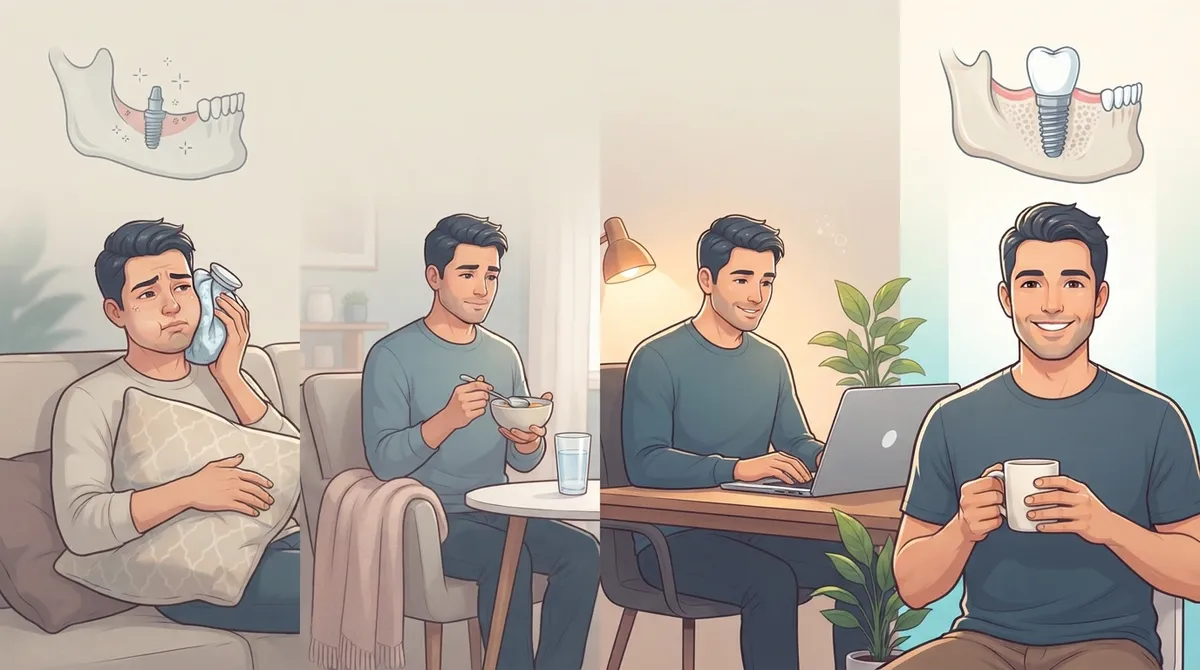
- Most patients feel significantly better within 1-2 weeks after implant surgery, with peak discomfort occurring in the first 3-5 days, making early recovery more manageable than expected.
- Full osseointegration (jawbone fusing with implant) takes 3-6 months for lower jaw and 4-6 months for upper jaw due to bone density differences; rushing this process risks implant failure.
- You can return to work within 1-3 days for non-physical jobs, and progress from soft foods (week one) to semi-soft foods (weeks 2-4) before resuming a normal diet after complete healing.
- Bone grafts add 3-6 months of extra healing time before implant placement, and personal factors like smoking, diabetes, and age significantly affect individual recovery timelines.
Wondering how long implant recovery takes before you can eat normally again? You're not alone. This is one of the most common questions we hear at Charming Smiles of Ocoee. Whether you're missing one tooth or several, understanding the healing timeline helps you plan ahead with confidence.
The good news is that dental implant recovery is more manageable than most people think. Most patients feel like themselves again within a week or two. Full healing takes longer, but the process is predictable and well understood. Let's break down exactly what to expect, step by step, so you can walk into your procedure feeling calm and prepared.
1. Implant Recovery Happens in Two Stages
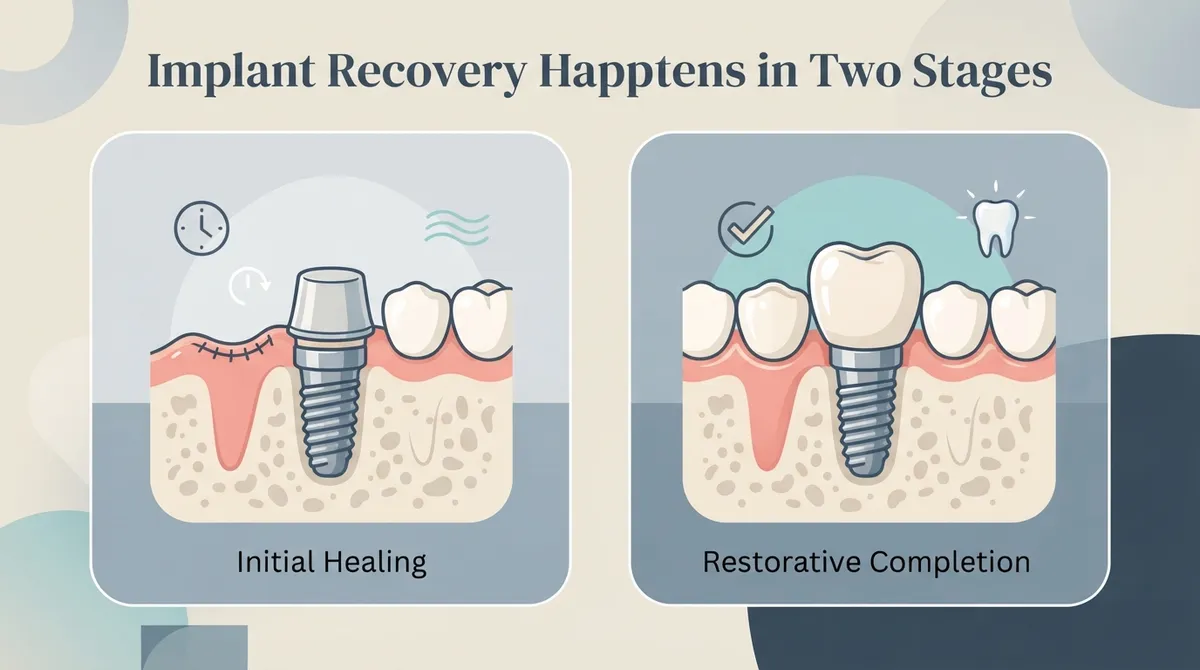
Dental implant recovery isn't just one simple timeline. It actually involves two separate healing phases. Understanding both stages helps you know what's normal and what to expect at each point.
The first stage is soft-tissue healing. This is when your gums recover from surgery. The second stage is osseointegration, a bigger process where the implant post fuses with your jawbone. Both stages matter for a successful, long-lasting result.
Stage One: Initial Healing
This early phase usually lasts about 1 to 2 weeks. During this time, your gums close up around the implant site. Swelling and soreness are common but manageable.
Stage Two: Osseointegration
This is the longer, more important phase. Your jawbone actually grows around the titanium implant post, locking it firmly in place. This step is what makes dental implants so strong and durable compared to other tooth replacement options.
2. The First Week Is the Toughest
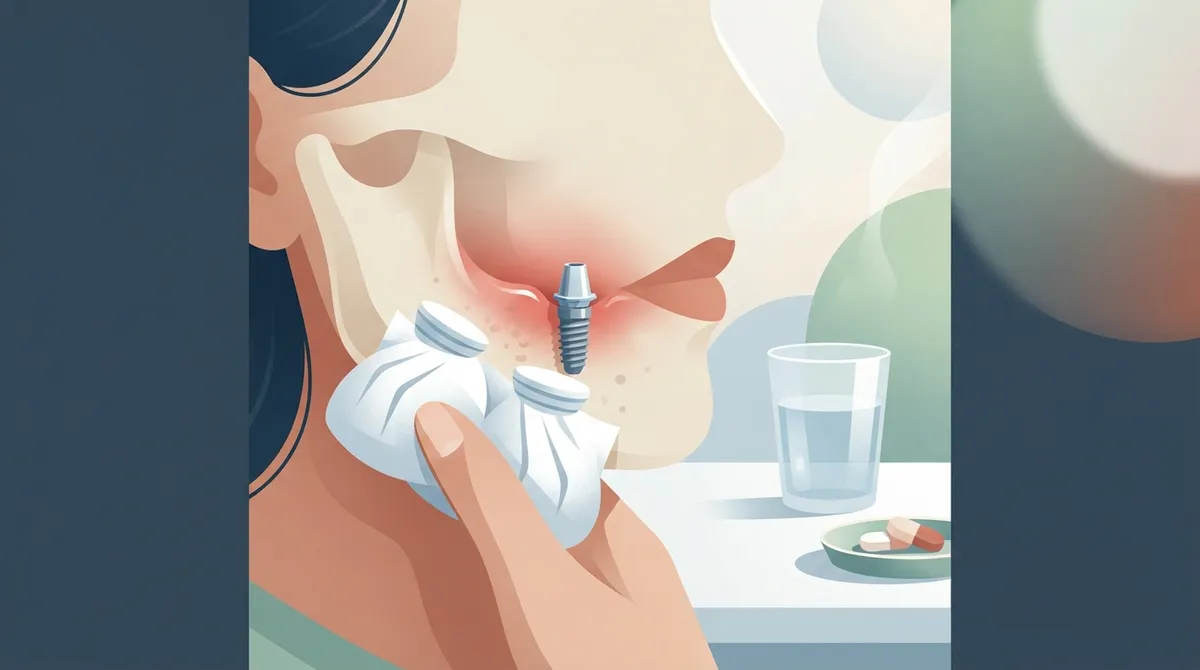
Most discomfort happens in the first 3 to 5 days after surgery. You might notice mild swelling, some bruising, and tenderness around the implant site. This is completely normal.
By day 7 to 10, most patients feel significantly better. Swelling goes down, and daily activities become much easier. Here's what typically happens during week one:
- Days 1-2: Peak swelling and soreness, mostly manageable with over-the-counter pain relief
- Days 3-4: Swelling starts to decrease noticeably
- Days 5-7: Most soreness fades, soft foods become easier to eat
- Days 7-10: Stitches may be removed if needed, gums look much healthier
3. Osseointegration Takes 3 to 6 Months
This is the part that surprises many patients. While you'll feel fine within a couple of weeks, the implant needs several months to fully bond with your jawbone. This process is called osseointegration, and it's the foundation of a successful implant.
During this window, your jawbone cells grow into tiny grooves on the implant surface. This creates a bond stronger than you might expect. Rushing this process by placing a crown too early can lead to implant failure, so patience really does pay off here.
4. Upper Jaw Implants Often Take Longer
Did you know your upper and lower jaw don't heal at the same speed? This is a fact many patients don't realize until their consultation.
| Jaw Location | Bone Density | Typical Healing Time |
|---|---|---|
| Lower Jaw | Denser bone | 3 to 4 months |
| Upper Jaw | Softer, less dense bone | 4 to 6 months |
The upper jaw generally has softer bone tissue. This means osseointegration takes a bit longer to complete safely. Dr. Aliuska Lopez and the team at Charming Smiles of Ocoee always create a treatment plan tailored to your specific jaw structure and bone quality.
5. You Can Likely Return to Work Within Days
Here's some encouraging news for busy patients. Most people can go back to work within 1 to 3 days after implant surgery. This depends on a few key factors.
- Your job isn't physically demanding
- You weren't heavily sedated during the procedure
- You feel comfortable and aren't in significant pain
- Your dentist has given you the green light
If your work involves heavy lifting or intense physical activity, you may want to take a few extra days off. Always follow your dentist's specific advice, since every patient's situation is a little different.
6. Bone Grafting Adds Extra Healing Time
Some patients need a bone graft before or during implant placement. This happens when there isn't enough healthy bone to support the implant securely. If this applies to you, your recovery timeline will be longer.
Bone grafts typically need 3 to 6 months to heal before the implant can even be placed. This might feel discouraging, but it's actually protecting your long-term results. A strong foundation means your implant will last for many years to come.
Signs You Might Need a Bone Graft
- Significant bone loss from missing teeth for a long time
- Previous gum disease that affected jawbone density
- Naturally thin or weak jawbone structure
- Injury or trauma affecting the jaw area
7. Your Overall Health Affects Healing Speed
Not everyone heals at the exact same pace. Several personal health factors can speed up or slow down your recovery timeline.
Here are common factors that influence how long is implant recovery for each patient:
- Smoking status (smokers often heal more slowly)
- Diabetes or other chronic health conditions
- Overall bone density and quality
- Age and general immune system strength
- How well you follow post-surgery care instructions
During your consultation, our team reviews your health history carefully. This helps us give you a realistic, personalized timeline instead of a generic estimate.
8. Eating Normally Takes a Few Weeks
Many patients ask when they can go back to their regular diet. The answer depends on which healing stage you're in.
Week One: Soft Foods Only
Stick to soup, yogurt, mashed potatoes, and smoothies. Avoid anything crunchy, sticky, or too hot.
Weeks Two to Four: Gradual Transition
You can slowly add back semi-soft foods like pasta, fish, and scrambled eggs. Chew carefully and avoid the implant site if it's still tender.
After Full Healing: Normal Diet
Once osseointegration is complete and your final crown is placed, you can eat almost anything. This includes crunchy apples, nuts, and steak, just like natural teeth.
9. Recognizing Normal Healing vs. Warning Signs
Knowing what's normal helps ease your worries during recovery. It also helps you catch potential problems early.
Normal signs of healing include:
- Mild swelling that improves each day
- Slight tenderness when touching the area
- Minor bleeding in the first 24 hours
- Gradual improvement in comfort week by week
Signs you should call your dentist include:
- Severe pain that worsens instead of improving
- Fever or chills
- Excessive swelling after day 4 or 5
- Pus or unusual discharge from the implant site
- The implant feels loose or unstable
If you notice any warning signs, don't wait it out. Reach out to our office right away, or call us at (407) 378-3704 for guidance.
10. The Final Crown Placement Is Quick
Once your implant has fully integrated with your jawbone, the final step is surprisingly simple. Placing the crown or bridge on top of the implant post requires little to no recovery time at all.
Most patients feel completely normal right after this appointment. There's no surgery involved at this stage, just a straightforward fitting and adjustment process. This is often the most exciting part of the entire journey, since it's when your new smile finally comes together.
11. A Comfortable Practice Makes Recovery Easier
Choosing the right dental team makes a real difference in how smooth your implant journey feels. At Charming Smiles of Ocoee, we combine advanced technology with a relaxing, spa-like environment designed to ease anxiety at every step.
Dr. Aliuska Lopez is known throughout Ocoee as a skilled smile expert who genuinely cares about patient comfort. From your first dental implants consultation to your final crown placement, our team walks you through every stage of healing with clear communication and gentle care.
We also understand that cost matters. That's why we offer flexible insurance & financing options and a helpful dental savings plan for patients without insurance. Be sure to check our current specials, including a free dental implant consultation and $200 off implant treatment, to make your smile investment more affordable.
Recovery Timeline at a Glance
| Recovery Stage | Typical Duration | What to Expect |
|---|---|---|
| Initial Healing | 1 to 2 weeks | Swelling, soreness, soft food diet |
| Return to Work | 1 to 3 days | Possible for non-physical jobs |
| Osseointegration | 3 to 6 months | Implant fuses with jawbone |
| Bone Graft Healing (if needed) | 3 to 6 months extra | Additional wait before implant placement |
| Final Crown Placement | 1 appointment | Minimal to no recovery needed |
Every patient heals a little differently, and that's perfectly normal. The best way to get an accurate timeline for your unique situation is through a personal consultation with our team.
Curious what other patients say about their experience? You can see what our Charming Smiles of Ocoee patients share by visiting our Charming Smiles Facebook page or browsing our Charming Smiles Instagram page for real smile transformations. You can also visit us on Google — Charming Smiles of Ocoee to read reviews from patients right here in Ocoee.
Ready to Start Your Implant Journey?
Understanding how long implant recovery takes helps you plan with confidence instead of guessing. While the full healing process takes a few months, most patients are back to their normal routines within days, not weeks.
If you're ready to explore whether dental implants are right for you, our friendly team at Charming Smiles of Ocoee is here to help. According to the National Institute of Dental and Craniofacial Research, successful implant integration depends heavily on proper post-surgical care, something our team prioritizes with every patient.
Take the first step toward a complete, confident smile today. You can easily book online for a free implant consultation, or reach out to learn more about our location and how we can help you throughout your entire recovery journey.
FAQs
Q: How long does it take to recover from a dental implant?
A: Most patients feel much better within 1 to 2 weeks after surgery. Full healing, called osseointegration, usually takes 3 to 6 months before your implant is ready for a final crown. It's a two-stage process, but the hardest part is really just that first week!
Q: How painful is dental implant recovery?
A: Most patients describe the discomfort as mild to moderate, similar to a tooth extraction. Swelling and soreness usually peak in the first few days and improve steadily after that. Over-the-counter pain relievers are often enough to keep you comfortable.
Q: How long before I can eat normally after a dental implant?
A: You'll want to stick with soft foods for about the first week. After two to four weeks, you can slowly add back semi-soft foods. Once your implant is fully healed and your crown is in place, you can enjoy your favorite foods again without worry.
Q: Does a bone graft make implant recovery longer?
A: Yes, it does add extra time to the process. Bone grafts typically need 3 to 6 months to heal before the implant can even be placed. While it takes patience, it creates a stronger foundation for a longer-lasting implant.
Q: How do upper and lower jaw implant healing times differ?
A: Lower jaw implants often heal a bit faster, usually within 3 to 4 months, because the bone is naturally denser. Upper jaw implants can take 4 to 6 months since the bone tends to be softer. Either way, our team at Charming Smiles of Ocoee will guide you through the exact timeline for your case.