10 Facts About Invisalign for Overbite Correction (2026)
Discover how Invisalign treats overbites, what research shows about results, and why Charming Smiles of Ocoee is Ocoee's trusted choice for clear aligner care.
Key Takeaways
- Invisalign can treat mild to moderate overbites caused by tooth positioning, but severe skeletal overbites may require braces, elastics, or jaw surgery; an in-person exam is essential to determine your specific case.
- Research shows Invisalign achieves only 39-41% of computer-predicted overbite correction on average, so expect refinement trays and overcorrection planning rather than results matching your digital preview.
- Vertical tooth movements (intrusion and extrusion) needed for overbite correction are harder for aligners to control than horizontal movements, requiring careful planning and potential mid-treatment adjustments.
- You must wear aligners 20-22 hours daily for treatment to work as planned; skipping wear time slows progress and may require extra refinement trays, making consistent compliance critical to success.
- Treatment timelines range from 6-12 months for mild cases to 18+ months for complex overbites, depending on severity, the tools needed (attachments, bite ramps, elastics), and how consistently you wear your aligners.
- Both Invisalign and traditional braces produce similar results for severe deep bites over 5mm; choose based on your lifestyle preference, severity level, and your dentist's recommendation after a thorough evaluation.
Does your smile show more top teeth than bottom when you bite down? You might have an overbite, and you're probably wondering if you really need metal braces to fix it. Good news: Invisalign has become a popular choice for many people dealing with this exact issue. But how well does it actually work, and is it the right choice for your smile?
At Charming Smiles of Ocoee, we get this question all the time. Patients want straight answers about clear aligners and overbites, not just marketing promises. So let's break down what the research actually shows, what you can expect, and how to know if Invisalign might work for your bite. Dr. Aliuska Lopez and our team have helped many Ocoee patients understand their options, and we want to share that same clarity with you.
1. What Exactly Is an Overbite (And Why It Matters)
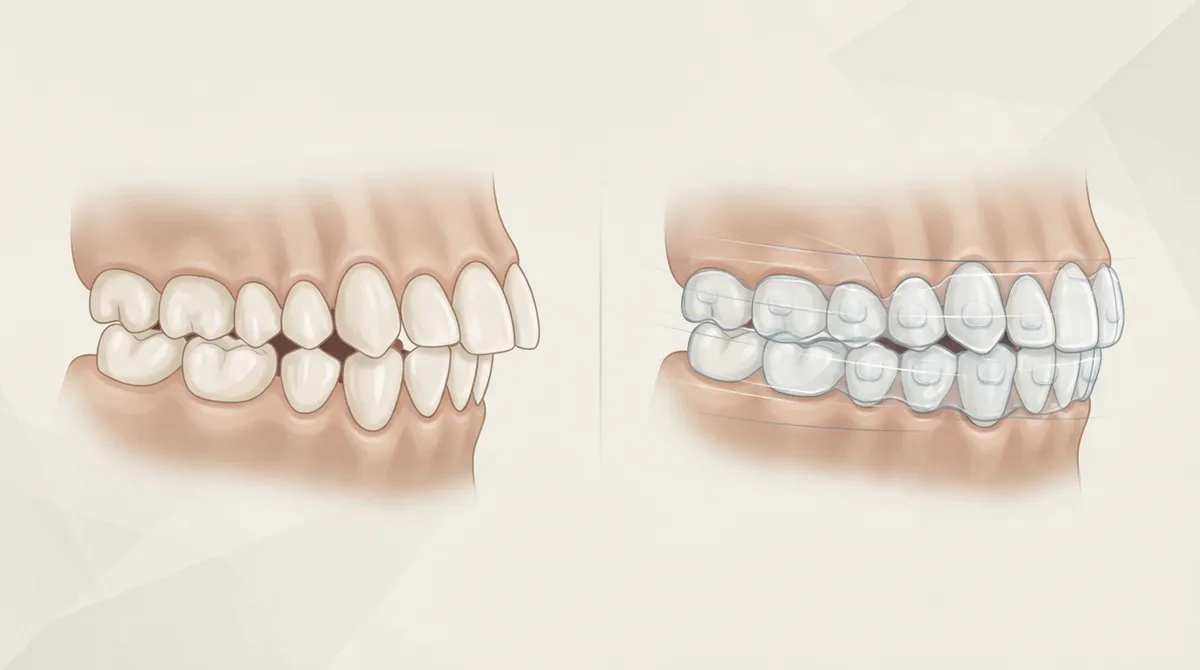
An overbite happens when your top front teeth overlap your bottom front teeth more than they should. A little overlap is normal and healthy. But when it's too much, dentists call it a deep bite.
A deep bite can cause real problems over time. Here's what can happen if it's left untreated:
- Your bottom teeth may wear down your top teeth (or the other way around)
- Your gums might get irritated from teeth biting into them
- You could develop jaw pain or discomfort
- Your bite might feel uneven or uncomfortable
- Your smile might not look the way you want it to
This is why fixing an overbite isn't just about looks. It's about protecting your teeth and jaw for years to come.
2. Can Invisalign Actually Fix an Overbite?
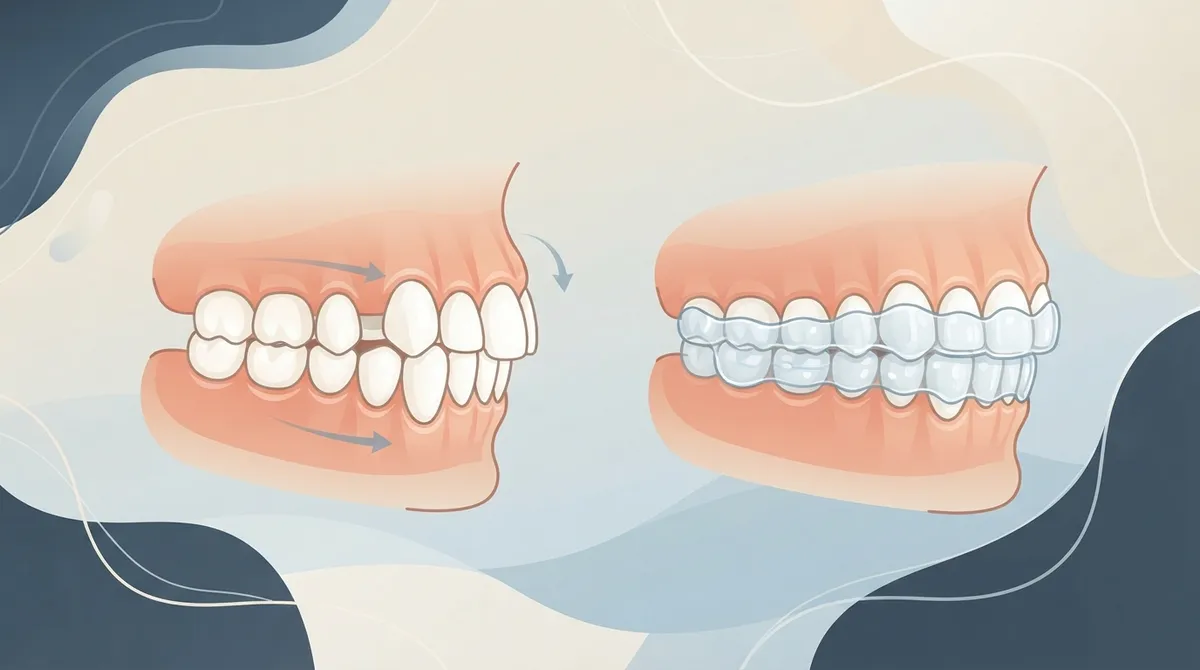
Yes, in many cases it can. Clear aligners can treat mild to moderate overbites, especially when the problem comes from how your teeth are positioned rather than a major jaw size difference.
Here's the key thing to understand: not every overbite is the same. Some are caused by tooth position. Others come from the actual shape and size of your jaw bones. Invisalign works best on the first type. If your overbite comes from a skeletal issue, you may need extra help, like braces, elastics, or in rare cases, jaw surgery.
This is exactly why an in-person exam matters so much. A qualified dentist or orthodontist needs to look at your teeth, jaw, and bite pattern before making any promises about treatment.
3. How Invisalign Moves Your Teeth to Fix an Overbite
Invisalign uses a series of clear, custom-made trays that you switch out every one to two weeks. Each tray gently pushes your teeth a tiny bit closer to their final position.
For overbite correction, most of the movement happens with your front teeth. Your dentist may use special tools to help guide this process:
- Small attachments (tiny bumps) placed on certain teeth to give the aligners more grip
- Bite ramps that help push your back teeth down slightly
- Interproximal reduction, which is light shaving between teeth to create small amounts of space
- Elastics (rubber bands) that connect your upper and lower trays
- Refinement aligners added later in treatment for extra correction
Research backs this up. A 2017 study published on PubMed looked at 120 Invisalign patients and found a median deep-bite improvement of about 1.5 millimeters. Most of that change came from how the front teeth moved, not from the back teeth shifting up or down.
4. Why Vertical Tooth Movement Is Trickier Than You'd Think
Not all tooth movements are equal when it comes to clear aligners. Moving teeth side to side tends to be fairly predictable. But moving teeth up and down (what dentists call vertical movement) is a different story.
Overbite correction often depends on two vertical movements:
- Intrusion: pushing front teeth up into the gum line
- Extrusion: pulling back teeth down toward the biting surface
Both of these are harder for aligners to control compared to simply sliding a tooth left or right. This doesn't mean it can't be done. It just means your dentist needs to plan carefully and may need to adjust your treatment along the way.
5. What the Research Really Says About Results
Here's something important that not every dental website tells you: the computer-generated treatment plan (called ClinCheck) doesn't always match what actually happens in your mouth.
A 2021 study found that ClinCheck overestimated planned overbite reduction in over 95% of cases studied. On average, patients achieved only about 39% of the improvement the software predicted. A related 2024 study on teens found similar results, with patients achieving about 41% of the predicted correction.
Why does this matter for you? Because it means you shouldn't expect your treatment to look exactly like the digital preview. Your dentist should overcorrect on purpose or plan for refinement trays to reach your desired result.
| Study | Year | Key Finding |
|---|---|---|
| Khosravi et al. | 2017 | Median 1.5mm deep-bite improvement in 120 patients |
| Overbite Predictability Study | 2021 | Only 39.2% of programmed reduction achieved on average |
| Adolescent Overbite Study | 2024 | 41.38% of predicted reduction achieved in teens |
| Fujiyama et al. | 2022 | Invisalign and braces both effective for severe deep bites over 5mm |
| Vietnamese Patient Study | 2025 | Statistically significant improvement in 31 patients (small sample) |
6. Invisalign vs Traditional Braces for Overbite Treatment
So which one wins for fixing an overbite? The honest answer is: it depends on your specific case.
A 2022 study compared 50 adults with severe deep overbites (more than 5mm) using either Invisalign or fixed braces. Both treatments worked well. The Invisalign group saw around 1.0mm of upper front tooth intrusion and 2.0mm of lower front tooth intrusion.
Here's a simple comparison to help you think through your options:
| Factor | Invisalign | Traditional Braces |
|---|---|---|
| Visibility | Nearly invisible | Visible metal or ceramic brackets |
| Removability | Yes, for eating and brushing | No, fixed in place |
| Best for | Mild to moderate overbites | Mild to severe overbites |
| Predictability for deep bite | Moderate, may need refinements | Generally more predictable |
| Daily comfort | Smooth plastic trays | Metal brackets and wires |
For many patients, especially teens and adults who want a more discreet option, Invisalign is a great fit. But if your overbite is very severe, your dentist may recommend a combination approach or lean toward braces.
7. Steps to Getting Invisalign for Your Overbite
Wondering what the process actually looks like? Here's a simple walkthrough of what to expect:
- Schedule a consultation with a dentist experienced in Invisalign treatment
- Get a full exam, including x-rays and digital scans of your teeth and bite
- Discuss whether your overbite is a good candidate for aligners
- Review your custom treatment plan and expected timeline
- Receive your first set of aligner trays
- Wear each tray for the recommended time before switching to the next
- Attend regular check-in appointments to track your progress
- Complete any refinement trays needed for extra correction
- Move into retainer wear to keep your new bite in place
This is why we always recommend starting with a proper consultation rather than jumping straight into treatment. At Charming Smiles of Ocoee, we currently offer a free Invisalign consultation so you can get real answers before committing to anything.
8. How Long Does Treatment Usually Take?
Overbite correction timelines vary a lot depending on how severe your bite issue is. Mild cases might take around 6 to 12 months. More complex overbites can take 18 months or longer, especially if refinement trays are needed.
A few things that affect your timeline:
- How severe your overbite is at the start
- Whether you need attachments, bite ramps, or elastics
- How consistently you wear your aligners each day
- Whether refinement trays are needed partway through
- Your body's natural rate of tooth movement
Speaking of consistency, this brings up one of the most important rules of Invisalign treatment.
9. Why Wear Time Makes or Breaks Your Results
Here's something patients sometimes underestimate: you need to wear your aligners for 20 to 22 hours every single day. That leaves only a couple hours for eating, drinking anything besides water, and brushing your teeth.
Skipping wear time, even for a few hours here and there, can slow down your progress. It can also mean your teeth don't move exactly as planned, which may require extra refinement trays later. Think of it like this: your aligners can only do their job if they're actually on your teeth.
If you struggle with remembering to put your aligners back in, try setting phone reminders or keeping your aligner case in the same spot every time you take them out. Small habits like this make a big difference over the course of treatment.
10. Why an In-Person Evaluation Is Non-Negotiable
We know online research is a great starting point, but no article (including this one) can replace a hands-on exam. Every overbite is different. Some patients have crowding to deal with. Others have gum concerns or jaw joint issues that need attention first.
A thorough evaluation should look at:
- How your jaw bones are positioned compared to each other
- The health of your gums and any signs of periodontal disease
- Whether you have crowding or spacing issues alongside the overbite
- Any jaw joint (TMJ) discomfort or clicking
- Your overall dental health, including cavities that need treatment first
Skipping this step and jumping straight into aligners you bought online can lead to disappointing results or even dental damage. This is one of the biggest reasons we always recommend working with a trusted, experienced provider.
Why Choose Charming Smiles of Ocoee for Your Invisalign Journey
Dr. Aliuska Lopez and our team have built a reputation in Ocoee for gentle, honest, and skilled care. We know starting Invisalign treatment can feel like a big decision, so we make sure you understand your options every step of the way. Our spa-like office includes soothing music, comfortable blankets, and a calm atmosphere designed for patients who feel nervous about dental visits.
We also make treatment affordable. Right now, we're offering $200 off Invisalign treatment along with flexible financing options to fit your budget. We accept many major insurance plans, and our in-house dental savings plan can help if you don't have insurance at all.
Curious what real patients say about their experience? You can visit us on Google to read reviews from Charming Smiles of Ocoee patients, or check out our Facebook page and Instagram page for smile transformations and helpful tips. You can also learn more in our guide on 7 Things You Need to Know About Invisalign in 2026.
Frequently Asked Questions About Invisalign and Overbites
Ready to find out if Invisalign is right for your bite? The team at Charming Smiles of Ocoee is here to guide you with honest answers and personalized care. You can easily book online for a free Invisalign consultation, learn more about our location near Publix in Ocoee, or simply call us at (407) 378-3704 to get started. Your straighter, healthier smile is closer than you think.
FAQs
Q: Can Invisalign fix a deep overbite?
A: Yes, in many cases! Invisalign can treat mild to moderate deep overbites, especially when the cause is tooth position rather than jaw structure. Severe cases may need extra tools like elastics, bite ramps, or even a combination with braces, so a proper exam is always the best first step.
Q: How severe of an overbite can Invisalign treat?
A: Invisalign works great for mild to moderate overbites and can even help with some severe cases when paired with attachments, bite ramps, or elastics. Research shows real improvement is possible, though very severe skeletal overbites may need additional orthodontic or surgical support.
Q: How long does Invisalign take to correct an overbite?
A: It really depends on how severe your overbite is! Mild cases might take 6 to 12 months, while more complex bites can take 18 months or longer, especially if refinement trays are needed along the way.
Q: Is Invisalign or braces better for a severe overbite?
A: Both can work well! Studies show Invisalign and traditional braces produce similar results for severe deep bites over 5mm. The best choice depends on your specific bite, lifestyle, and what your dentist recommends after a thorough evaluation.
Q: Will an overbite come back after Invisalign, and do I need a retainer?
A: Yes, retainers are essential after treatment! Teeth naturally want to shift back over time, so wearing your retainer as directed helps protect your investment and keep that beautiful new bite exactly where it belongs.